


Africa is one of the world’s richest continents in oil, gas, gold, copper, cobalt, lithium, platinum and other strategic resources. Yet the question of who actually owns this wealth is more complicated than it appears. In most cases, African governments legally control resources on behalf of their citizens, while private companies—many of them foreign-owned—receive licenses to explore, mine, process and sell them. The real battle is therefore not only about ownership, but also about who controls extraction, who receives the profits and who captures the value after the resources leave the ground.

The simple answer: African countries own the resources—but that is only part of the story
When people hear that Africa has enormous deposits of cobalt, gold, copper, oil, gas, lithium and rare-earth minerals, it is natural to ask: Who owns all this wealth?
The answer is not as simple as pointing to a foreign mining company or an African government.
In most African countries, underground resources are legally vested in the state or held by the state as a custodian on behalf of citizens. Governments then grant companies licenses, leases, concessions or production-sharing agreements that allow them to explore and extract those resources.
The Extractive Industries Transparency Initiative, or EITI, explains that governments act on behalf of citizens when they enter agreements with companies to exploit oil, gas and minerals. Depending on the legal system, these agreements can give companies different rights and obligations while the state collects taxes, royalties and other payments.
So, a company operating an African mine does not automatically own the natural resource itself.
But there is a second, much more important question:
Who controls the mine, the money, the processing, the exports and the supply chain?
That is where the story becomes complicated.
Africa has enormous natural wealth
Africa's resource base is extraordinary.
The continent contains major deposits of gold, platinum, diamonds, copper, cobalt, manganese, bauxite, uranium, lithium, graphite and rare-earth elements. It is also home to some of the world's major oil and gas producers.
The World Bank says Africa has significant geological potential across 26 key minerals that are important to modern technologies and the global clean-energy transition.
The African Union has also warned that Africa's mineral wealth has historically not translated into enough industrial development because many minerals leave the continent as ores, concentrates or relatively unprocessed materials.
That distinction matters.
Imagine two countries.
Country A digs copper out of the ground and exports the raw material.
Country B mines copper, refines it, manufactures components and eventually produces products using that copper.
Both countries have copper.
But Country B captures far more economic value.
This is one of the biggest issues in Africa's natural-resource debate.
The question is not simply who owns the rock. It is who owns the economic value created from the rock.
Governments are the legal gatekeepers
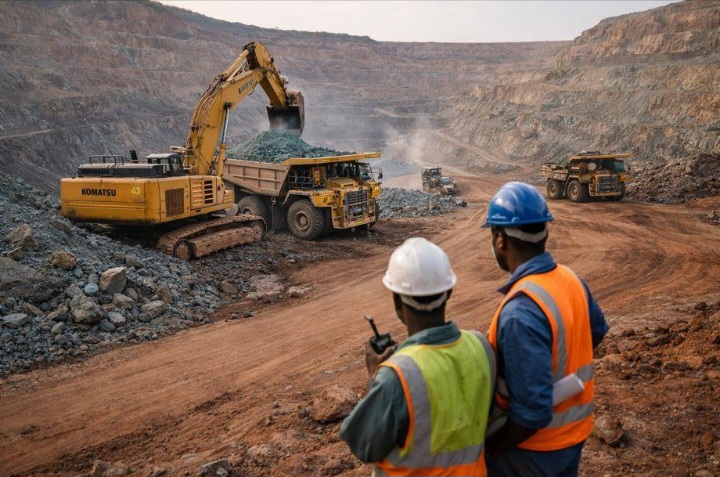
African governments have enormous power over natural resources because they write the laws that determine who can explore and extract them.
A government can decide:
- Who receives a mining license
- How long a license lasts
- How much tax a company pays
- How much royalty is paid
- Whether foreign companies can operate
- Whether local companies must participate
- Whether minerals must be processed locally
- How communities are compensated
- What environmental standards companies must follow
- Whether contracts are publicly disclosed
The legal arrangements vary considerably from one country to another.
Some countries use production-sharing agreements for petroleum. Others use concessions or licenses. Mining systems also differ.
This means there is no single African model of resource ownership.
The African Union's African Mining Vision, adopted by African leaders, calls for transparent, equitable and optimal exploitation of mineral resources so that they contribute to broad-based economic development. It specifically emphasizes local value addition, industrialization, stronger local businesses and better resource governance.
In other words, African governments increasingly recognize that simply collecting royalties from foreign companies is not enough.
---
Then who are the foreign companies?
Foreign companies remain major players in Africa's extractive industries.
Companies headquartered in countries such as China, the United States, Canada, Australia, the United Kingdom, France and other countries have invested heavily in African mining and energy.
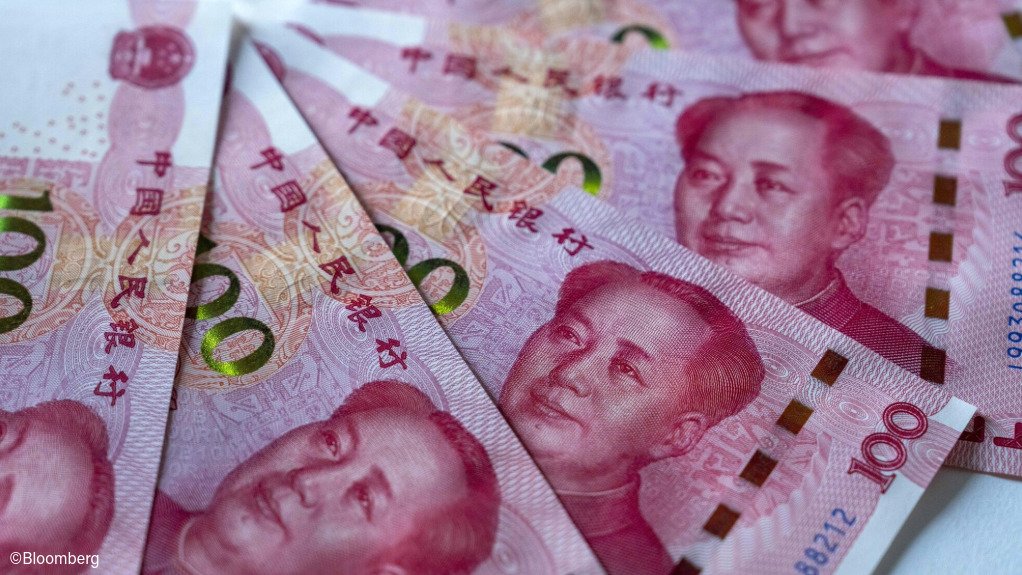
China is particularly important in several mineral supply chains.
A recent U.S. Congressional Research Service analysis found that China-origin firms had substantial investments in African mining, while Chinese companies are especially important in several critical-mineral supply chains.
But it is important to avoid a common mistake:
Chinese mining in Africa does not mean that "China owns Africa's minerals."
Chinese companies are not the same thing as the Chinese government, and individual companies can have different ownership structures.
The same principle applies to American, British, Canadian, Australian or European companies.
A foreign company may own shares in a mining operation, provide financing, operate a mine or hold a license without owning the country's entire natural-resource base.
The Democratic Republic of Congo shows why the issue is complicated
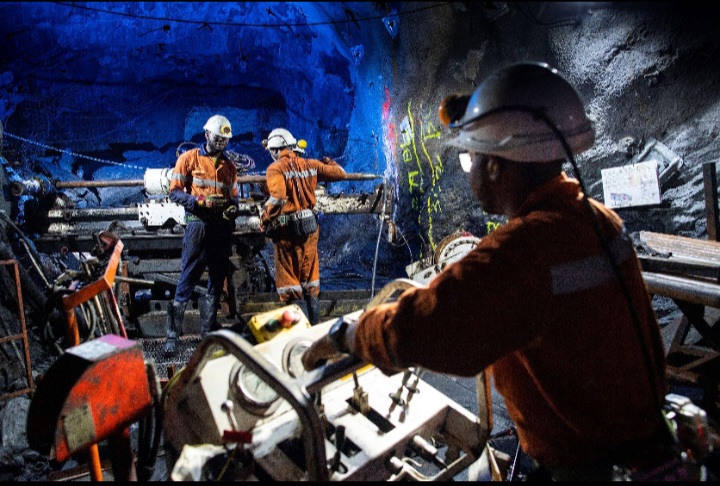
Few countries demonstrate the complexity better than the Democratic Republic of Congo.
The DRC is one of the world's most important sources of cobalt and is also a major copper producer. Which is critical to several industrial and energy technologies, including batteries.
The country's enormous mineral wealth has attracted companies from around the world. But the DRC has increasingly pushed for greater control over how its minerals are processed and exported.
In August 2026, the government banned exports of copper and cobalt concentrates as part of an effort to encourage more domestic processing and capture more value inside the country. The measure also allows certain exceptions through government-approved waivers.
The significance goes beyond cobalt. It represents a growing African argument:
If Africa supplies the raw materials for the world's industries, why should the highest-value stages of production happen somewhere else?
The same debate is happening across Africa
The push for greater local participation is not limited to Congo. Ghana, for example, has been tightening local participation requirements in its mining industry.
In 2026, Ghana's Minerals Commission directed several major international mining companies, including Newmont, AngloGold Ashanti and Zijin, to transition certain mining operations to Ghanaian-owned or Ghanaian-majority-owned contractors. The policy is part of a broader effort to increase the role of Ghanaian businesses in the mining economy.
This illustrates an important distinction. Where country does not necessarily have to completely nationalize a mine to increase its share of the economic benefits.
It can require:
- Local contractors
- Local employees
- Local procurement
- Local ownership
- Domestic processing
- Technology transfer
- Community development
- Higher royalties and taxes
The goal is to make the mining industry less of an isolated export business and more connected to the wider economy.
Oil tells a similar story
The same question applies to Africa's petroleum industry.
Nigeria, Libya, Angola, Algeria and other oil-producing countries have attracted major international oil companies for decades. But foreign companies generally operate through agreements established under national laws. Where Nigeria provides a useful example.
Under Nigeria's Petroleum Industry Act, NNPC Limited was incorporated with its shares initially vested in the federal government. The law also restructured the country's petroleum institutions and regulatory framework.
This means that when an international company participates in Nigeria's oil industry, it does not simply arrive and take Nigerian oil.
It operates under a legal and contractual system established by the Nigerian state.
The same basic principle applies across much of the continent, although the details differ from country to country.
But ownership on paper is not the same as control
This is perhaps the most important part of the story.
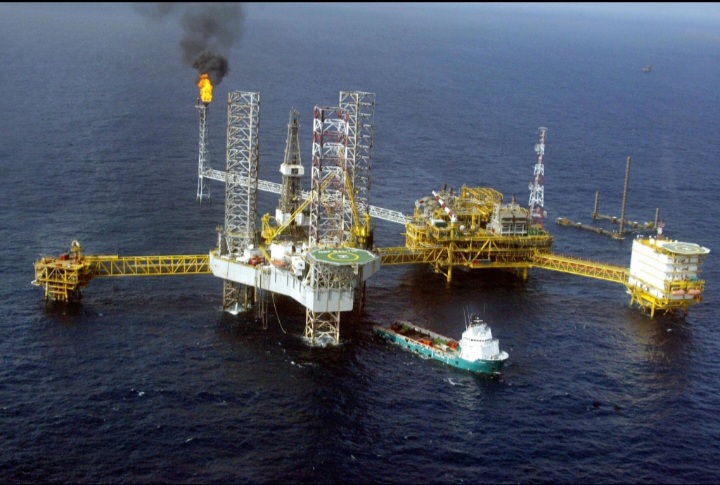
A government may legally own or control a natural resource while a private company controls much of the actual operation.
Why?
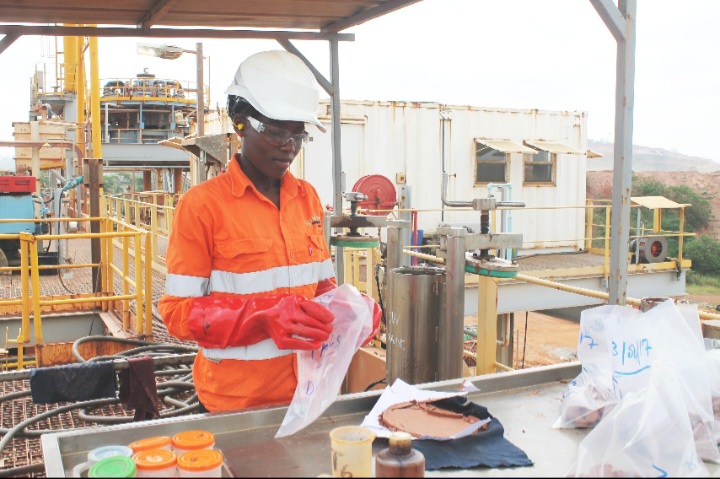
Because extracting minerals requires enormous amounts of money, technology, geological expertise, equipment, transportation infrastructure and access to international markets.
A government may therefore invite an international company to invest billions of dollars to develop a mine.
The company takes on financial and operational risks. In return, it receives rights to extract the resource and make money under the agreed terms.
The government receives taxes, royalties, fees, dividends or other forms of revenue. This can be a reasonable arrangement.
The problem comes when the terms are weak, contracts are poorly negotiated, corruption affects decision-making, or governments fail to properly collect the money they are owed.
The World Bank has noted that African countries have sometimes failed to realize the full potential of their natural resources because of poor deals, undeveloped projects and weak management of resource revenues.
So the critical question is not simply:
"Who owns the mine?"
It is:
"How much of the wealth generated by the mine stays in the country?"
And then there are the hidden owners
There is another layer that is often overlooked: beneficial ownership.
The company listed on a mining license may not always tell the whole story.
A company can be owned by another company, which is owned by another company, potentially creating a complicated corporate chain.
The person who ultimately controls or benefits from the company is known as the beneficial owner.
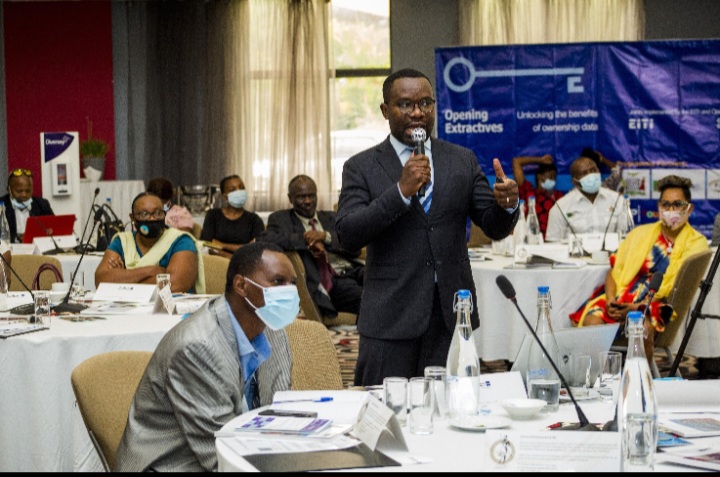
EITI has made beneficial-ownership transparency a major part of its work because hidden ownership structures can make it difficult to determine who actually benefits from extractive licenses and contracts.
This matters because if citizens cannot identify who ultimately benefits from a mining or petroleum deal, it becomes harder to determine whether the country's interests are being protected.
For journalists and citizens, beneficial ownership records can therefore be extremely important.
Africa's biggest problem may be what happens after extraction
Consider a lithium deposit. Which is mined in Africa.
But what happens next?
If the mineral is exported as raw material, another country may handle processing, chemical conversion, battery-component manufacturing and eventually the production of finished products.
The African country receives income from the initial extraction.
But other countries can capture much larger portions of the value chain.
This is why the African Union's Green Minerals Strategy emphasizes moving beyond raw mineral exports toward value addition, local processing, industrialization and regional supply chains.
UN Trade and Development makes a similar argument. It warns that dependence on primary commodity exports can leave developing economies vulnerable to international price swings and external shocks. Its 2025 research found that 95 of 143 developing economies remained commodity-dependent during 2021–2023.
Africa's challenge, therefore, is not simply to own more mines. It is to capture more value from what it already has.
The new scramble for Africa's critical minerals
The global energy transition has made Africa's resources even more strategically important.
Cobalt, copper, lithium, manganese, graphite, nickel, platinum-group metals and rare earth elements are increasingly important to batteries, electric vehicles, renewable-energy technologies, electronics and other advanced industries.
UNCTAD estimates that Africa holds significant global shares of several energy-transition minerals, including cobalt, manganese, natural graphite, copper, nickel and lithium.
That has triggered a new competition.
China is active.
The United States is seeking stronger mineral partnerships.
European countries want secure supply chains.
India is expanding its interest.
Gulf states are investing.
International mining companies are looking for new deposits.
And African governments are increasingly trying to negotiate from a position of greater strength. This is why today's resource competition is different from the old colonial scramble.
The players have changed, the technologies have changed and the strategic importance of the minerals has changed.
But the fundamental question remains:
Who benefits?
Africa does have an opportunity to change the equation
The situation is not hopeless. African governments can use their natural resources to finance infrastructure, education, healthcare, manufacturing, energy systems and jobs. But that requires strong institutions and better deals.
The African Mining Vision argues for a mining industry that creates economic linkages instead of functioning as an isolated enclave that simply removes raw materials from the continent.
That means Africa could increasingly seek:
Mining → Processing → Manufacturing → African industries → African jobs
rather than:
Mining → Raw export → Foreign processing → Foreign manufacturing
The first model keeps more economic activity on the continent.
The second leaves Africa vulnerable to remaining primarily a supplier of raw materials.
So, who really owns Africa's natural resources?
The honest answer is:
African states generally have legal sovereignty over their natural resources, but ownership, control and economic benefit are divided among governments, state-owned enterprises, private African companies, multinational corporations, investors and, in some cases, communities.
And the answer changes from country to country and resource to resource.
A foreign mining company may operate a mine.
An African government may hold a stake.
A state-owned company may have a partnership with an international investor.
Local companies may provide services.
Communities may have rights over land or receive compensation.
Investors may own shares in the companies involved.
And behind some companies, beneficial owners may be difficult to identify without detailed corporate records.
That is why saying "foreigners own Africa's resources" is too simplistic.
But saying "Africans own everything and therefore receive most of the wealth" is also misleading.
The reality lies somewhere in between.
The real fight is over value, not just ownership
Africa's resource debate is ultimately about power and value.
- Who writes the contracts?
- Who provides the capital?
- Who owns the mining company?
- Who controls the technology?
- Who processes the mineral?
- Who sets the price?
- Who collects the taxes?
- Who receives the dividends?
- Who gets the jobs?
- Who owns the companies supplying the mine?
- Who benefits from the infrastructure?
- Who carries the environmental cost?
And, perhaps most importantly:
What remains in Africa after the resource is extracted?
That could be the difference between Africa being a continent that is rich in resources and a continent whose people are rich because of those resources.
The minerals beneath African soil belong, in the legal sense, to African states and their citizens under national laws.
But the wealth they generate is shaped by contracts, ownership structures, taxes, technology, processing capacity, governance and global markets.
Africa may own the resources. The bigger challenge is making sure it owns enough of the value they create.









Comments (0)
No comments yet. Be the first to share your thoughts!