


More than 6,000 newly trained police officers have graduated at Kiganjo with redesigned uniforms and a 36 percent increase in entry-level pay. President William Ruto says the changes are part of a wider police reform agenda. But as the new officers prepare to take to the streets, the biggest question remains: can better pay, training and a new uniform rebuild public trust in Kenya’s police service?

A New Chapter Begins at Kiganjo
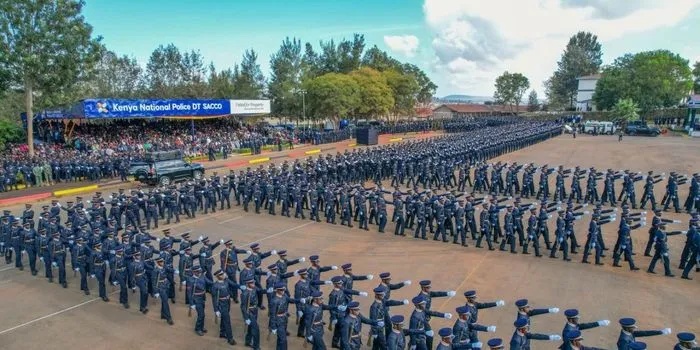
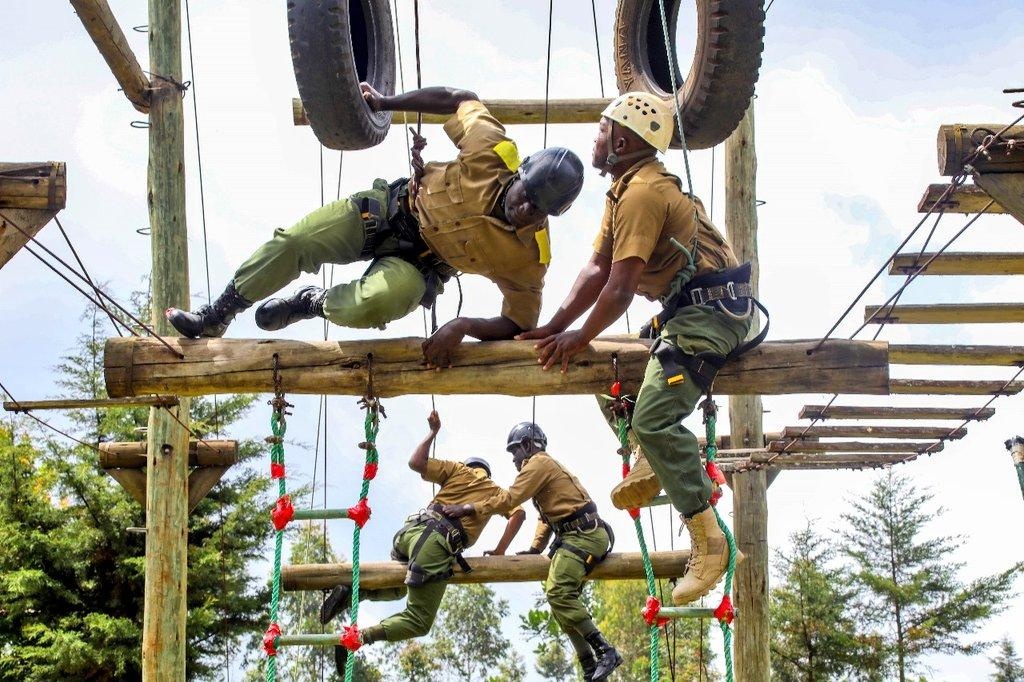
The National Police Service has welcomed a new generation of officers after more than 6,000 recruits completed nine months of training at the National Police College in Kiganjo, Nyeri County.
President William Ruto presided over the passing-out parade on Friday, marking the transition of the recruits from trainees to police constables ready for deployment across the country.
The ceremony, however, was about more than graduation.
It brought together three major developments for Kenya's police service: thousands of new officers, a redesigned uniform and improved salaries for junior police officers.
Together, the changes are being presented by the government as part of a broader attempt to modernize policing and improve the welfare and professionalism of officers.
But for ordinary Kenyans, the real measure of success will not be what happens at Kiganjo.
It will be what happens when these officers begin interacting with the public.
Thousands of New Officers Enter the Service
The recruits have spent nine months undergoing police training before completing their course and receiving their certificates.
Their training covered policing, discipline, public safety, human rights and other areas required for modern law enforcement.
They will now be deployed to different parts of Kenya, joining a police service expected to respond to increasingly complex security challenges.
From ordinary crime and traffic enforcement to terrorism, cybercrime, public demonstrations and emergency situations, the new officers will be operating in environments where their decisions can have a direct impact on people's lives.
That is why Ruto's message to the graduates focused heavily on responsibility.
Be firm against crime, but faithful to the law. Exercise authority, but remain fully accountable. Preserve order, but protect freedom.
The message underlines one of the most difficult responsibilities of policing: maintaining security while respecting the rights of citizens.
The Uniform Has Changed — But the Mission Has Not
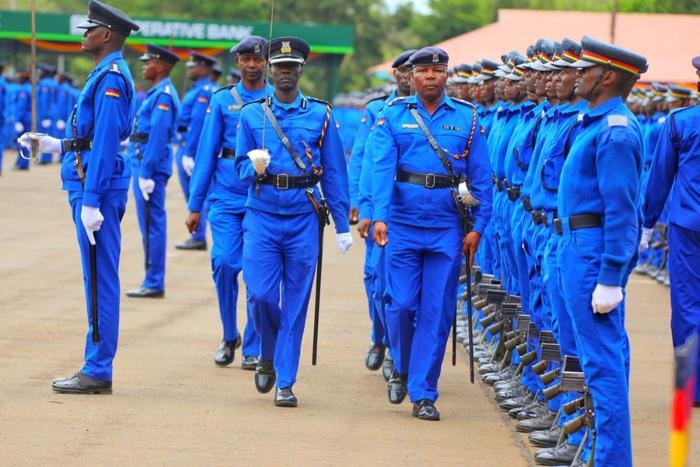
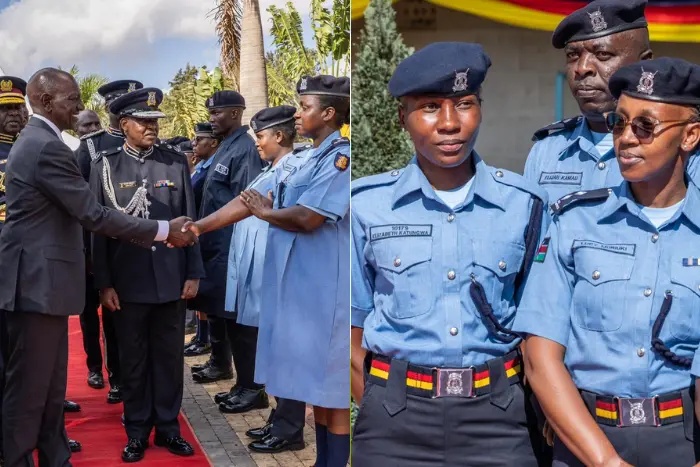
Perhaps the most visible symbol of change at Kiganjo was the new General Duty police uniform.
The traditional dark-blue appearance is being replaced by a light sky-blue shirt paired with dark navy-blue trousers.
The new design also features updated police insignia and identification details intended to make officers more easily identifiable.
The government says the redesign followed consultations involving police officers and members of the public.
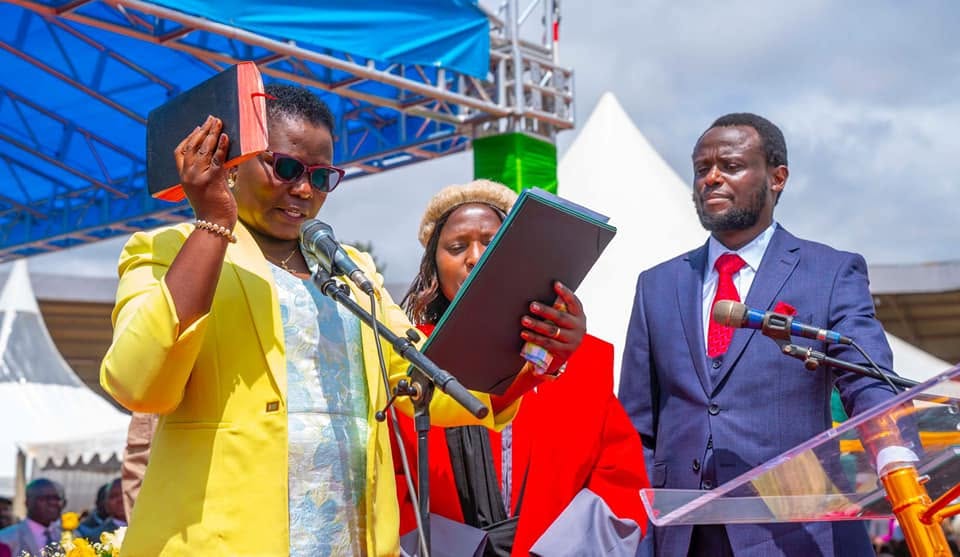
Interior Cabinet Secretary Kipchumba Murkomen said the new uniform was not simply a government decision.
“The uniform that you unveiled today is as a result of rigorous public participation, and the police officers themselves chose their uniform.”
The new uniform will initially be worn by General Duty officers, while the Administration Police Service and General Service Unit will retain their existing operational uniforms.
The rollout is expected to begin nationwide from August 31.
A New Uniform Also Comes With a Maternity Design
The uniform changes also include a dedicated outfit for expectant female officers.
The maternity design is intended to provide greater comfort and flexibility during pregnancy while allowing officers to remain active in their professional duties.
Although it may appear to be a small part of the wider reform program, the inclusion of maternity wear highlights the government's focus on police welfare and working conditions.
For a service that expects officers to work under demanding and sometimes dangerous circumstances, welfare can directly affect morale and performance.
Entry-Level Police Salaries Rise by 36 Percent
The changes at Kiganjo were not limited to clothing. Ruto also announced a substantial increase in the basic salary of entry-level police constables.
The basic salary has risen from KSh21,645 to KSh29,360, representing an increase of approximately 36 percent.
The increase forms part of a wider review of police salaries covering different ranks.
Ruto argued that police officers cannot be expected to maintain high standards of professionalism while their welfare is neglected.
“We cannot demand professionalism, integrity and sacrifice from police officers while remaining indifferent to their remuneration, housing, healthcare, equipment, career progression, and psychological well-being.”
The government has also pointed to improvements in healthcare, housing and equipment as part of its wider police welfare programme.
For thousands of young officers beginning their careers, the salary increase could make a significant difference.
But it also comes with higher expectations. Better pay means the public and government can reasonably demand better service, discipline and accountability.
Ruto’s Bigger Promise: Reforming the Police Service
The government says the new recruits, uniforms and salaries are only pieces of a much larger police reform program.
Ruto said his administration is implementing recommendations from the Presidential Task Force on Police Reforms, including improvements in training, equipment, mobility, surveillance, digital systems and psychological support.
The government also wants to modernize police training facilities.
At Kiganjo, Ruto launched the development of new physical training facilities aimed at improving the preparation of future officers.
The United States has separately committed millions of shillings toward modernizing police training infrastructure in Kenya, with support from the United Nations Office on Drugs and Crime.
Interior CS Murkomen described training as central to the reform agenda.
“Training and training and training is going to be the cornerstone of reforming the National Police Service.”
He said officers must be capable of dealing with security threats while maintaining a constructive relationship with the public.
The Hardest Reform Is Changing Police Culture
A new uniform can change how officers look.
A salary increase can improve their welfare.
Better equipment can improve their ability to do their jobs.
But none of these changes automatically guarantees better policing.
Kenya's police service has for years faced criticism over allegations of excessive use of force, corruption, misconduct and violations of citizens' rights.
That means the biggest test of the reforms will be behavioral.
Ruto appeared to acknowledge this during the ceremony.
“A uniform does not necessarily create professionalism. Character, discipline, training, and conduct do.”
That statement may ultimately define the entire reform program.
The public does not encounter police officers at passing-out ceremonies.
They encounter them on roads, at police stations, during demonstrations, at crime scenes and in moments of crisis.
That is where professionalism will be judged.
The Real Test Starts on the Streets
The thousands of recruits leaving Kiganjo today carry more than certificates. They carry the authority of the State.
They will have the power to arrest, investigate crimes, manage public gatherings and enforce the law.
With that authority comes responsibility.
The government has provided a new uniform and promised better pay, training, equipment and welfare.
Now it must demonstrate that these investments can produce measurable changes in how police officers treat citizens and how the institution responds when officers abuse their powers.
For the recruits themselves, the ceremony is the beginning of their careers.
For Kenya, it could be the beginning of a new era in policing — if the promised reforms reach beyond the parade ground.
The uniform is new. The officers are new. The pay is better.
Now Kenyans will be watching to see whether the policing is new too.








Comments (0)
No comments yet. Be the first to share your thoughts!