

The glass ceiling in Kenyan politics and leadership is an invisible, systemic barrier that prevents qualified women from reaching top decision-making roles.
In recent years, African countries has seen a steady increase in the number of women occupying leadership positions across various sectors. From politics to corporate management, academia, and non-profit organizations, African women are making significant strides and breaking through traditional barriers that have long kept them out of decision-making roles.

Kenya being one of the African countries in the list, its leadership is changing, and women are at the forefront of this transformation. From boardrooms to government offices, Kenyan women are increasingly occupying leadership roles that were once considered unreachable. Yet, despite the undeniable progress, the road to gender equality in leadership is still marred by various barriers many of which are deeply rooted in cultural norms, societal expectations, and structural biases.
Studies today shows that companies and organizations with diverse leadership are more innovative, perform better financially, and have a more positive social impact. In Kenya and Africa at large, the need for more women in leadership positions is even more crucial as the continent undergoes rapid economic and social changes that demand inclusive and transformative leadership styles.
Despite improvements across various sectors in Africa, the political representation of women and youth remains a critical concern; for instance, at the current marginal rate of increase in parliamentary representation, gender parity will not be achieved. Following South Africa's historic 2024 elections, which forced a coalition government after the African National Congress won only 40% of the vote, there is an urgent need to dismantle the political glass ceiling—the invisible barrier that systematically prevents women and youth from securing top decision-making and leadership roles.
Where do Women Stand in Kenyan Leadership Today?
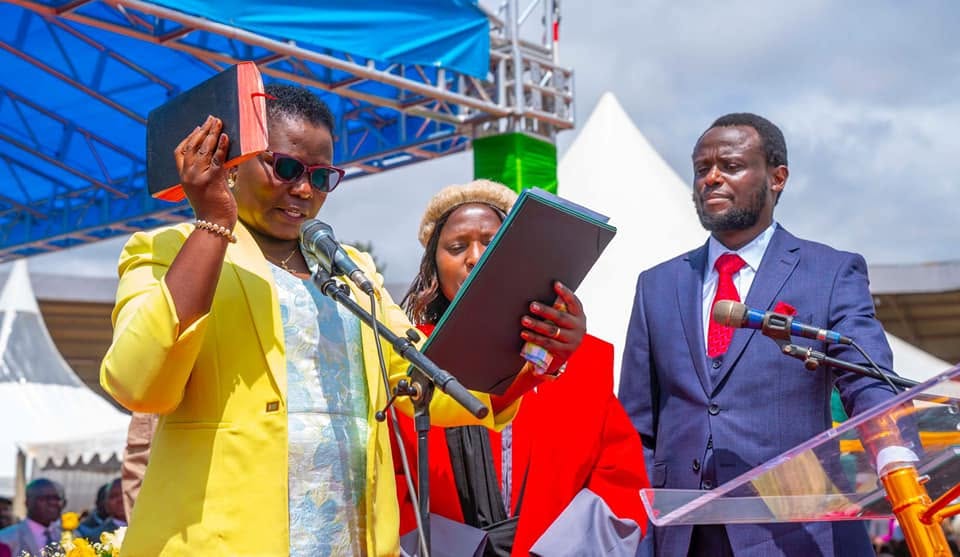
Despite these invisible walls, progress is happening. Resources and mentorship programs supported by groups like UN Women in Kenya and local advocates are helping more women win gubernatorial, senatorial, and parliamentary seats, slowly shattering the barrier. Kenyan women are slowly taking top leadership roles in politics, law, and business. A major example is Martha Koome, who became the first female Chief Justice of Kenya and the first woman to lead a judiciary in East Africa. Additionally, six women won powerful political races to run county governments as governors: Anne Waiguru (Kirinyaga) Gladys Wanga (Homa Bay) Susan Kihika (Nakuru) Wavinya Ndeti (Machakos) Cecily Mbarire (Embu) and Faith Kawira Mwangaza former Governor (Meru).
Drivers of Change in women leadership in Kenya
The 2010 Kenyan Constitution introduced affirmative action provisions, such as the County Woman Representative seats and the push for the two-thirds gender principle, boosting female representation in Parliament
Corporate and Government Initiatives
Kenyan government and organizations actively promote gender diversity in leadership to bridge the country's gender gap. Different organizations pursues gender balance through internal structural reforms and equitable distribution of leadership roles. The framework for Gender Equality and Women's Empowerment addresses governance, economic inclusion, and social justice.
Women Empowerment Networks
The rise of women-led networks and organizations dedicated to leadership development has been instrumental in breaking down the barriers that Kenyan women face. Networks like The African Women's Development and Communication Network is a pan-African feminist network based in Kenya that lobbies for gender equality and amplifies women's voices in policy. Some of these networks are: A movement of grassroots women leading community transformation, land rights advocacy, and local development. The Coalition on Violence against Women works nationally to end gender-based violence, challenge harmful cultural norms, and promote female leadership. A national feminist organization providing legal aid, fighting sexual and gender-based violence (SGBV), and supporting local women-led shelters. These networks create safe spaces for women to share experiences, learn from each other, and build the confidence needed to navigate the challenges of leadership.
Educational and Leadership Programs
Education plays a critical role in shaping future leaders, and numerous programs across Kenya are dedicated to providing women with the skills and knowledge required to succeed in leadership. Educational institutions in various counties are increasingly offering specialized leadership courses aimed at empowering women.
Different program provides women with access to leadership development training, focusing on essential skills such as strategic decision-making, team management, and self-leadership. These types of programs help bridge the gap in leadership skills and ensure that women are prepared to compete for top positions in both the public and private sectors. Also several international organizations have partnered with African institutions to deliver targeted leadership training for women.
Opportunities in Women in Leadership
As Kenya undergoes rapid economic, social, and political transformation, the future of women in leadership holds great promise. Several emerging trends and opportunities are paving the way for more women to ascend to leadership roles across industries and sectors. These developments, along with policy changes and supportive ecosystems, offer the potential to accelerate gender parity in leadership.
Rising Trends and Policy Changes
The digital revolution in Kenya has opened new doors for women leaders, particularly in technology and entrepreneurship. The growing tech sector offers numerous opportunities for women to innovate and lead startups. Women are increasingly founding and leading tech-driven enterprises that address key societal challenges, such as access financial services, education and healthcare.
Similarly,Kenyan creative and cultural industries provide significant leadership opportunities for women. From media and entertainment to fashion and the arts, women are playing central roles in shaping Africa’s global cultural footprint. The expansion of these sectors, combined with the digitalization of content creation and distribution, is empowering women to lead and influence narratives at both local and international levels.
Government interventions have also played a critical role in advancing gender equality in leadership. Many African countries have implemented gender quotas or other affirmative action policies aimed at increasing women’s representation in both political and corporate leadership.
In Kenya, corporate governance frameworks have encouraged gender diversity on boards, leading to an increase in women’s representation in top management. Other countries, such as Kenya and Uganda, have introduced similar policies, leading to incremental progress in gender-balanced leadership. These policy interventions are proving to be effective in driving change, but there is still much work to be done in ensuring that gender quotas are met and that women have equal access to leadership opportunities across all sectors.
African women face major hurdles
African women face major hurdles reaching top leadership roles due to cultural norms, workplace biases, and systemic inequalities.
Cultural and Societal Barriers
Traditional Roles & Societal Expectations Societal norms form the foundational barrier to female leadership, often dictating gender roles long before a woman enters the workforce. The Male Leadership Paradigm: Historically, public life, governance, and tribal or organizational leadership were held exclusively by men. Because of this historical inertia, societies subconsciously conflate "leadership" with masculinity. The Private vs. Public Sphere: Traditional structures relegate women to the private sphere (domestic care, child-rearing) and men to the public sphere (breadwinning, decision-making). When a woman attempts to enter the public sphere of leadership, she is often viewed as violating a social contract, leading to social resistance and community skepticism. The Persona Paradox (Gender Biases): Society socializes men to be competitive and assertive, traits highly valued in leaders. Conversely, women are socialized to be nurturing and communal. When a woman exhibits leadership traits like decisiveness or authority, it creates a psychological clash in the minds of others, who view her as "unnatural" or "defiant."
Workplace Bias and Discrimination
Even when women overcome societal barriers to enter the professional world, they encounter institutional hurdles designed around a traditionally male career trajectory.
The Glass Ceiling and the "Broken Rung": The "glass ceiling" refers to the invisible, unacknowledged barrier that prevents women from rising to upper-corporate tiers. However, research shows the problem starts earlier with the "broken rung"—women are far less likely to be promoted from entry-level positions to their first managerial roles, stalling their career growth from the outset. The Likability vs. Competence Trap (Double Standards): This is one of the most pervasive workplace biases. Assertive men are praised as "go-getters," "decisive," and "strong." Assertive women face labels like "abrasive," "aggressive," or "difficult." To be successful, a woman must often balance being highly competent while remaining unthreateningly likable—a exhausting tightrope act men rarely have to walk. The Cycle of Missing Role Models: Because fewer women reach the top, young female professionals look upward and see an exclusively male leadership team. This creates a psychological barrier ("I don't belong there") and deprives them of visible blueprints for navigating corporate politics as a woman.
Access to Education and Professional
Networks Success in leadership relies heavily on human capital (education) and social capital (networks). Women face systemic disadvantages in acquiring both.The Pipeline Problem: In many developing or rural regions, families with limited resources prioritize boys' education over girls' due to traditional expectations. Furthermore, globally, women remain underrepresented in high-paying, high-influence pipeline fields like STEM (Science, Technology, Engineering, and Math), finance, and political science, which are traditional stepping stones to executive power. The Sponsorship Gap: While women are often heavily mentored (given advice), they are severely under-sponsored. A sponsor is an influential leader who uses their personal political capital to advocate for a promotion behind closed doors. Without these powerful allies, women struggle to penetrate closed professional networks. Balancing Family and Career The collision between biological timelines, domestic expectations, and corporate structures forces many women out of the leadership track during their peak career-growth years. The Second Shift: Even in dual-income households where both partners work full-time, studies consistently show that women perform a disproportionate share of unpaid domestic labor and caregiving (for both children and aging parents). This effectively means women work a "second shift" at home. The Structural Mismatch: The traditional path to leadership requires intense, uninterrupted dedication during a professional's 20s and 30s—which directly coincides with prime childbearing and early child-rearing years. Corporate structures that measure commitment by "face time" or late-night availability inherently penalize mothers. Opting Out vs. Pushed Out: When workplace policies lack flexibility, affordable childcare, or robust paid parental leave, the physical and emotional toll leads to extreme burnout. Many talented women do not willingly "opt out" of the pipeline; rather, they are systematically pushed out by inflexible environments, choosing roles with less responsibility simply to maintain sanity and family stability.
The call to action
Governments, businesses, educational institutions, and individuals must work together to create a leadership landscape that embraces gender diversity and empowers women to lead. In doing so, Africa will unlock the full potential of its talent and ensure that its progress is truly shared by all.










Comments (0)
No comments yet. Be the first to share your thoughts!