

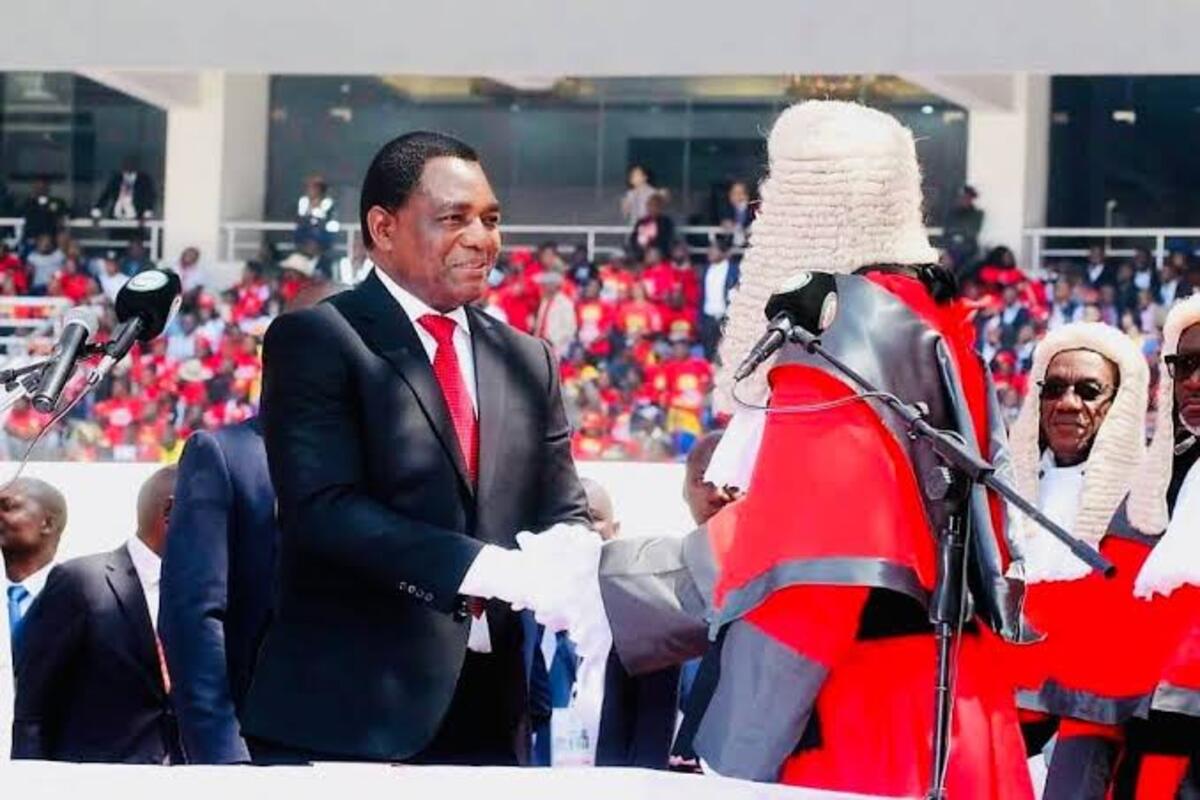
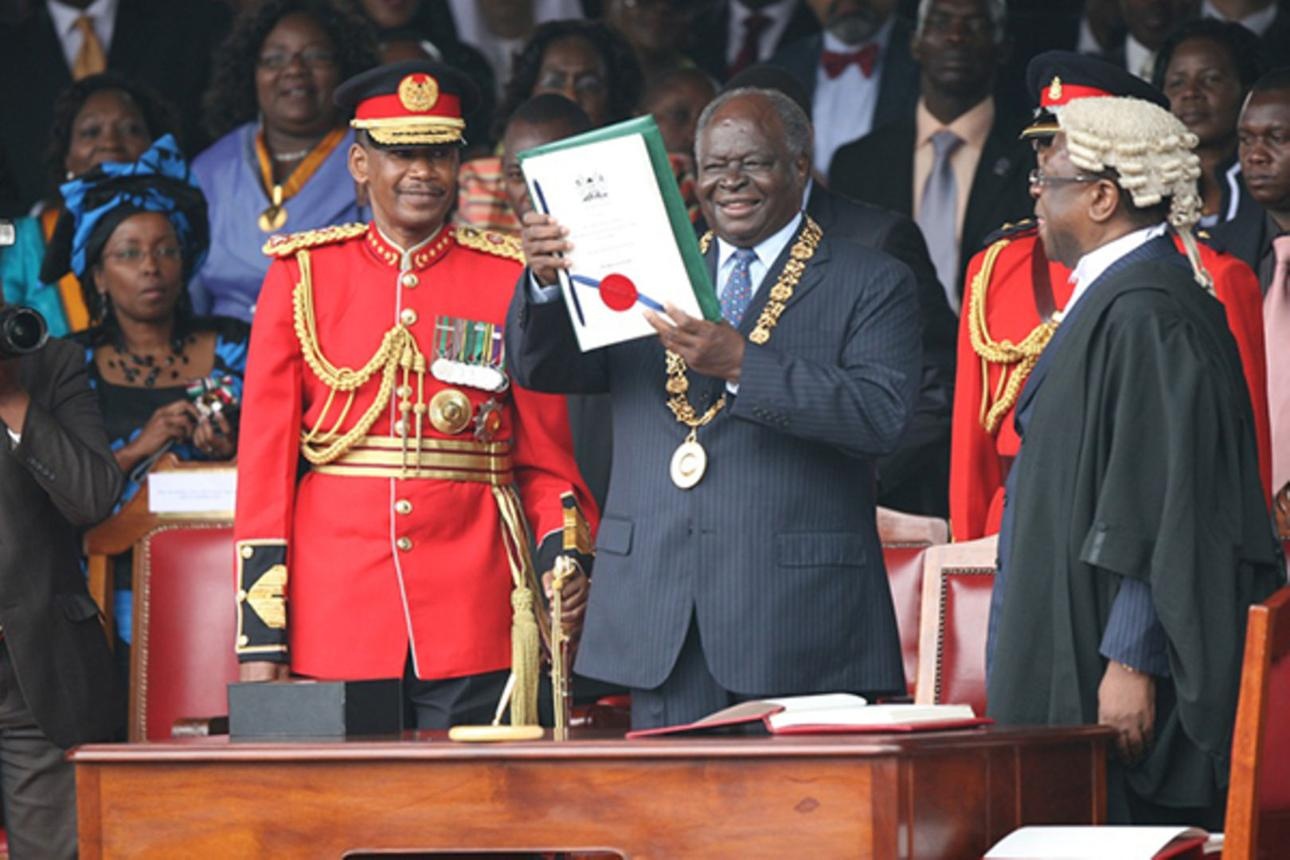
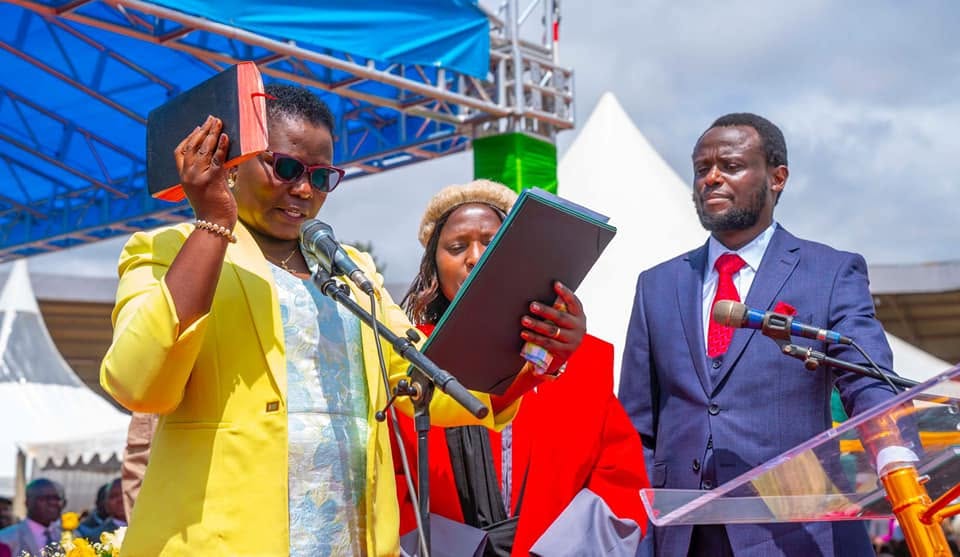
Hichilema and Vice-President Mutale Nalumango were sworn in on Tuesday at Lusaka’s National Heroes Stadium before thousands of Zambians and a gathering of African leaders and foreign dignitaries. Chief Justice Mumba Malila administered the constitutional oath, formally beginning Hichilema’s second mandate after his victory in the August 13 presidential election.
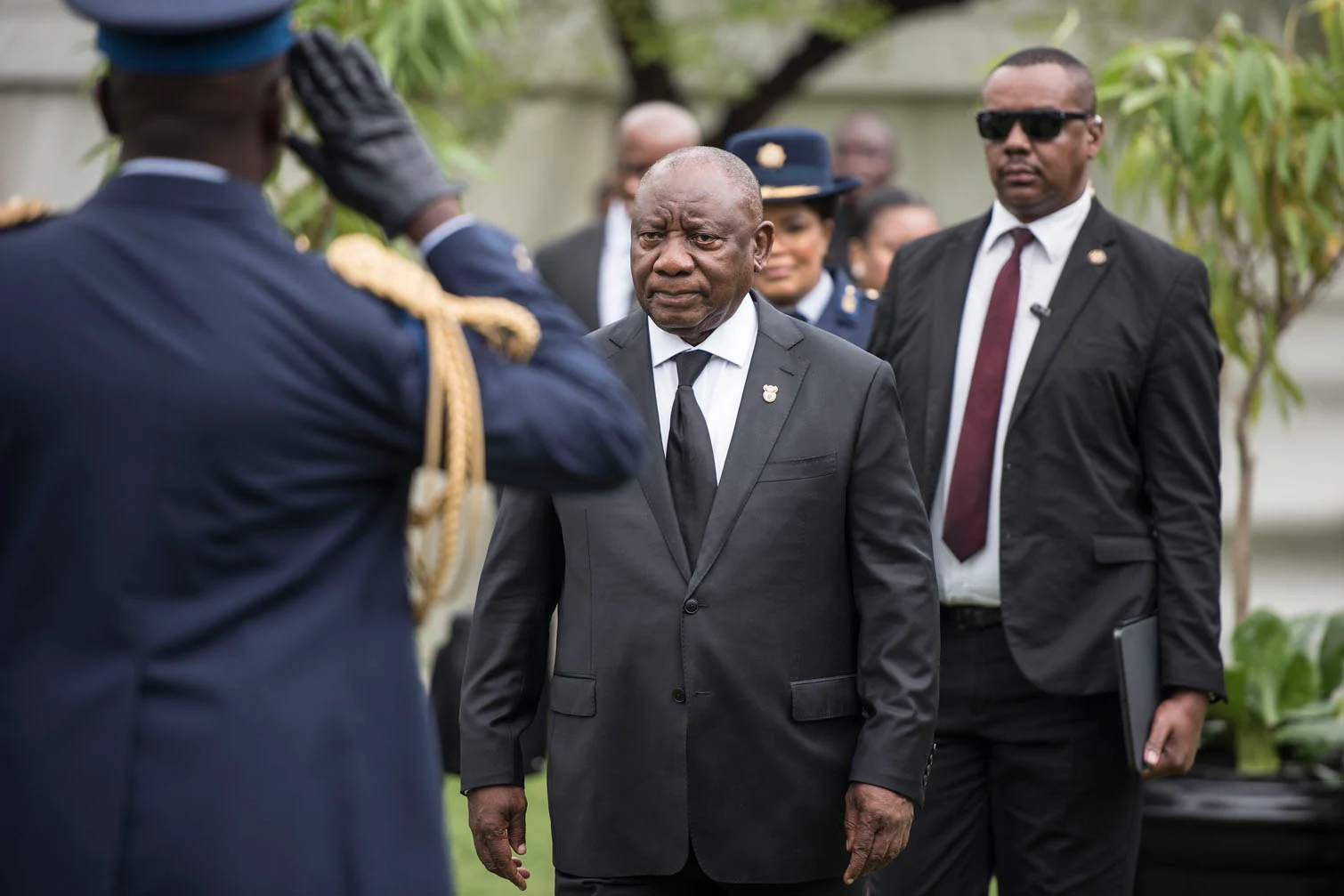
The ceremony carried all the symbolism of a major national occasion. Hichilema inspected the Guard of Honour, received a 21-gun salute and watched a military fly-past as supporters celebrated his return to office. Presidents from Kenya, Tanzania, Zimbabwe, Botswana and Namibia attended, alongside senior representatives from China, the United States, the United Arab Emirates and other countries.

However, behind the celebrations lies a more complicated political reality.
Hichilema secured roughly 60 per cent of the vote, according to Zambia’s Electoral Commission, defeating his main challenger Brian Mundubile, who rejected the result and raised allegations of irregularities during the electoral process. The election was followed by the arrest and detention of Mundubile and his running mate, Makebi Zulu, on treason-related allegations that they reject.
International observers and rights groups have raised concerns about the political environment surrounding the election, including allegations of intimidation, restrictions on opposition activities and the treatment of opposition figures. Reuters reported that observers described the election as chaotic and marked by serious irregularities, while Hichilema's government has maintained that his victory reflects the will of Zambian voters.
The controversy creates a difficult backdrop for a president who first came to power in 2021 promising a new political direction after years of economic difficulties and growing concerns over democratic governance.
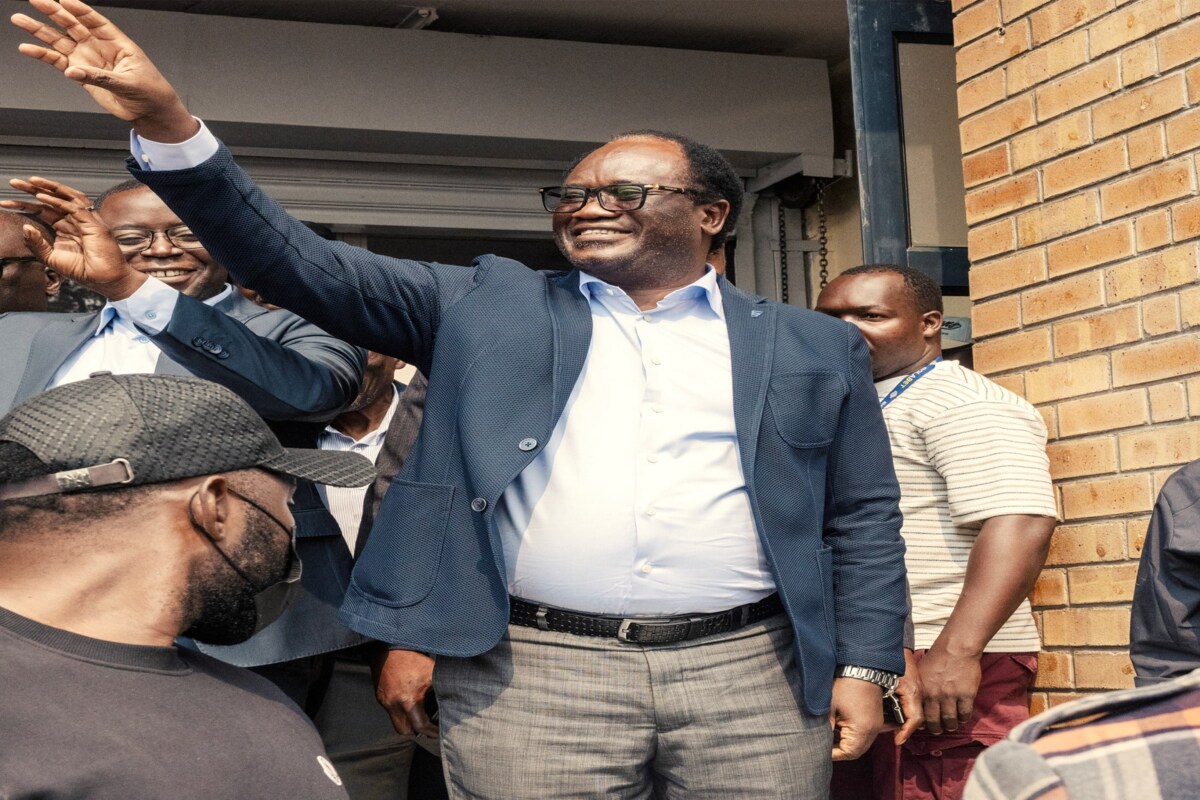
From ‘New Dawn’ to ‘Grow Zambia’
Hichilema's message at the inauguration was deliberately focused on what comes next rather than the disputes surrounding the election.
Five years after campaigning under the banner of a “New Dawn”, he unveiled what he described as the Grow Zambia agenda, shifting the emphasis from stabilising the economy to expanding production, investment and opportunities for ordinary citizens.
The president pointed to debt restructuring, improved foreign exchange reserves, lower inflation and greater fiscal discipline as achievements of his first administration. He also highlighted the expansion of free education and the Constituency Development Fund as examples of policies intended to bring government resources closer to citizens.
Nevertheless, Hichilema acknowledged that economic stability has not automatically translated into better living standards for every Zambian a distinction that could define his second term.
For many households, improvements in macroeconomic indicators matter little if food, electricity, transport and other essentials remain expensive. Hichilema therefore faces pressure to convert economic reforms into jobs, higher household incomes and tangible improvements in everyday life.
His government has set ambitious targets in agriculture, energy, tourism and industrialisation. Among the targets outlined under his economic blueprint are increasing maize production to 10 million tonnes, expanding electricity generation capacity to 10,000 megawatts and attracting five million international tourists annually.
A Country Looking Beyond Copper
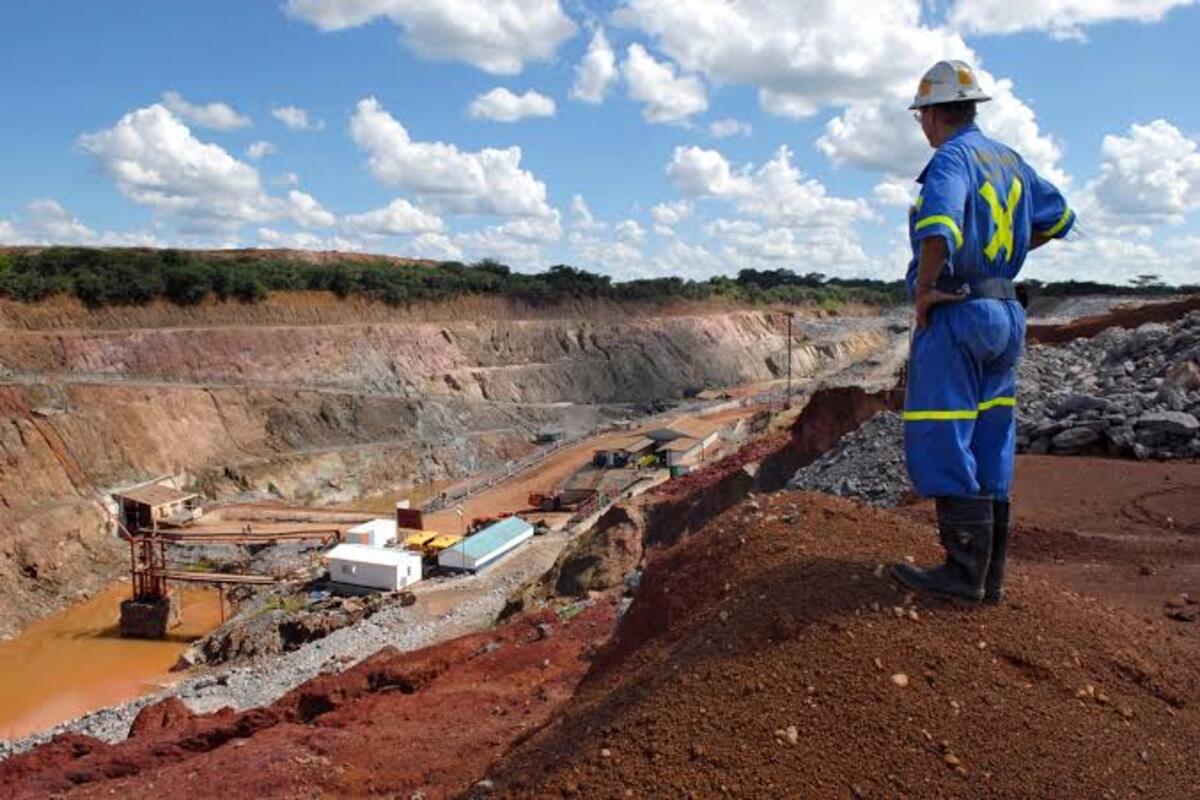
Zambia's economic future remains closely connected to mining, particularly copper, which has long been one of the country's most important sources of foreign exchange.
Hichilema now wants to push the economy beyond the traditional model of exporting raw resources.
The administration is placing greater emphasis on manufacturing, agricultural production, energy and value addition. The ambition is to create an economy capable of producing more goods locally rather than relying heavily on imports and exporting minerals without capturing a larger share of their downstream value.
Zambia is strategically important to the African mining industry and sits at the intersection of major regional trade corridors connecting the southern and central parts of the continent. Its economic performance therefore has implications beyond its borders, particularly for neighbouring countries that depend on Zambian infrastructure, energy and trade routes.
The presence of leaders from across the region at Hichilema's inauguration also reflected Zambia's wider importance within organisations such as the Southern African Development Community and the Common Market for Eastern and Southern Africa.
The Democratic Question
Yet economic ambition will not be enough to define Hichilema's second term.
The president also faces the challenge of rebuilding confidence in Zambia's democratic institutions.
When Hichilema won power in 2021, his victory was widely viewed as a demonstration of Zambia's tradition of peaceful transfers of power. His government inherited a country facing debt distress and economic difficulties, while his supporters portrayed the change in leadership as a decisive break from the past.
Five years later, the political atmosphere is considerably more complicated.
The detention of his main electoral rival and the controversy surrounding the election have raised questions about how Zambia's democratic institutions will function during Hichilema's second term.
Hichilema used his inauguration speech to call for national unity and urged political competitors to treat one another as fellow Zambians rather than enemies. He also appealed for constructive criticism and stressed that political competition should not permanently divide the country.
The message will now have to be translated into practice.
Five Years to Prove the Promise
Hichilema enters his second term with something many African presidents spend years seeking which is political continuity.
He now has another five years to pursue his economic programme without the immediate pressure of securing another presidential mandate. That gives his administration an opportunity to deepen reforms, attract investment and accelerate infrastructure and industrial projects.
But it also means that the expectations of Zambians will rise.
The first term was largely defined by stabilisation. The second has been presented as the period of growth.
That means the measure of Hichilema's presidency will increasingly move away from what his government inherited and towards what it delivers.
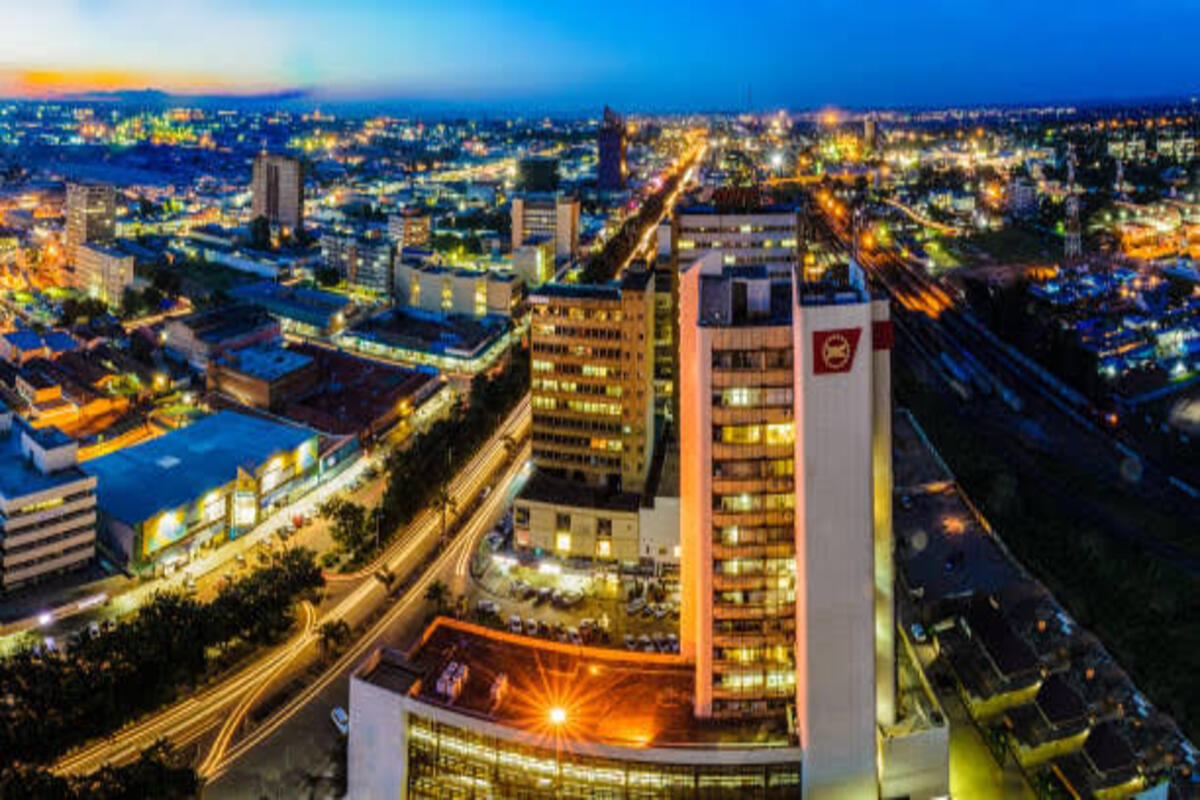
For Zambia, the question is no longer simply whether Hichilema can stabilise the economy.
It is whether he can turn stability into prosperity while simultaneously protecting the democratic institutions that helped make Zambia one of Africa's notable examples of peaceful political transitions.







Comments (0)
No comments yet. Be the first to share your thoughts!