


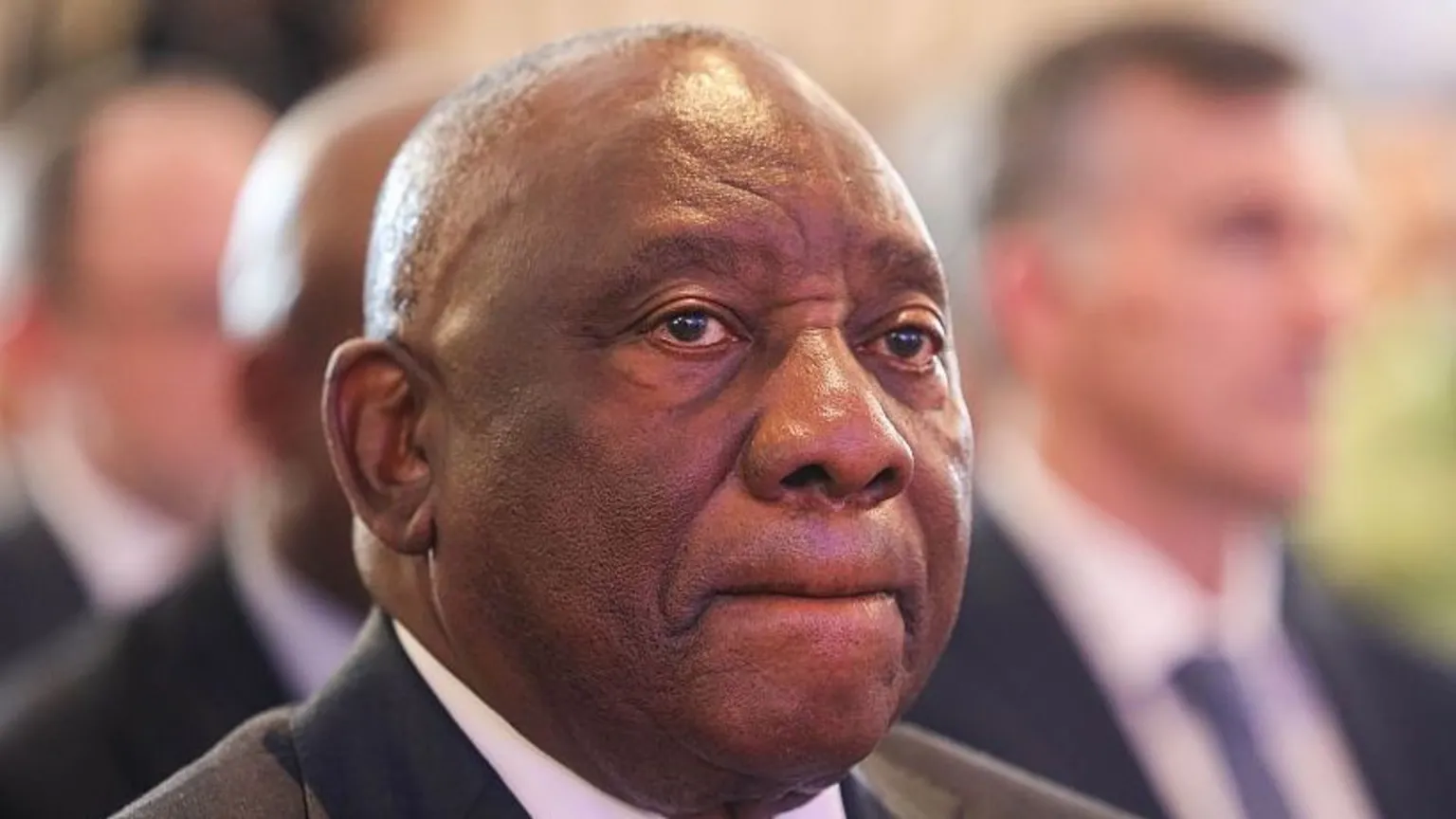
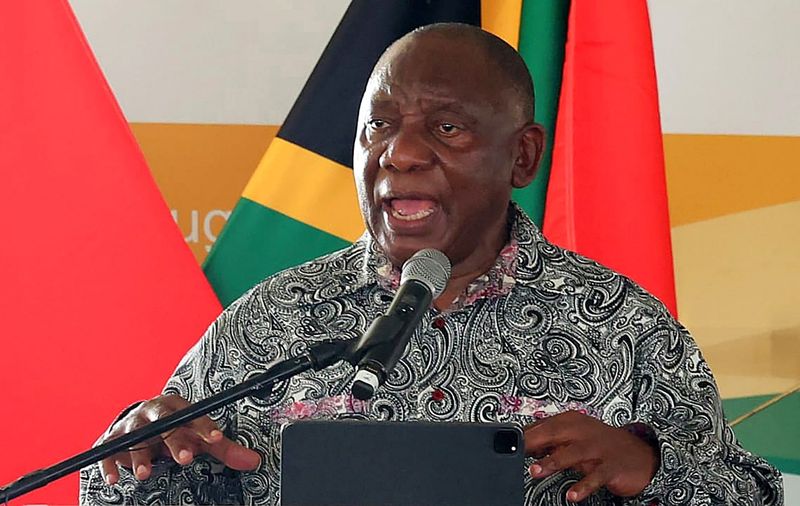
South African President Cyril Ramaphosa has won a major legal victory after the Western Cape High Court set aside the parliamentary report that found he may have committed serious misconduct in connection with the theft of foreign currency from his Phala Phala game farm.
The unanimous judgment, delivered on Wednesday, 25 November 2026, removes the immediate legal foundation for the impeachment process that had been revived earlier this year.

The court found that the independent parliamentary panel responsible for investigating the allegations had exceeded its lawful mandate, applied the wrong legal test and made material errors in assessing the evidence.
The ruling also declared unlawful and set aside the steps taken by the National Assembly on the basis of the report.
The decision represents a significant development in a scandal that has threatened Ramaphosa’s political future since it became public in 2022.
However, the judgment does not bring the controversy to a definitive end. Opposition parties have criticised the outcome and the possibility of an appeal remains. Parliament is also considering the implications of the ruling for its impeachment committee.
The immediate consequence is that the impeachment process can no longer proceed on the basis of the report in its original form.
How the Phala Phala Scandal Began
The controversy centres on a burglary at Ramaphosa’s private game farm, Phala Phala, in Limpopo, on 9 February 2020.
The incident became public in June 2022 when former intelligence chief Arthur Fraser lodged a criminal complaint against the president.
Fraser alleged that approximately $4 million in foreign currency had been stolen from the farm and accused Ramaphosa of concealing the incident from the authorities.
The allegations raised questions about the source of the money, whether the theft had been properly reported and whether the president’s security personnel had become involved in an unofficial investigation to recover the stolen funds.
Ramaphosa denied wrongdoing.
He maintained that the money was the proceeds of a legitimate sale of 20 buffalo to a Sudanese businessman and that he had reported the burglary to his security chief.
The president also denied that he had instructed anyone to conduct an unlawful investigation or interfere with the work of the police.
The scandal attracted widespread political attention because of the constitutional responsibilities attached to the office of the president and the potential implications for public confidence in government.
It also placed Ramaphosa under pressure within the governing African National Congress (ANC), where his political opponents called for him to resign.
The Parliamentary Panel That Triggered the Impeachment Debate
Following the allegations, Parliament established an independent panel under Section 89 of the Constitution to determine whether there was sufficient evidence to justify initiating impeachment proceedings against the president.
The panel was chaired by former Chief Justice Sandile Ngcobo, with advocate Mahlape Sello and retired judge Thokozile Masipa serving as members.
In November 2022, the panel released a report concluding that the information before it indicated, on a prima facie basis, that Ramaphosa may have committed serious violations or misconduct.
The report identified four areas of concern.
These included allegations relating to the president’s farming business and whether it was compatible with his constitutional responsibilities, the handling and reporting of the burglary, the alleged involvement of presidential security personnel and claims that the president had improperly sought assistance from Namibia in connection with the investigation.
The panel’s findings were not a criminal conviction or a final determination that Ramaphosa had committed misconduct.
Rather, they were intended to establish whether the allegations warranted further consideration by Parliament.
The report nevertheless created the possibility of impeachment and placed the president under significant political pressure.
In December 2022, the National Assembly voted against adopting the report, preventing the impeachment process from proceeding at that time.
The ANC, which then held a parliamentary majority, voted against the report.
Ramaphosa subsequently survived the immediate political threat, although the legal dispute over the report continued.
Constitutional Court Decision Revives the Process
The controversy returned to the courts after several political parties challenged Parliament’s decision to reject the report.
In May 2026, the Constitutional Court ruled that Parliament had acted irrationally in blocking the impeachment process and ordered that the report be referred to an impeachment committee.
The decision revived a process that had been dormant since 2022 and placed Ramaphosa under renewed legal and political pressure.
Parliament began preparing for the next stage of the inquiry, with lawmakers expected to establish the procedures and timetable for examining the allegations.
Ramaphosa, however, challenged the validity of the original panel report in the Western Cape High Court.
His legal team argued that the panel had misunderstood its mandate, relied on inadequate evidence and made errors in its interpretation of the law.
The president’s application sought to have the report reviewed and set aside.
The outcome of that challenge became particularly significant because the impeachment process depended on the validity of the report.
Why the High Court Overturned the Report
The Western Cape High Court delivered a unanimous judgment, finding that the panel had fundamentally misunderstood the nature of its responsibilities.
The court emphasised that the panel was not conducting a trial or deciding whether the president was guilty of misconduct.
Its role was to assess whether the evidence met the legal threshold required to recommend that Parliament consider impeachment proceedings.
The judges found that the panel had confused the requirement for sufficient evidence with the lower standard of prima facie evidence.
In other words, the panel had treated the existence of a possible case to answer as sufficient, without properly determining whether the information met the standard required under the parliamentary rules.
The court also found that the panel had gone beyond the four allegations that Ramaphosa had been asked to address.
According to the judgment, the panel considered additional information concerning the source of the foreign currency and the movements of presidential security chief Major-General Wally Rhoode.
The judges concluded that these issues had not been properly connected to the charges the panel was required to assess.
The court further criticised the panel’s reliance on parts of Fraser’s affidavit, finding that some of the information was hearsay or unsupported by evidence demonstrating its reliability.
The judgment also addressed the panel’s interpretation of the law governing the president’s business interests.
The panel had raised concerns about Ramaphosa’s involvement in a farming business while serving as president.
However, the court found that the panel had failed to properly consider the relevant legislation and executive ethics rules, which allow certain disclosed financial interests that do not create conflicts of interest.
The judges also found errors in the panel’s assessment of the allegation that Ramaphosa had failed to report the burglary to the Hawks.
The court said the panel had not adequately considered whether the alleged conduct was intentional or carried out in bad faith.
On the allegations involving the president’s security personnel and the investigation, the court found that the panel had failed to establish a sufficient factual basis for its conclusions.
The court ultimately ruled that the report could not stand.
It declared the report unlawful and set it aside in its entirety, together with the steps taken by Parliament on the basis of the report.
The judges stressed that their decision did not mean that Ramaphosa should be exempt from a lawful impeachment process.
Rather, any such process must be based on a legally valid foundation.
What the Ruling Means for Ramaphosa
The judgment is a significant victory for Ramaphosa, both legally and politically.
The president had faced renewed pressure following the Constitutional Court’s decision in May to revive the impeachment process.
The High Court ruling has now removed the report that formed the basis of that process.
This means that the immediate threat of impeachment has been substantially reduced.
The decision also strengthens Ramaphosa’s position within the ANC as the party prepares for its next leadership conference in 2027.
The president is expected to remain in office until the end of his current presidential term in 2029, although he is expected to step down as ANC leader at the party’s next leadership conference.
The Phala Phala scandal had provided his political opponents with a powerful argument against his leadership.
The court ruling weakens that argument, at least in relation to the parliamentary report.
However, the president continues to face political challenges, including criticism of his administration’s performance, economic conditions and the broader state of governance in South Africa.
The ruling does not resolve those issues.
Opposition Parties Criticise the Judgment
The judgment has drawn criticism from political opponents who believe the impeachment process should continue.
The African Transformation Movement, which supported efforts to pursue impeachment, criticised the decision and indicated that it would consider an appeal.
The party argued that the outcome raised concerns about accountability and the application of constitutional standards to the president.
Other opposition parties have also maintained that the underlying allegations surrounding the Phala Phala burglary remain matters of public interest.
The court’s decision, however, was not a determination of whether the president committed the alleged misconduct.
It was a ruling on the legality of the parliamentary panel’s report and the process through which it was produced.
This distinction is central to understanding the outcome.
The court did not conduct a criminal trial, nor did it determine the full factual circumstances surrounding the burglary.
Instead, it concluded that the parliamentary report could not lawfully serve as the basis for the impeachment process.
Parliament Considers Its Next Steps
The ruling has left Parliament with the task of determining how to proceed.
National Assembly Speaker Thoko Didiza has indicated that she will study the judgment and its implications for Parliament and the impeachment committee.
Parliament must now consider the effect of the court’s order on the existing proceedings.
The immediate question is whether the impeachment process can continue in any form, or whether further legal and parliamentary steps would be required before the allegations could be considered again.
The court’s decision to set aside the report means that Parliament cannot simply continue relying on the findings that were declared unlawful.
Any further action would need to comply with the constitutional and procedural requirements governing impeachment.
The judgment may also lead to further litigation if opposition parties decide to challenge the ruling.
For now, Parliament’s next steps remain uncertain.
A Political Victory, but Not the End of the Phala Phala Controversy
The Phala Phala scandal has become one of the most consequential political controversies of Ramaphosa’s presidency.
It has raised questions about transparency, accountability and the standards expected of South Africa’s highest public office.
The High Court ruling provides Ramaphosa with substantial legal relief by removing the parliamentary report that threatened to trigger impeachment proceedings.
However, the political debate surrounding the scandal is likely to continue.
Opposition parties may pursue further legal challenges, while Parliament must determine how to give effect to the judgment.
The ruling also highlights the importance of ensuring that constitutional accountability mechanisms operate within the law.
Impeachment is one of the most serious processes available to Parliament and the court has made clear that it must be conducted on a lawful and properly established basis.
For Ramaphosa, the decision removes an immediate threat to his presidency.
For South Africa, the wider question of political accountability remains unresolved.
The coming weeks will determine whether the judgment brings the parliamentary process to a close or becomes the beginning of another chapter in the long-running Phala Phala dispute.
Sources: Reuters, Associated Press, Financial Times, IOL and the Western Cape High Court judgment.




Comments (1)