


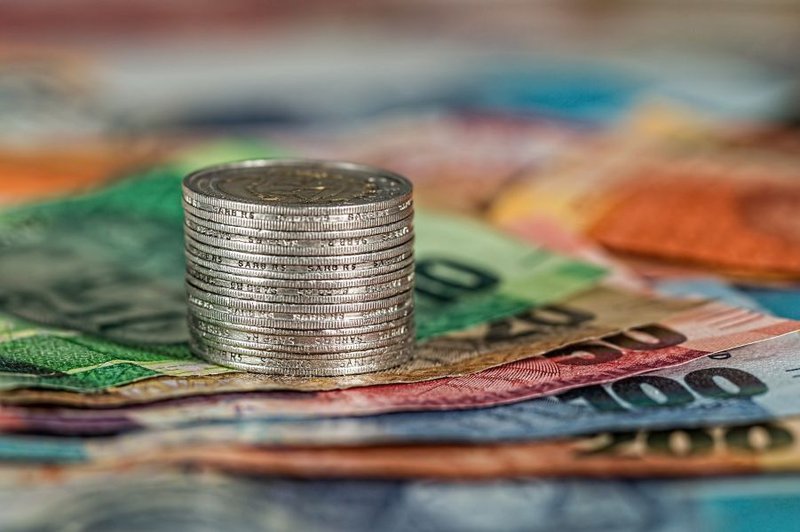
South Africa has received a significant boost to its international financial standing after S&P Global Ratings upgraded its long-term foreign-currency sovereign credit rating from BB to BB+, bringing it to its highest level since 2017.
The decision, announced on 27 November 2026, reflects improving government finances, stronger fiscal performance and expectations that the country's debt burden will gradually decline.

In another important development, S&P restored South Africa's long-term local-currency credit rating to BBB−, bringing rand-denominated government debt back into investment-grade territory for the first time in more than a decade.
The announcement signals renewed confidence in South Africa's economic management following years of weak growth, rising public debt and infrastructure challenges. However, the country still faces considerable economic obstacles.
Improving public finances drive the upgrade
One of the key factors behind the decision is South Africa's improving fiscal position.
For years, government expenditure exceeded revenue, forcing the state to borrow increasingly large amounts to finance its obligations. Rising debt-service costs subsequently placed pressure on public finances, limiting the resources available for infrastructure, healthcare and other development priorities.
The latest figures suggest that this situation is beginning to change.
Government debt reached approximately 74.6% of GDP in the 2025/26 financial year, below the previously projected 78.4%. South Africa has also maintained three consecutive years of primary budget surpluses and is expected to record a fourth in the 2026/27 financial year.
A primary budget surplus occurs when government revenue exceeds expenditure before interest payments on existing debt.
S&P expects fiscal consolidation to continue towards 2029, supporting a gradual reduction in the country's debt burden.
These developments suggest that government is making progress towards restoring financial stability after years of increasing borrowing requirements.
What does the new credit rating mean?
The distinction between South Africa's foreign-currency and local-currency ratings is important.
The foreign-currency rating has improved from BB to BB+, placing South Africa one notch below investment grade. The local-currency rating has been restored to BBB−, which represents investment-grade status.
This distinction matters because foreign-currency debt exposes governments to additional risks associated with exchange-rate movements and access to international currencies, while local-currency debt is denominated in the country's own currency.
S&P has also assigned a stable outlook, suggesting that the agency expects the country's financial position to remain broadly balanced, although further improvements are not guaranteed.
The upgrade could strengthen South Africa's reputation among international investors, particularly institutions that consider sovereign credit ratings when allocating capital.
A boost for investors and businesses
A stronger credit rating can have important implications for South Africa's investment environment.
One potential benefit is lower government borrowing costs. When investors perceive a country as less risky, they may demand smaller returns when purchasing its government bonds.
Improved sovereign credibility can also benefit businesses because corporate borrowing costs are influenced, in part, by the financial risk associated with operating in a particular country.
South Africa could also become more attractive to international institutional investors, particularly those whose investment mandates allow them to invest in investment-grade securities.
However, the foreign-currency rating remains below investment grade, meaning the upgrade does not automatically remove all restrictions affecting international investment.
The Johannesburg Stock Exchange could also benefit indirectly from improved investor sentiment, although corporate performance and global financial conditions will continue to influence share prices.
Economic reforms remain critical
The improved rating comes as South Africa continues implementing structural reforms aimed at addressing long-standing weaknesses in key economic sectors.
Through Operation Vulindlela, a joint initiative of the Presidency and National Treasury, government has prioritised reforms in electricity, transport, water and telecommunications.
Electricity reform is particularly important. Years of load-shedding disrupted businesses, increased operating costs and weakened industrial productivity. Greater private-sector participation, renewable energy investment and improvements to electricity transmission infrastructure are expected to strengthen energy security.
Transport is another major priority. Operational difficulties at Transnet have affected railway efficiency, port operations and the movement of goods, undermining the competitiveness of South African exports.
Improving these systems could reduce logistics costs, increase export capacity and strengthen South Africa's position as a regional trade and investment hub.
Successful implementation of these reforms will be essential to maintaining investor confidence and supporting long-term economic growth.
The challenges South Africa must still overcome
Despite the positive rating decision, South Africa's economic growth remains relatively modest.
S&P projects real GDP growth of approximately 1.3% in 2026, with average growth of around 1.7% over 2027–2029.
These projections highlight the scale of the challenge facing the country.
High unemployment, particularly among young people, remains one of South Africa's most pressing economic problems. Infrastructure deficiencies, inequality and weak business confidence also continue to constrain economic development.
Furthermore, government must maintain fiscal discipline while meeting substantial demands for spending on education, healthcare, social protection and infrastructure.
If expenditure increases faster than revenue, the improvements in public finances could be reversed.
The stable outlook therefore represents cautious optimism rather than an indication that South Africa's economic challenges have been resolved.
Africa Pro 24 Analysis: A stronger financial reputation must translate into economic opportunity
South Africa's latest credit-rating upgrade is an important milestone and a welcome development for an economy that has experienced years of financial pressure.
However, improved creditworthiness alone cannot deliver the economic transformation the country needs.
The real opportunity lies in using renewed international confidence to attract productive investment, expand manufacturing, strengthen agriculture, modernise infrastructure and develop competitive technology industries.
South Africa also has an opportunity to reinforce its position as a major investment and financial gateway to the African continent. Stronger regional trade, industrial partnerships and cross-border investment could help extend the benefits beyond its domestic economy.
Ultimately, the success of this development should not be measured solely by improved ratings or lower borrowing costs.
It should be measured by the jobs created, businesses expanded, infrastructure delivered and opportunities made accessible to ordinary South Africans.
The rating upgrade is a vote of confidence in South Africa's financial direction. The real achievement will be turning that confidence into sustainable economic growth and improved living standards.
Sources: S&P Global Ratings, Reuters, Moneyweb, Bloomberg, EWN and Jacaranda FM.













Comments (0)
No comments yet. Be the first to share your thoughts!