


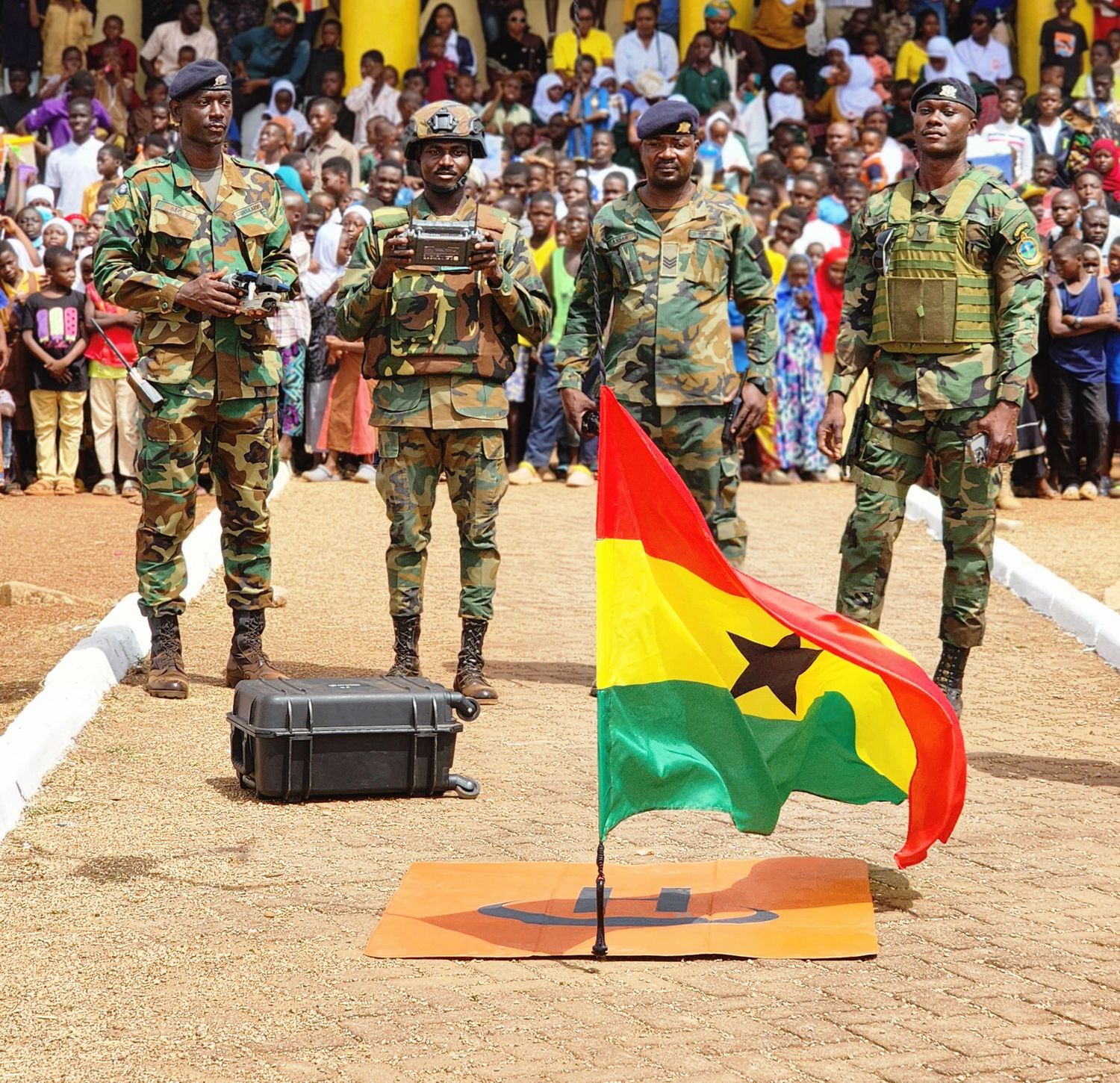
The military government of Guinea-Bissau had initially promised to conduct elections in December 2026, a year after seizing power. That promise is now broken. On Thursday, Transitional President General Horta Inta-a issued a decree announcing that the country would be unable to hold the vote as scheduled, pushing presidential and legislative elections to November 26, 2028.
The decree cited a lack of technical, material and financial resources needed to conduct a credible election. Holding the vote without meeting legal and operational requirements, it warned, could undermine its transparency, inclusiveness and credibility, as well as public confidence in the process. The announcement coincided exactly with the one-year anniversary of the November 26, 2025 coup.

Background and Context
The military government seized power from then-incumbent President Umaro Sissoco Embaló three days after general elections were held on November 23, 2025. The coup interrupted the electoral process before official results could be announced. Both Embaló and opposition candidate Fernando Dias had claimed victory—claims that remain unverifiable since the military annulled the results and, according to the National Electoral Commission, armed men destroyed most of the vote count.
The junta installed General Horta Inta-a, formerly army chief of staff, as transitional president for what was meant to be a one-year period. A transitional charter published in early December explicitly barred him from running in the eventual election.
Prime Minister Ilídio Vieira Té had signaled last month that conditions for holding elections in December were not yet in place, though he offered no alternative date at the time.
The postponement follows a military-organized referendum in August 2026, in which voters approved constitutional changes that significantly expanded presidential powers and reduced the size of parliament from 102 to 65 seats. The referendum was boycotted by the main opposition party, the African Party for the Independence of Guinea and Cape Verde (PAIGC), which warned that the changes risked concentrating too much power in the presidency.
With this decree, the hopes of the electorate for an election have been dashed once again.
Reaction and Regional Pressure
The announcement has not drawn significant immediate commentary from the international scene. However, the Economic Community of West African States (ECOWAS) had earlier urged the military junta to keep to its word and transition the country back to democracy in a "credible and transparent" manner. Both ECOWAS and the African Union suspended Guinea-Bissau from their decision-making bodies following the 2025 coup.
Guinea-Bissau has been among a host of nations that have attracted Western scrutiny and rebuke, alongside Burkina Faso—now in its fourth year of military rule—as well as Mali and Niger. The European Parliament condemned the coup and subsequent human rights abuses, calling for the immediate release of arbitrarily detained persons and urging regional actors to support the restoration of democratic order.
Onlookers have expressed concern about the political instability in Guinea-Bissau and worry about the nation's political future.
A History of Instability
Guinea-Bissau has been plagued by coups and political instability since gaining independence from Portugal in 1973. The country has experienced at least nine attempted and successful coups since 1974 and the UN has described it as a "narco-state" due to its role as a transit hub for cocaine bound for Europe.
The current military government seized power in November 2025 and now looks set to stay in power until at least 2028. If the government can successfully conduct the elections as scheduled, it would amount to three years of military rule—triple the initial one-year transition period promised to both domestic stakeholders and international partners.
The ousted President Embaló, who has been living in exile in Morocco, had said he intended to run in the December elections. However, the military government barred him from returning to the country last month, citing security and public order concerns. The transitional charter also bars Inta-a from running, leaving the political future of both key figures uncertain.
With reporting from Arise News, Al Jazeera, The Associated Press, BBC and Xinhua.





Comments (0)
No comments yet. Be the first to share your thoughts!