


Kenya’s public healthcare system is facing a potentially deeper crisis after doctors threatened to join an ongoing nurses’ strike that has already disrupted services across the country for six weeks.
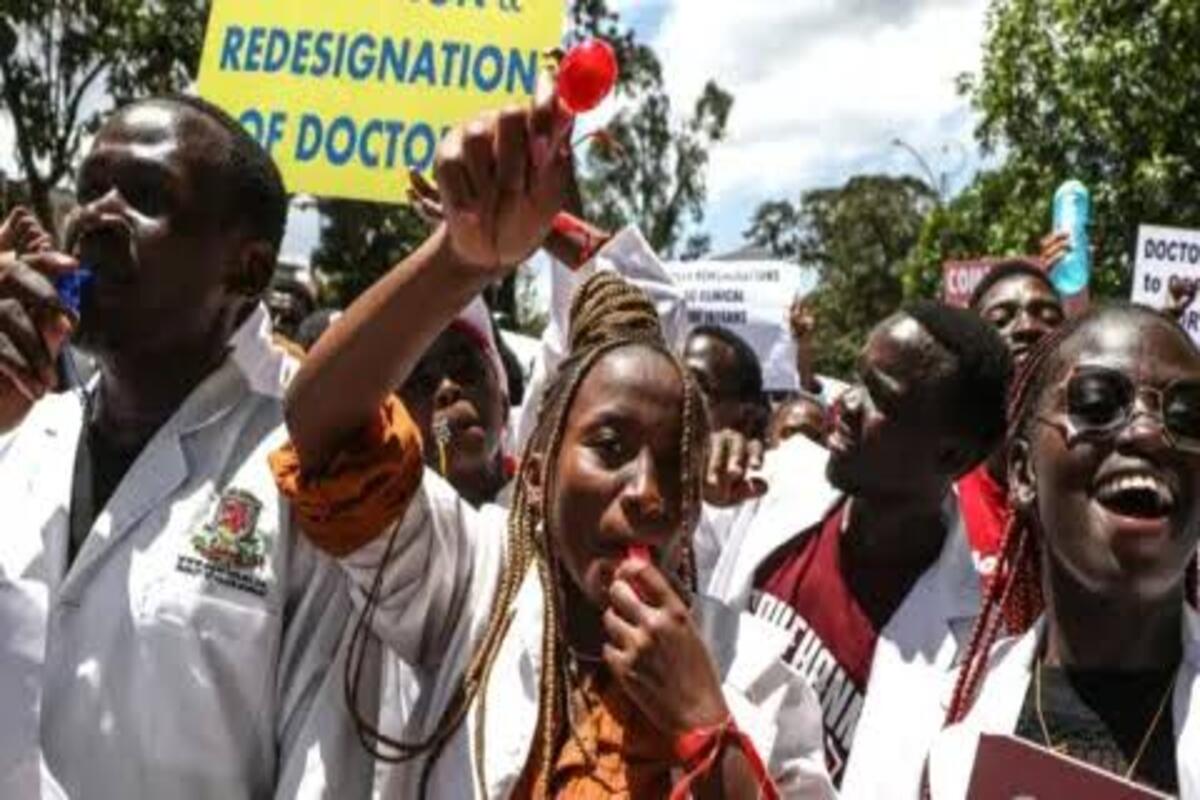
The Kenya Medical Practitioners, Pharmacists and Dentists Union (KMPDU) has given the government seven days to resolve the nurses’ dispute, warning that doctors could issue a strike notice if the standoff remains unresolved. The ultimatum comes as doctors say they are increasingly overwhelmed by the additional responsibilities created by the shortage of nurses in public hospitals.

The development could significantly worsen the situation for millions of Kenyans who depend on public hospitals for treatment. While doctors have continued working during the nurses’ industrial action, KMPDU Secretary-General Dr Davji Bhimji Atellah said doctors could not continue performing duties normally handled by nurses, particularly when the country is already experiencing shortages of medical personnel.
A dispute that has lasted six weeks
The nurses’ strike is rooted in a dispute over the implementation of a 2017 collective bargaining agreement. The agreement followed a previous six-month nurses’ strike and included provisions on remuneration and working conditions.
However, nurses say key commitments have remained unfulfilled for years. They have argued that allowances contained in the agreement have not been adequately implemented, while the government has pointed to financial constraints as one of the reasons for the delay.
The prolonged dispute has now moved beyond negotiations between healthcare workers and government officials. Public hospitals in several parts of the country have experienced disruption, while some facilities have reportedly reduced or suspended services.
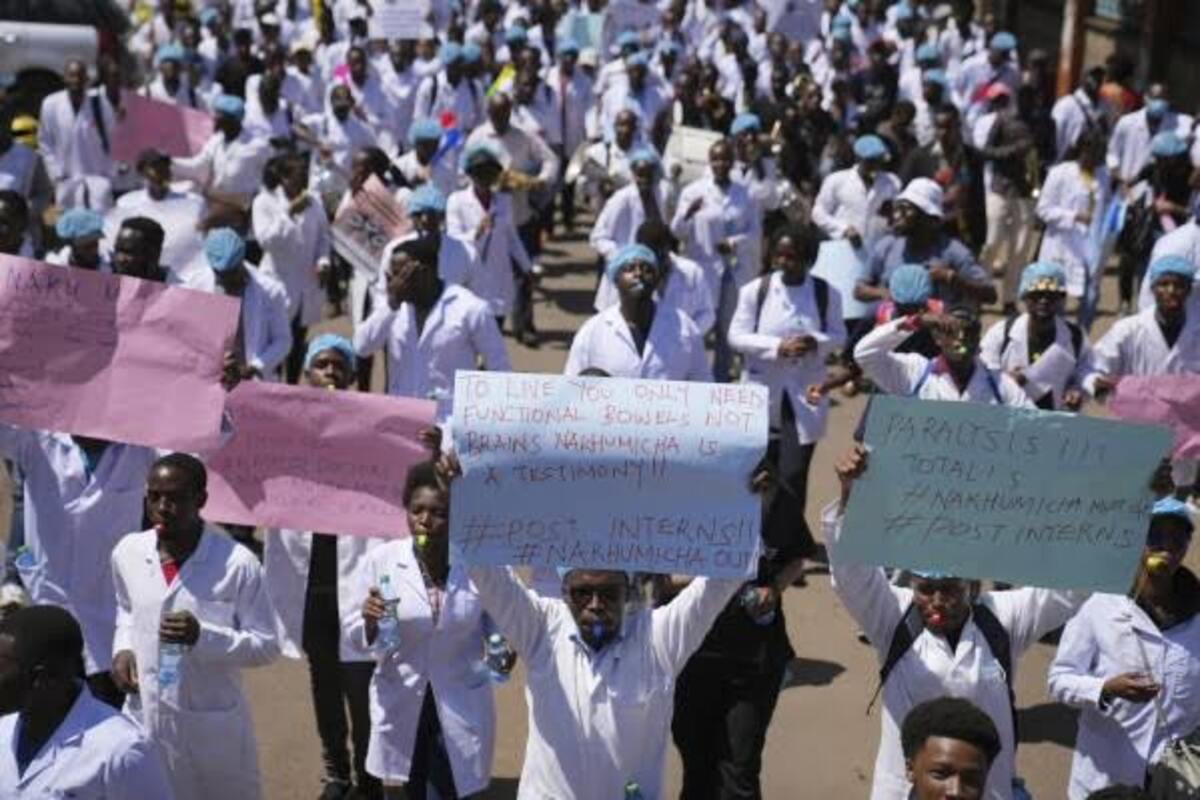
On Tuesday, hundreds of nurses marched to the Council of Governors’ offices in Nairobi as they intensified pressure on county governments to address their grievances. The protest demonstrated that the dispute is no longer a short-term disagreement but an increasingly entrenched confrontation over the working conditions of healthcare workers.
Why doctors are now sounding the alarm
Doctors have become increasingly concerned about the consequences of the nurses’ absence.
Healthcare delivery depends on different professionals performing interconnected roles. Nurses are responsible for much of the continuous patient care in hospitals, including monitoring patients, administering medication, supporting procedures and maintaining round-the-clock care.
When large numbers of nurses withdraw their services, the pressure does not simply disappear. Other healthcare workers are forced to absorb some of the workload, creating longer hours, heavier patient loads and greater pressure on an already stretched system.
That is the situation KMPDU says doctors are now facing.
Dr Atellah has argued that doctors cannot simply take over nursing responsibilities indefinitely. The union says the existing shortage of doctors makes the additional workload particularly dangerous for both healthcare workers and patients.
The warning is therefore not only about doctors’ working conditions. It is also about patient safety.
The biggest danger is to patients
For ordinary Kenyans, the dispute is ultimately measured not in collective bargaining agreements or government budgets but in whether a hospital can provide treatment when someone needs it.
The Kenya National Commission on Human Rights has already raised serious concerns about the impact of the strike. The commission reported 79 deaths between August 31 and September 2, including maternal, neonatal and perinatal deaths, and called for an urgent resolution of the dispute to protect the constitutional right to health.
The figures underline why the current standoff cannot be treated as an ordinary labour dispute.
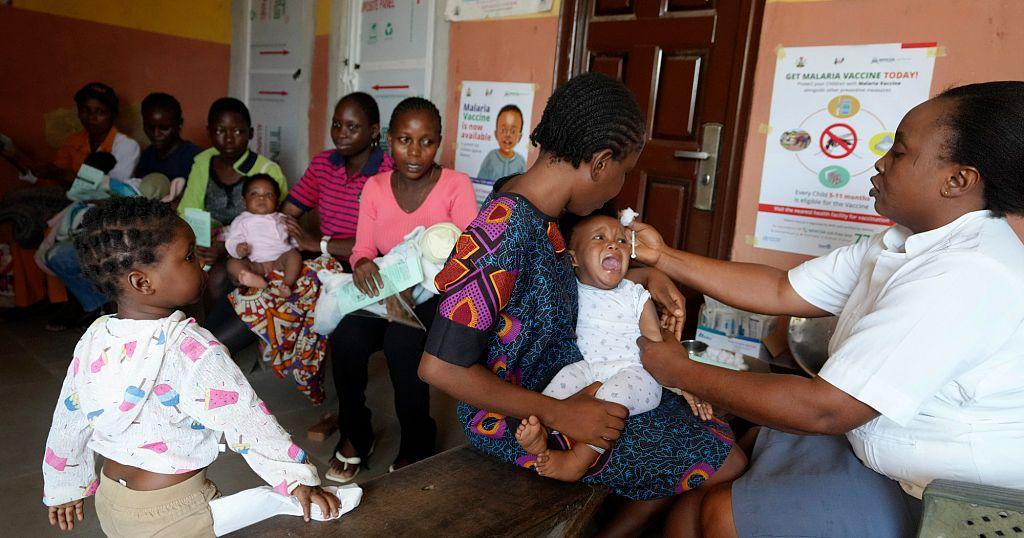
Public hospitals provide essential services to people who often have nowhere else to go. For low-income families, a government hospital may be the only realistic option for childbirth, emergency treatment, surgery or management of chronic illnesses.
A prolonged disruption therefore risks creating a two-tier crisis in which patients who can afford private healthcare find alternatives while poorer Kenyans are left exposed to deteriorating services.
The government faces a difficult balancing act

The government and county authorities face a difficult choice.
On one hand, they must address legitimate concerns raised by healthcare workers. On the other, county governments are operating under significant financial pressures and have repeatedly argued that implementing every demand immediately is not financially straightforward.
The Council of Governors has urged nurses to return to work and allow negotiations to continue. Officials have also argued that the ongoing strike is illegal, pointing to court proceedings concerning the industrial action.
However, legal arguments alone may not solve the underlying problem.
Kenya has experienced repeated healthcare strikes over the years, often involving disputes over collective bargaining agreements, employment, pay and working conditions. The recurring pattern suggests that the country has struggled to create a durable system for resolving disputes before they escalate into nationwide industrial action.
The government therefore has a narrow window to prevent the nurses’ strike from becoming a wider healthcare shutdown. KMPDU’s seven-day ultimatum has placed the responsibility squarely on the negotiating table.
For Kenya, the immediate question is no longer simply whether nurses will return to work.
It is whether the government can resolve the dispute before doctors decide that they, too, have reached their limit.
And if that happens, the consequences will be felt not only by healthcare workers but by millions of Kenyans who depend on the public health system for their lives and livelihoods.










Comments (0)
No comments yet. Be the first to share your thoughts!