
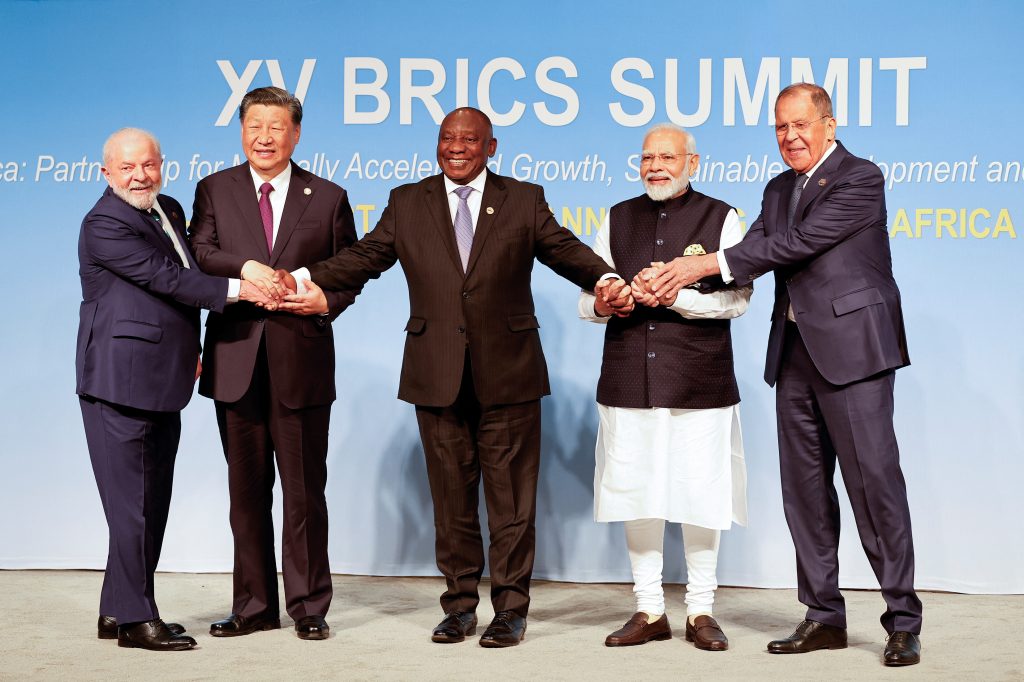
For African nations, the question is no longer whether to engage with BRICS but how to ensure that membership and partnership translate into tangible economic transformation rather than just geopolitical symbolism.
The BRICS Bank: Financing Africa's Infrastructure Deficit
Perhaps the most tangible benefit of BRICS membership for African countries is access to development finance through the New Development Bank (NDB). The NDB has become an increasingly important source of infrastructure financing for African members, offering an alternative to Western-dominated financial institutions.

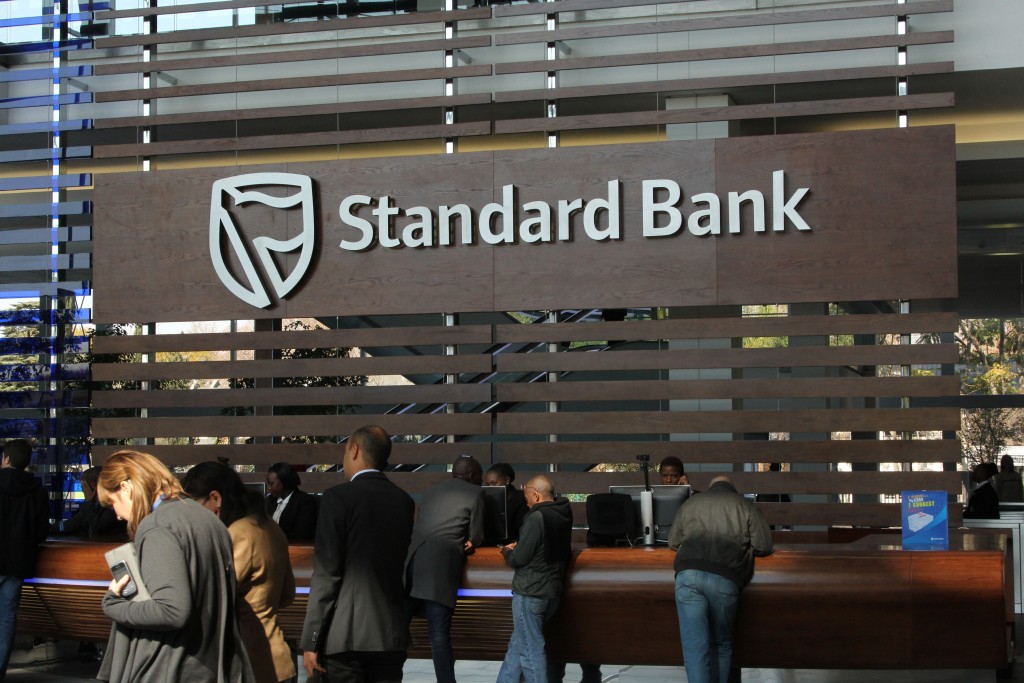
South Africa has been a significant beneficiary. The NDB recently approved a $1 billion loan to upgrade infrastructure in the country's eight largest metropolitan municipalities, including Johannesburg, Cape Town and Durban. The funding will support investments in water supply, sanitation, electricity distribution and waste management systems—essential services that have been deteriorating due to years of underinvestment and weak governance.
The bank has also approved a $200 million loan for the Limpopo Academic Hospital project and $205 million for the Magalies bulk water supply scheme, which will provide reliable drinking water to about two million residents. These projects demonstrate the NDB's growing footprint in financing Africa's infrastructure deficit at a time when governments are seeking alternative sources of long-term development capital.
For Ethiopia and Egypt, the newest African members of BRICS, the bank offers similar opportunities to finance infrastructure and industrial development. The NDB's lending portfolio has expanded as member countries seek additional capital for development priorities, providing an alternative to the often-stringent conditions attached to Western funding.
Trade: The Promise and the Reality
BRICS members collectively account for roughly half of the world's agricultural imports, presenting significant export opportunities for African producers. However, the reality is more complex. The original BRICS countries, particularly India and China, account for less than 10% of South Africa's agricultural exports, compared to about 20% for Southern African Customs Union countries.
South African agribusinesses have consistently pushed for deeper intra-BRICS trade, viewing the bloc as a crucial market for agricultural products. Higher tariffs and phytosanitary barriers remain major challenges preventing deeper penetration of South African agricultural products in BRICS markets. Some BRICS countries have more favourable trading terms with countries outside the grouping, highlighting the need for more balanced trade arrangements.
The expanded grouping includes Egypt and Ethiopia, which could create more opportunities for intra-African trade within the BRICS framework. South Africa has been exploring ways to position itself as a gateway for the rest of the continent, working with fellow African members to build stronger regional value chains.
De-dollarisation: Opportunity and Risk
BRICS has become the most vocal champion of de-dollarisation, using its summits to amplify proposals for alternatives to the US dollar. For African economies heavily dependent on dollar-denominated imports, this agenda holds practical appeal. When the dollar strengthens, the cost of essential items like fuel, food and pharmaceuticals rises sharply in local currency terms.
Ethiopia offers a pointed example. Its major imports are priced and settled mainly in dollars. A strong greenback pushes up domestic costs, while the government's openness to BRICS-led alternatives has not insulated it from the domestic realities of currency instability and economic management.
Recent progress includes Russia and Ethiopia beginning transactions in their respective currencies, a move described as reducing transaction costs and avoiding the risk of exchange rate fluctuations. The Russian government now allows banks to conduct currency transactions in Ethiopia, Nigeria and Tunisia, helping meet payment needs in national currencies.
However, the shift away from the dollar remains more rhetoric than reality. BRICS does not have a shared currency, and its members remain divided on what a unified path should look like. India's policymakers show no interest in abandoning the security that dollar-linked financial systems provide, while China is moving gradually, prioritising stability over disruption.
South Africa, deeply integrated in Western-led financial systems, is wary of provoking economic or political risks at home. For African economies, switching the unit of settlement does not by itself insulate an economy from volatility. Without strong monetary policy, disciplined public finances and institutions capable of commanding trust, shifting away from the dollar could introduce new vulnerabilities rather than solve old ones.
Industrialisation and Technology Transfer
BRICS partnerships are increasingly focused on industrialisation and technology transfer rather than just trade and infrastructure. The Russia-Ethiopia partnership, for example, includes cooperation in unmanned technologies, pharmaceuticals, agricultural equipment and energy gear, with discussions on localising Russian manufacturing facilities in Ethiopia's state-owned economic zone.
Similarly, South Africa is looking to leverage China's expertise in renewable energy, battery storage and grid infrastructure as it tackles challenges throughout its electricity sector. Experts note that China's extensive experience in these areas presents substantial opportunities for bilateral cooperation within the BRICS framework.
The South African government is drawing up new economic blueprints to make the most of the enlarged BRICS-Plus grouping, pushing for more value-added exports such as processed minerals, manufactured goods and agricultural products with higher value. The goal is to turn natural resources into finished items at home, so more money stays in the country and more people find work in factories and processing plants.
Digital Payments and Financial Integration
BRICS members are also examining ways to connect their fast payment systems and central bank digital currencies. For African exporters and remittance providers, the promise is real. A payment from Johannesburg to Mumbai or São Paulo can still travel through correspondent-banking chains that add time and cost at successive stages, while domestic instant-payment systems move money in seconds.
However, South Africa has concluded that there is no compelling immediate need for a retail digital rand, pursuing instead a different sequence from countries placing digital currencies closer to the centre of their payments strategy. The more consequential competition for African business may not be between BRICS and the dollar but between the payment rails now being built on the continent itself.
The Pan-African Payment and Settlement System (PAPSS), launched by Afreximbank and the AfCFTA Secretariat, allows payments between participating markets to be initiated and received in local currencies rather than routinely routed through correspondent banks in New York or London. The system connects 28 countries, more than 190 banks and fintechs and 16 switches.
A BRICS Trade Treaty?
One of the boldest ideas under consideration is a formal BRICS-Plus trade treaty. South Africa has some of the lowest tariffs in the group, making it easier for other members to sell here than for South African goods to enter their markets. A treaty would help remove or lower these barriers so trade becomes more even-handed.
The BRICS Economic Partnership Strategy, currently under negotiation for the period 2026–2030, incorporates elements central to the African Continental Free Trade Area (AfCFTA), including a development integration approach, a focus on market integration, and the advancement of infrastructure and industrial development. These priorities are intended to strengthen intra-BRICS trade and deliver benefits to all African BRICS members.
A Complex and Uneven Relationship
BRICS offers African economies a strategic platform to diversify partnerships, access alternative financing and reduce dependence on Western-dominated institutions. However, the relationship is not without risks. Asymmetric power dynamics, potential dependency and policy misalignment remain concerns. The long-term impact depends on inclusive participation, transparent governance and alignment with locally defined development priorities.
As one expert noted, Africa's challenge is to convert the language of global realignment into real domestic capacity. Financial autonomy should not be framed as rejecting the dollar but as achieving the ability to trade and borrow in multiple currencies, manage exposure prudently, and negotiate international finance from a position of strength. The experiments led by BRICS can provide leverage, but leverage is only useful for countries with the institutional capacity to use it effectively.
With reporting from Ecofin Agency, China Daily, Xinhua, Business Day, Taylor & Francis, Business Insider Africa, Addis Fortune and the Parliamentary Monitoring Group.