


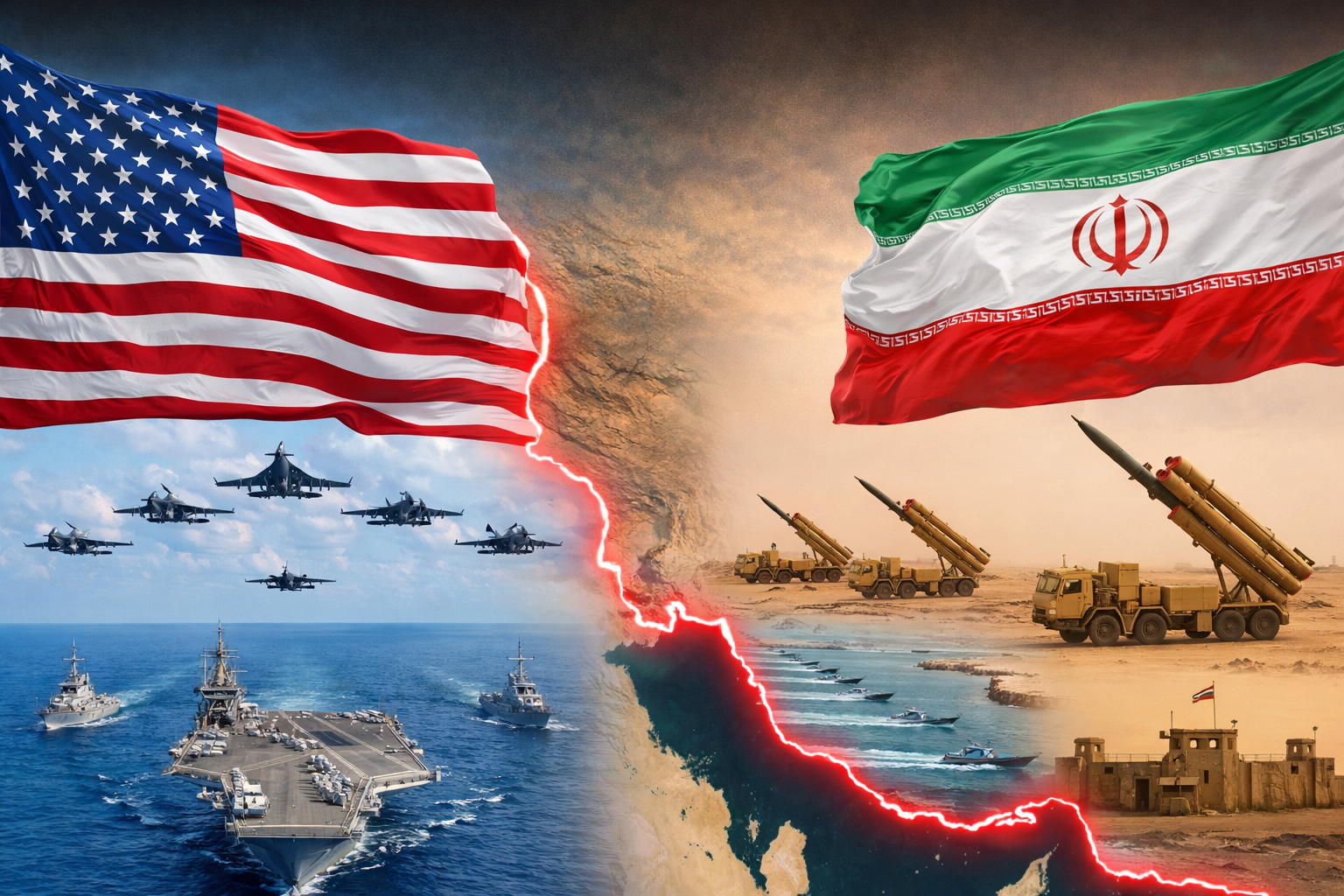
What began as a military confrontation thousands of kilometres from African shores has appeared on fuel pump displays in Lagos, Nairobi and Johannesburg, in the cost of bread and fertiliser for millions of farmers, and in the balance sheets of governments already struggling with record debt burdens. The conflict has become one of the most significant external shocks to hit the continent since the COVID-19 pandemic.
Slower Growth and Rising Costs
The World Bank cut its growth forecast for Sub-Saharan Africa for 2026 from 4.4% to 4.1%, citing the fallout from the Iran war as the primary reason for the downgrade. The revision reflects a much tougher external environment than policymakers had anticipated late last year, with energy and fertiliser prices rising sharply as the conflict disrupted shipping through the Strait of Hormuz.

The impact has been most severe in oil-importing and financially vulnerable economies with limited policy room to respond, including Burundi, Malawi, Ethiopia, Kenya and Mozambique. Kenya, for example, could face a sharp inflation shock under severe scenarios, while Ethiopia, with about 750,000 workers in Saudi Arabia alone, faces potential pressure on vital remittance flows.
The conflict is also creating uncertainty around investment from Gulf countries, which have become major investors in Africa, particularly in East Africa, in sectors including mining, renewable energy, real estate and information technology. Remittance flows, a lifeline for millions of African households, could also come under pressure if prolonged conflict weakens labour demand in the Middle East.
Fuel Prices and the Cost of Living
The most immediate and visible impact has been at the pump. The disruption of traffic through the Strait of Hormuz, through which about one-fifth of global oil shipments pass, has pushed global oil and gas prices sharply higher. Brent crude surged past $100 a barrel, briefly approaching $120, with immediate pass-through into fuel and transport costs across Africa.
South Africa's latest fuel price adjustments explicitly cited the increase in Brent crude and shipping costs, driven by uncertainty over the US-Iran confrontation, as the main reason for rises in regulated pump prices. Tanzania also raised pump prices, with diesel seeing the sharpest increase. In Ethiopia, the impact has been visible in longer queues of cars waiting for fuel across Addis Ababa and other regional cities.
The higher fuel costs have rippled through economies, pushing up public transit fares, trucking rates and electricity tariffs in systems that still depend on diesel or heavy fuel oil. African airlines that rely on Gulf transit hubs have begun rerouting or suspending some connections, adding time and fuel costs.
Food Security and Fertiliser Crisis
Beyond energy, the war has threatened the continent's food security through its impact on fertiliser supplies. A third of global nitrogen fertiliser trade passes through the Strait of Hormuz. Urea prices surged from $480 to $700 per tonne following the outbreak of conflict.
For African farmers, many of whom rely on imported fertilisers to maintain crop yields, the price spike has been devastating. The World Food Programme projected a 21% increase in food-insecure people in West and Central Africa and 17% in East and Southern Africa due to the war. The disruption hits Africa's planting seasons, with the potential for long-term damage to agricultural productivity.
Countries in eastern Africa have been hardest hit. Roughly 26% of Kenya's fertiliser imports pass through the Strait of Hormuz, and in Sudan, the share exceeds 50%. The agricultural sector has been particularly affected, with Kenyan exporters of flowers, vegetables and other horticultural goods facing rising costs that have caused "major losses."
The Dangote Refinery: A Rare Beneficiary
While most African economies have suffered from the disruption, the $20 billion Dangote Petroleum Refinery in Nigeria has emerged as a major beneficiary, providing a rare bright spot in an otherwise bleak economic picture. The refinery reached full capacity in February 2026, just as the conflict began, and has since supplied diesel, jet fuel and gasoline that doesn't need to pass through the Strait of Hormuz.
The war has boosted the wealth of Aliko Dangote by some $4.86 billion since the start of the year, bringing his net worth to about $34.8 billion. The refinery has ramped up purchases of Nigerian crude, helping to strengthen premiums for Nigerian crude grades compared with those from Angola, and reshaping long-established trading patterns.
The refinery's output has risen by more than 70% this year, driven by stronger demand for refined petroleum products as global supply chains are disrupted. Exports of jet fuel to Europe have grown significantly, and demand for the refinery's products has increased across sub-Saharan Africa. The company plans to expand the refinery's capacity to 1.4 million barrels per day by 2028.
Debt and Fiscal Pressure
The shock is landing at a time when many African governments have little room to respond. Andrew Dabalen, World Bank chief economist for Africa, noted that debt-servicing costs had doubled from 9% of revenues in 2017 to about 18% in 2025, while about half of African countries were either at high risk of or already in debt distress.
"There is very little scope actually for these countries to deal with this crisis because they just don't have a lot of fiscal space," Dabalen said.
A prolonged conflict triggering a "risk-off" stampede into the US dollar would mechanically weaken African currencies and inflate the cost of servicing dollar and euro-denominated debt. African finance ministers face painful trade-offs: defending currency reserves, cutting imports and tightening belts.
Broader Geopolitical Implications
The conflict has also exposed Africa's vulnerability to geopolitical rivalries. The African Union raised alarm over the resumption of the Middle East conflict, noting it is driving a severe economic and security crisis in Africa through energy shocks, supply disruptions and soaring prices.
"The resumption of the conflict between Iran and the United States is causing runaway inflation. The supply chain is disrupted due to the closure of the Strait of Hormuz. The Bab el-Mandeb Strait is also threatened. Energy, grain and fertilizer prices are soaring," said AU Commission Chairperson Mahmoud Ali Youssouf.
As the conflict continues, African countries are being forced to navigate complex diplomatic terrain, with some choosing sides and others seeking to maintain neutrality. The United States maintains a significant military presence across the continent, including bases, drones and security partnerships from Djibouti across East Africa into the Sahel. Those locations could become exposed or potential targets if the conflict escalates.
With reporting from Reuters, World Bank, Africa Confidential, Xinhua, EWN, ZAWYA, Punch Newspapers and The Africa Report.








Comments (0)
No comments yet. Be the first to share your thoughts!