

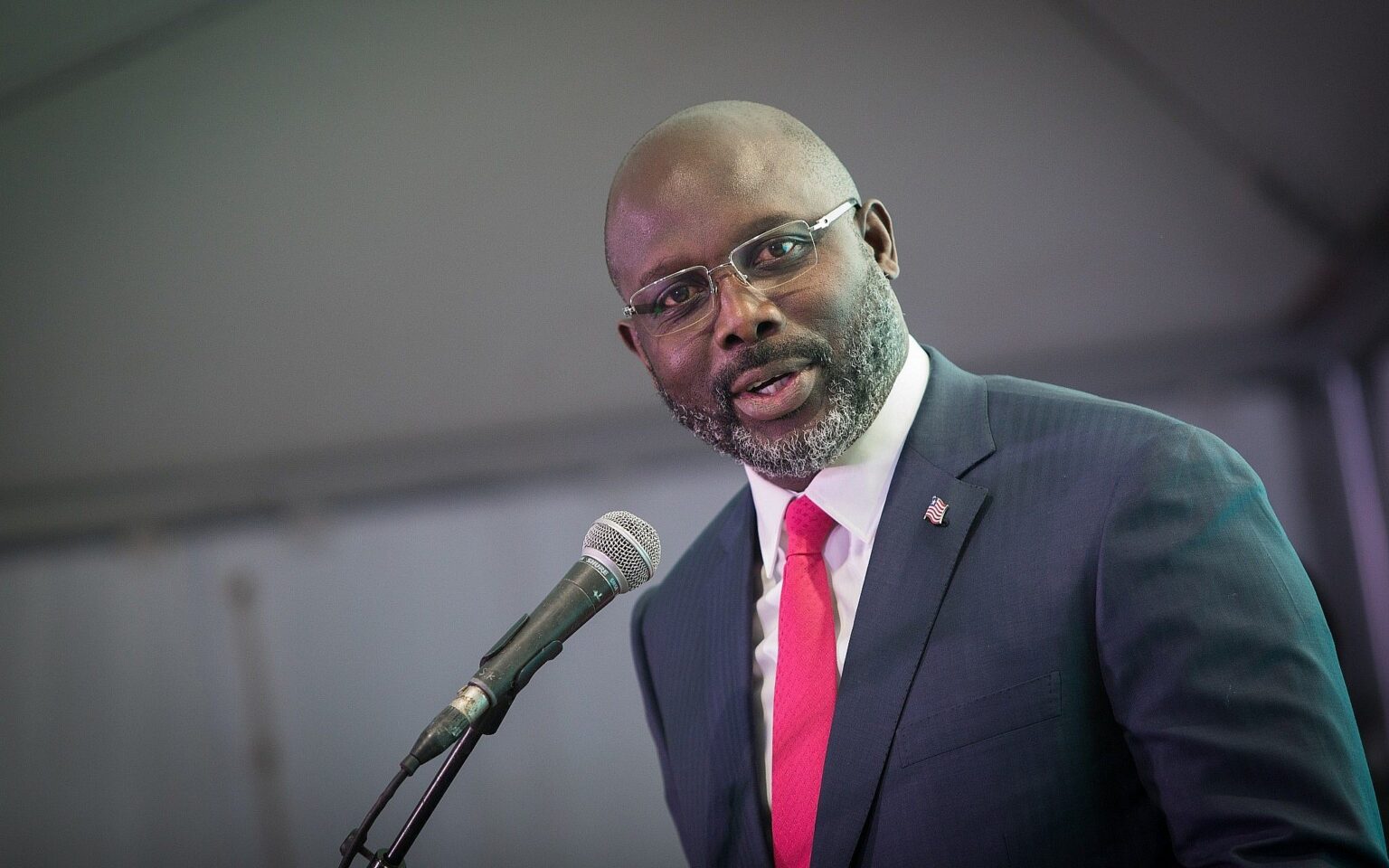
Speaking to supporters of the Congress for Democratic Change (CDC) in the United States over the weekend, Weah launched a sharp critique of President Joseph Boakai's administration, arguing that the country's economic and democratic progress has deteriorated since he left office.
"Families are struggling to eat. Businesses are collapsing under the weight of a bad economy and high taxes. And the Liberian people's confidence in their own institutions has been broken," Weah told supporters.

His remarks portray a country grappling with economic hardship while positioning himself as the leader capable of restoring stability and growth. The announcement comes more than three years before Liberians are due to return to the polls, making it an unusually early declaration of presidential ambitions.
Weah's 2029 campaign will differ significantly from his historic 2017 victory. Then, he was a political outsider promising change after years of public dissatisfaction with the political establishment. Today, he returns as a former president whose own record in office will be central to the national debate.
His administration delivered infrastructure projects, expanded road construction, and maintained relative political stability. However, it also faced criticism over unemployment, corruption allegations, and persistent economic challenges that ultimately contributed to his electoral defeat in 2023.
The political equation has also changed for President Boakai. Unlike in 2023, he will seek re-election as an incumbent whose government will be judged on its handling of the economy, governance reforms, public services, and job creation.
Economic issues are already emerging as the defining theme of the coming contest. Weah's criticism of rising taxes, struggling businesses, and declining public confidence suggests the CDC intends to build its campaign around the cost of living and economic management.
If economic conditions fail to improve over the next three years, the opposition could gain momentum by presenting itself as the alternative capable of reversing current trends. Conversely, sustained economic growth and visible governance reforms under the Boakai administration could strengthen the incumbent's re-election prospects.
Political analysts view Weah's declaration as the unofficial opening of Liberia's 2029 presidential race. The early announcement gives the CDC ample time to reorganize its structures, mobilize supporters at home and abroad, and rebuild the political coalition that propelled Weah to power in 2017.
It also increases pressure on the ruling establishment to demonstrate tangible improvements in the lives of ordinary Liberians before campaigning formally begins.
While the election remains years away, Weah's announcement has already shifted Liberia's political conversation from governance alone to the next battle for the presidency. Over the coming years, voters will weigh the legacy of Weah's administration against the performance of President Boakai's government, with economic recovery and public trust likely to determine who ultimately earns the mandate to lead Liberia into the next decade.
With reporting from AllAfrica, FrontPage Africa, Liberian Observer, and The New Dawn (Liberia).


Comments (0)
No comments yet. Be the first to share your thoughts!