
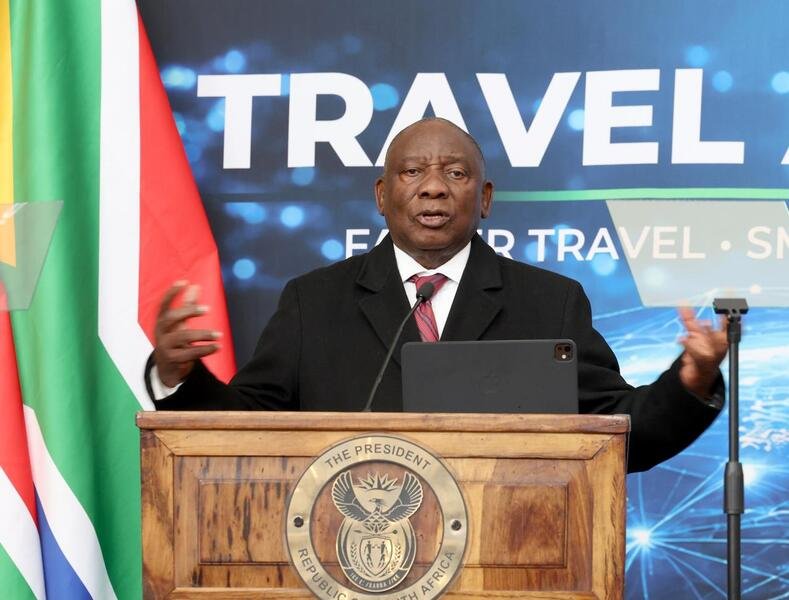
The launch, which took place on Wednesday, 12 August 2026, marks a significant milestone in the Department of Home Affairs' digital transformation programme and follows a successful pilot during South Africa's G20 Presidency. The ETA combines advanced biometric verification, machine learning and the upgraded Electronic Movement Control System (eMCS 2.0) as part of a modern digital immigration ecosystem.
A Reform That Strengthens Both the Economy and Security
Speaking at the launch, President Ramaphosa emphasised that the ETA is far more than a technological upgrade. He framed it as an economic reform with the potential to create jobs and expand opportunities for South Africans.

"Visa reform is therefore not simply an immigration reform. It is an economic reform. It is a jobs reform," Ramaphosa said.
The President noted that the latest Quarterly Labour Force Survey, which showed South Africa's unemployment rate rising to 33.6%, underscored the urgency of reforms that can stimulate economic activity. He argued that more visitors would translate into more hotel bookings, more restaurants filled, more tour operators employed, more flights, more conferences, more exports and more investment.
The ETA is also designed to strengthen border security. According to Ramaphosa, "A modern immigration system is not a weaker immigration system. It is a smarter immigration system." Technology allows authorities to know more about travellers before they arrive rather than after they enter, enabling stronger biometric verification, improved risk assessment and enhanced border security.
How the ETA Works
Home Affairs Minister Leon Schreiber explained that the process begins with a traveller registering a profile on the ETA website, which includes one-time PIN verification of their cellphone number and email address. The traveller then scans their passport and uploads a selfie.
"Through biometric technology, our platform compares the selfie with the photo embedded in the passport chip and the machine-readable zone of the passport. This ensures that the person who is applying is the actual holder of the passport," Schreiber explained.
The system then uses machine learning to assess the risk profile of the applicant, including checks against international watchlists. If the system finds potential risk indicators, it automatically creates a case for manual review by Home Affairs officials. Once approved, the system issues the electronic travel authorisation, which the traveller must present upon arrival.
The ETA is designed to be accessible and affordable. The authorisation is valid for multiple entries over a one-year period, with applications available in all official languages.
Part of a Broader Reform Agenda
The ETA launch is part of a wider set of reforms aimed at modernising South Africa's immigration system. Schreiber announced that the government is expanding the Department of Home Affairs' Trusted Tour Operator Scheme, which recently signed a partnership with China, and is preparing to pilot a hybrid work visa to attract digital nomads and remote workers.
"Our reforms are guided by two fundamental principles: ease of travel for legitimate travellers and safety for all South Africans. The ETA is the pinnacle achievement of the Department of Home Affairs' digital transformation journey and is set to propel South Africa into a new era of more efficient immigration management," Schreiber said.
The President's Office noted that the ETA launch follows a series of structural reforms under Operation Vulindlela, adding that modernising border management, improving the visa regime and creating a more welcoming environment for legitimate travellers are essential elements of South Africa's long-term economic strategy.
With reporting from SAnews.gov.za, The Presidency of South Africa, Department of Home Affairs and Reuters.