


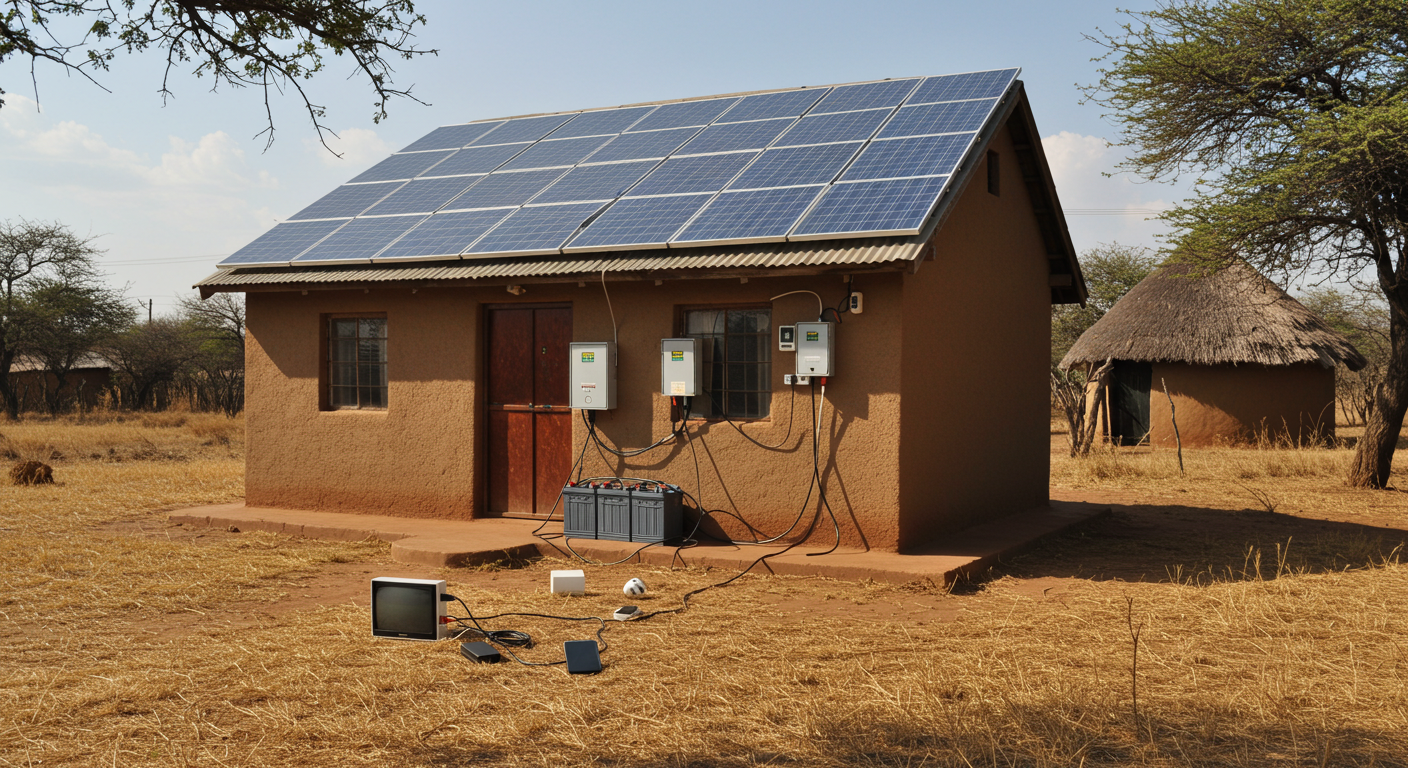
But there is a solution that does not require waiting for the government or the grid. It is something you can build, own and maintain yourself. This guide explains how an ordinary person can generate electricity for their home—not by building a solar panel from scratch, which is complex and delicate work, but by assembling a solar power system using components that are widely available and increasingly affordable across the continent.
Why Solar Is the Starting Point for Most Homes
Solar is the most practical entry point for home electricity generation in Africa. The continent receives more sunshine than almost anywhere on Earth and the cost of solar equipment has fallen by more than 90 percent over the past two decades. A basic system that would have been unaffordable a decade ago can now be purchased and installed for a reasonable cost.

In South Africa, for example, a system capable of making an average household fully self-sufficient for electricity—including panels, inverter, battery and a backup generator—can be installed for around R110,000. Paid over a seven-year loan, that works out to roughly R2,915 per month, which is now nearly the same as the average monthly electricity bill from the grid. The difference is that after the loan is paid off, your electricity costs drop dramatically.
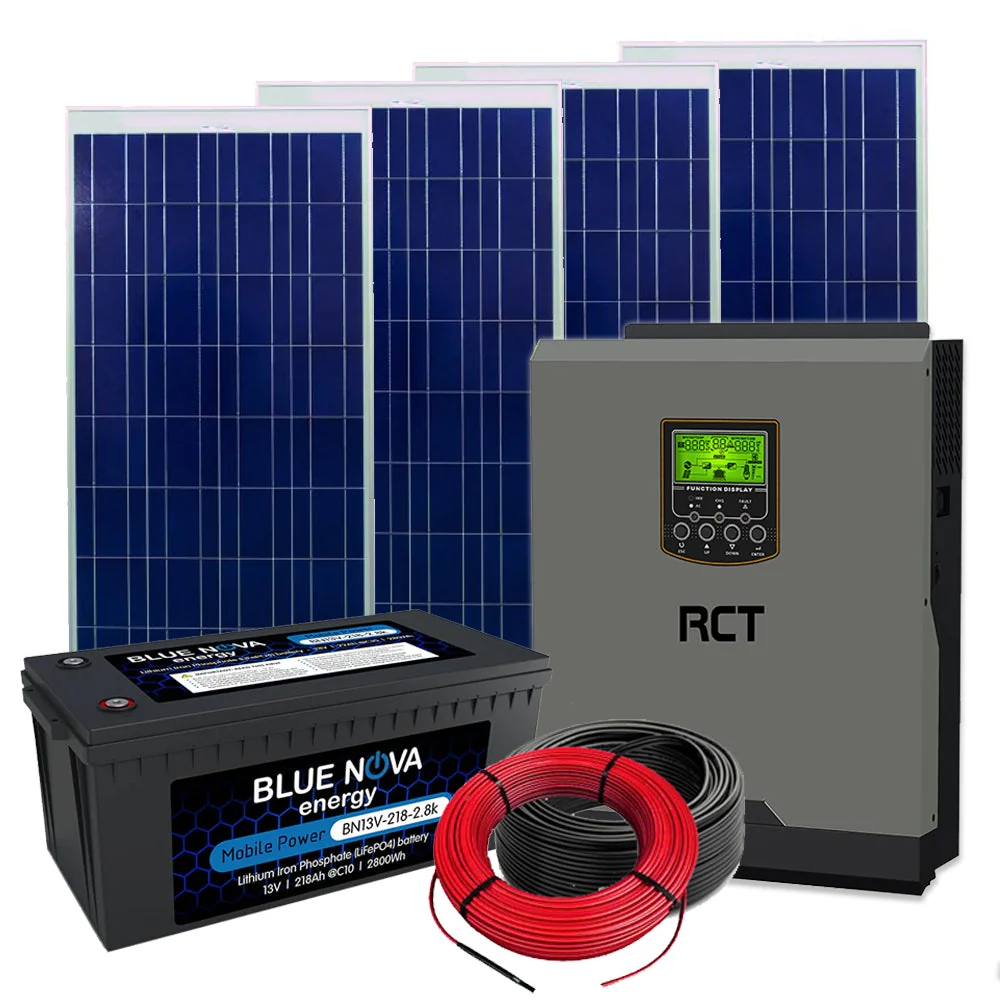
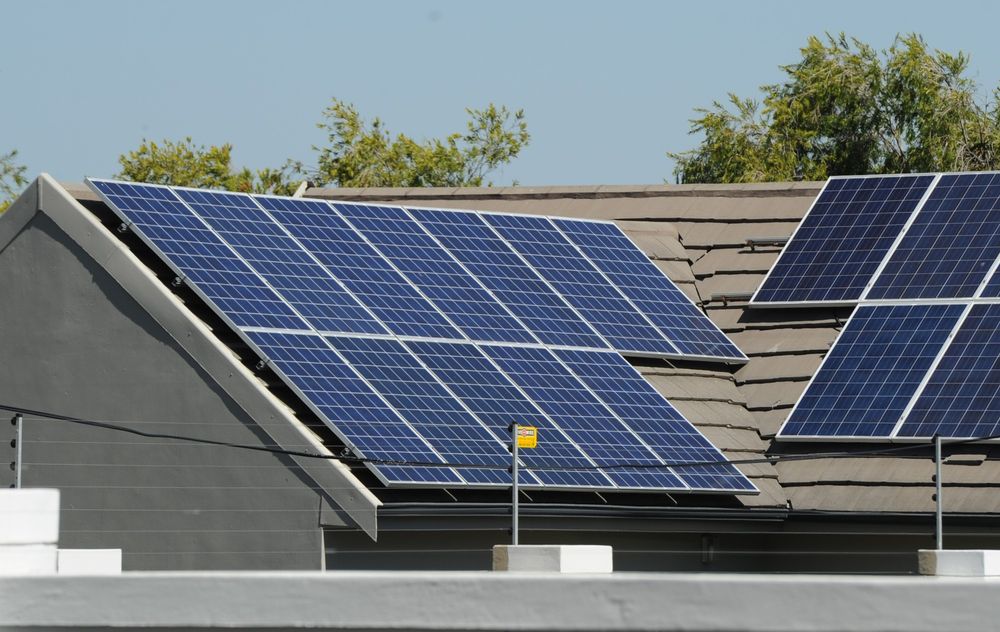
Solar kit: Solar panels, battery and hybrid Inverter
Step 1: Understand What You Need Before You Buy Anything
The biggest mistake people make is buying equipment before knowing how much electricity they actually need. This leads to systems that are either too small to be useful or far more expensive than necessary.
The first task is to calculate your daily energy requirement. This means listing every appliance you want to power, finding its wattage (usually printed on a label on the device) and estimating how many hours per day you use it. Multiply watts by hours to get watt-hours per day, then add everything together.
For example, a small kiosk might need to power lights, a phone charger, a radio and a small refrigerator. A typical home might need lights, a television, a refrigerator, a fan and a phone charger. Write it all down. Be honest about your usage—oversizing your system adds unnecessary cost.
You also need to know the peak sun hours for your location. This is not the same as daylight hours. It is the equivalent number of hours when the sun is strong enough to produce maximum power. Across Africa, this ranges from about 4.5 hours in some coastal or cloudy regions to over 6 hours in the Sahel and desert areas. Use the lower figure for your area to ensure your system works even during cloudy periods.
Step 2: The Four Essential Components
A basic solar system for a home consists of four main parts:
Solar panels capture sunlight and convert it into direct current electricity. For a modest home, you might need between 4 and 12 panels, depending on your energy needs and the panel wattage. Modern panels are typically rated between 400W and 600W each.
A charge controller regulates the electricity flowing from the panels to the battery. This protects the battery from overcharging and damage. For systems above 1kW, an MPPT controller is recommended because it extracts 20 to 30 percent more energy from your panels than older PWM controllers.
A battery stores electricity for use at night or during cloudy days. Lithium-iron-phosphate batteries are now the preferred choice for home systems. They last longer, are more efficient and require less maintenance than lead-acid batteries. A typical home system might use a 5kWh to 16kWh battery, depending on how much electricity you use at night.
An inverter converts the direct current electricity from your panels and battery into the alternating current that your appliances use. A hybrid inverter is the most practical choice because it can manage solar panels, battery storage and even grid or generator backup all in one unit.
Step 3: Assembling the System Safely
You can save money by doing some of the physical installation work yourself—such as mounting the panels and running cables—but the electrical connections should be done by a qualified professional, especially if the system connects to your home's main distribution board.
The basic order of connection is critical for safety. Always connect the battery to the charge controller first, then connect the solar panels. This protects the controller from damage. Never connect panels to the controller without a battery already connected.
All connections must be tight and secure. Loose cables are the number one cause of system failures and can even cause fires. Use proper cable lugs and tighten every terminal firmly.
The system must also be properly grounded. A grounding rod driven into the earth protects you and your equipment from electrical faults and lightning.
Step 4: Maintaining Your System for Long Life
A solar system is not "fit and forget." In Africa's dusty, hot and sometimes humid conditions, maintenance is what determines whether your system lasts five years or twenty.
The single most important maintenance task is cleaning your panels. Dust, sand and bird droppings can reduce output by 10 to 20 percent if left uncleaned and in extreme desert conditions, losses can reach 20 to 30 percent. In dusty areas like Abuja or Kano, clean your panels every three months. In coastal or less dusty areas, every four to five months is sufficient. Use a soft cloth, water and a non-corrosive soap.
Check your battery and connections regularly. Look for corrosion on battery terminals, loose cables or any signs of overheating. Tighten any loose connections and replace burnt fuses. For lithium batteries, check the battery management system logs to ensure the cells are balanced.
Monitor your system's performance. Many modern inverters come with apps that let you check how much power you are generating and using. Look for unusual patterns—a sudden drop in output could indicate dirty panels, a failing connection or a problem with the battery.
Step 5: What It Costs and How to Think About the Investment
Solar is not cheap upfront, but the long-term economics are compelling. In South Africa, a system that can power an average home fully off-grid costs roughly R110,000 including a backup generator and pays for itself over seven years compared to grid electricity—after which your power is essentially free.
You can also start smaller. A basic solar home system providing lights and phone charging can cost as little as R1,100, paid off over 12 monthly instalments of R95. This is designed for homes with limited or no access to electricity, providing essential lighting and the ability to charge phones without relying on kerosene or expensive trips to charging kiosks.
For those with some capital to invest, a mid-range system—say 3kW of panels, a 5kW inverter and a 5kWh battery—would cost roughly R60,000 to R120,000 installed in South Africa. This would cover lights, television, refrigerator, fans and phone charging for a typical household, with enough battery storage to last through the night.
Beyond Solar: Other Options for Generating Your Own Power
While solar is the most accessible option for most homes, there are other technologies worth knowing about.
Biogas uses animal manure or kitchen waste to produce methane gas that can be used for cooking, lighting and even running a small generator. A plastic tubular biogas digester—suitable for a household with two cows—costs around US$75 and takes one to seven days to start producing gas depending on the temperature. The slurry left over is an excellent organic fertilizer for farming. This is particularly practical for rural households with livestock.
Micro-hydro uses the flow of a stream or river to turn a turbine and generate electricity. This works 24 hours a day as long as water is flowing, unlike solar which only works during daylight. Small hydrokinetic turbines can be placed directly in a flowing river without building a dam and they require minimal civil works. If you live near a river with a consistent flow, this could be a reliable complement or alternative to solar.
The Bottom Line: Start Where You Are
You do not need to build a solar panel from raw materials to generate your own electricity. The components are available, the knowledge is accessible and the economics increasingly make sense. The most important step is the first one: calculating what you actually need, then buying the right components from a reputable supplier.
Start small if that is what your budget allows. A single panel, a small battery and an inverter can power lights and charge phones—a meaningful improvement for a household currently relying on kerosene and expensive phone-charging trips. Expand from there as your budget and needs grow.
The grid may never reach your home reliably. The sun will. Learning to harness it is one of the most practical investments you can make in your family's future.








Comments (0)
No comments yet. Be the first to share your thoughts!