

When the Sun Becomes the Fuel
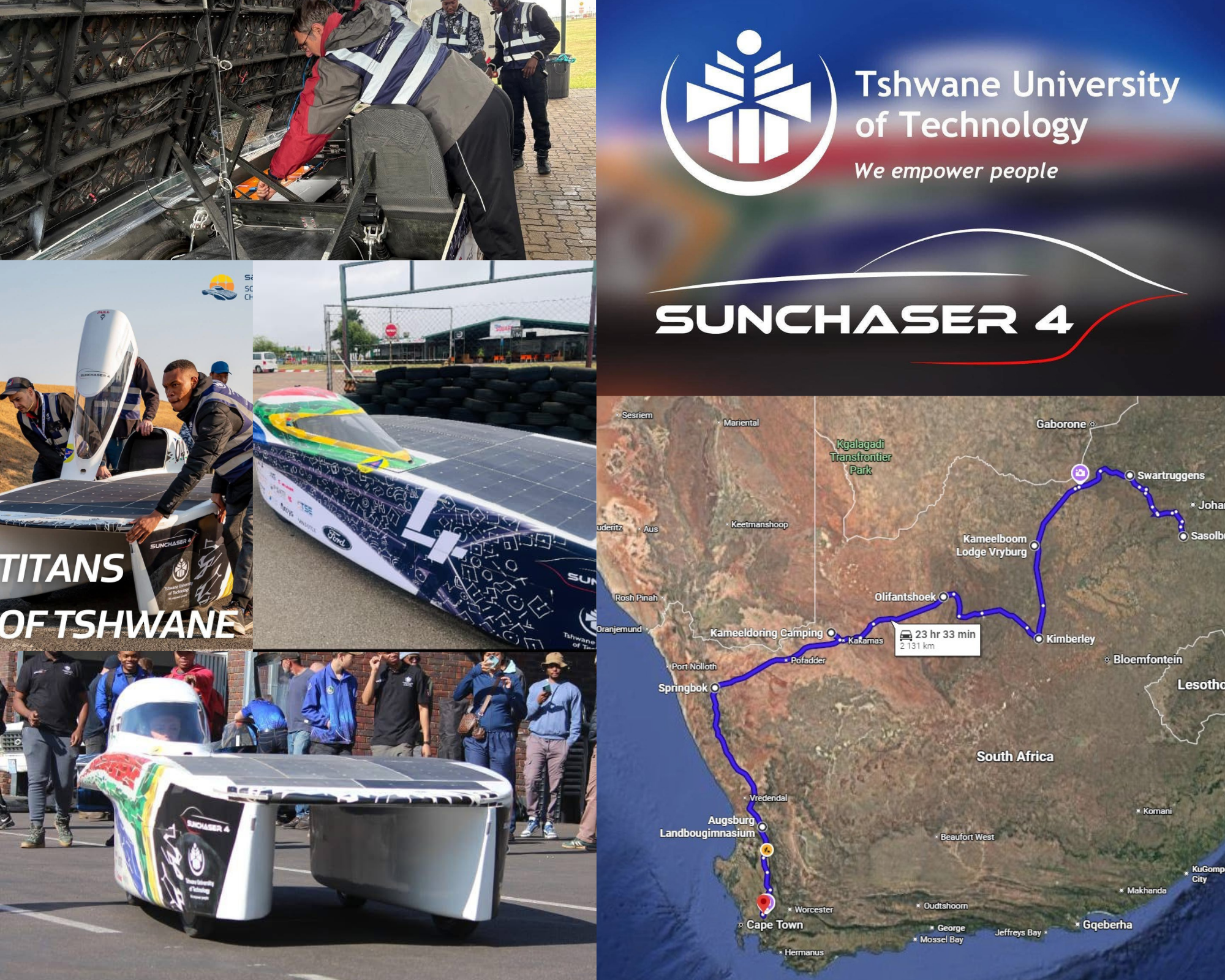
What happens when you put young innovators, engineers, a solar-powered car and more than 2 500 kilometres of South African roads together? You get the Sasol Solar Challenge, where the sun is not just in the sky, but a part of the team. For the Tshwane University of Technology’s SunChaser 4, getting to the starting line has been a journey of its own. Behind the sleek bodywork and solar panels is a team that has spent months testing, adjusting, repairing and questioning almost every detail of the vehicle. Now, after all that work, the workshop is giving way to the open road. On 10 September 2026, SunChaser 4 will join teams from South Africa and abroad for the Sasol Solar Challenge, an eight-day endurance challenge travelling from Sasolburg in the Free State province, to Franschhoek in the Western Cape province, that is 50kms away from Cape Town. The challenge is not simply about speed. Teams must manage energy, distance, weather challenges, mechanical problems, drivers and strategy while trying to squeeze every possible kilometre out of the sun. For TUT, the challenge is about more than crossing the finish line. It is an opportunity to show what can happen when students are given the chance to turn classroom theory into something that has to perform on a real road.

A Race Where Every Decision Counts
The Sasol Solar Challenge is a long game. Instead of simply racing towards Franschhoek, teams have to think several kilometres ahead. Energy management can make the difference between gaining valuable distance and being forced to stop. Every decision, from how the car is driven to when the driver changes, can affect the kilometres earned by the end of the day.
The 2026 route takes teams through towns including Rustenburg, Swartruggens, Zeerust, Vryburg, Kimberley, Postmasburg, Olifantshoek, Upington, Augrabies, Springbok, Vanrhynsdorp and Clanwilliam before the final push towards Franschhoek. The event’s official route information confirms that each stage has a start, control stop and finish, with teams also able to gain additional kilometres through optional loops. After the opening stage from Sasolburg, the route continues through Swartruggens and Zeerust towards Vryburg. Day 3 then heads from Vryburg to Kimberley and brings the Full Blind Stage, where teams know their start and finish points but only learn the location of the control stop shortly before the stage. Strategy suddenly becomes a guessing game. The later stages take the teams through Postmasburg and Olifantshoek, then Upington and Augrabies, before travelling through Springbok, Vanrhynsdorp and Clanwilliam. The final stage carries the teams towards Franschhoek.
By then, every kilometre earned, and every kilometre lost, will matter.
The Man Who Started the Chase
At the heart of the project is Johannes De Vries, an electrical engineer and TUT electrical engineering lecturer who founded the SunChaser project. His connection to the car is more than academic. He has continued improving the project over the years, even using his own garage at home to work on the vehicle. There is something almost amusing about watching someone who has been involved with a project for years speak about it with the excitement of someone seeing it for the first time. Yet that enthusiasm says something important about De Vries. SunChaser is not simply another university project waiting for a race date; it is something he has watched grow, change and demand constant attention. For an engineer, perfection is often found in the details. Even a little movement in the steering system is enough to raise concern because a vehicle expected to travel thousands of kilometres cannot afford to treat small issues as harmless.
Built to Waste Less
SunChaser 4 is designed around one basic idea: use energy as intelligently as possible. Its regenerative braking system allows the motor to act as a generator during braking, converting some of the vehicle’s movement back into electrical energy instead of allowing that energy to disappear as heat. The car is also built from lightweight materials, including carbon fibre and honeycomb structures, helping keep its weight at roughly 270 kilograms. The vehicle has previously survived a rollover with only a relatively small crack, which the team repaired in about an hour. Its roll cage is designed to withstand forces of several tonnes.
But mechanical failure is not the only challenge. The South African sun itself can become an opponent.
The Human Inside the Machine
Inside the black solar car, the driver experiences a very different journey from the people watching from the roadside. There is no air-conditioning because cooling the cabin would consume energy. Instead, the car relies on ventilation and airflow.
Drivers change roughly every two hours, with breaks and ice water helping them manage the heat and fatigue. They also need experience. Although a normal driver’s licence is required, SunChaser’s light weight and sensitive steering mean drivers must become comfortable with the vehicle before facing the challenge. The team has also had to deal with the practical challenges of getting a prototype vehicle onto public roads, including driver training and permits. Being ready therefore does not simply mean proving that the car can move. It means proving that the car, the drivers and the team can work together when the road stops being predictable.
Where Students Get Their Hands Dirty
That is where students such as Sebenzile Gabone come into the picture. The SunChaser project gives students an opportunity that a textbook cannot provide: the chance to work on something where mistakes have consequences and where theory has to function in the real world. Students are exposed to engineering, design, problem-solving, teamwork and the pressure of working towards a real deadline. They also learn that a good idea on paper may need several attempts before it becomes a good idea in practice. For Gabone, the project has been a helpful and insightful learning experience. The car may eventually be replaced by another vehicle, but the skills students develop through designing, testing, repairing and collaborating can follow them into their careers.
More Than a University Project
Dr Oosthuizen, Head of Department in Engineering at TUT, has watched the project develop through different stages. The SunChaser project has been active for more than a decade, experiencing periods of strong public visibility as well as quieter periods when the team concentrated on developing new vehicles. Students graduate, new students arrive, funding changes and projects evolve. Yet the knowledge gained does not simply disappear. Former students have carried their SunChaser experience into different careers, with some working in South Africa, others overseas and others in technical education. Oosthuizen says former students have told him that their experience with SunChaser helped them during job interviews, in some cases becoming one of the reasons interview panels chose them. As he put it, there are “good stories there” when it comes to the project’s alumni and where they are now.
Keeping the Wheels Turning
Like many ambitious student projects, SunChaser has also had to fight a less glamorous battle: money. Oosthuizen explains that funding has been one of the project’s major challenges, particularly since COVID-19. Support from organisations such as MerSETA previously helped fund bursaries and student appointments, while industry partnerships have also helped keep the project moving. For the 2026 challenge, Ford’s support is helping the TUT team prepare for the road through technical support, mentorship and exposure. Ford engineers have worked with students on mechanical issues, tooling and preparations ahead of the challenge.
A Small Car Carrying a Big Idea
There is something bigger happening behind the solar panels. SunChaser sits at the intersection of renewable energy, engineering, education and sustainable transport, giving young South Africans an opportunity to work on problems the world will increasingly have to solve: how we move people, how we use energy and how we design technologies that place less pressure on the environment. South Africa needs engineers who can do more than pass examinations. It needs young people who can look at a problem, get their hands dirty and build an answer. SunChaser gives students a place to practise doing exactly that. For the next generation watching from the roadside, the message may be simple: you do not have to wait until you have a corner office, a huge budget or a fancy laboratory to start building something meaningful. Sometimes, you start with a workshop, a team, a difficult problem and a little sunlight.
Now, the Road
The starting line in Sasolburg will not care how many hours were spent in the workshop. The sun will not care how difficult the funding was. The kilometres will not care how many times a component had to be redesigned. The car will simply have to perform. For De Vries, the founder who has continued returning to the project with the enthusiasm of someone who still has something to prove, the challenge is where years of engineering finally meet reality. For Oosthuizen, the challenge extends beyond the finish line to the students who graduate, the skills they carry into industry and the stories still waiting to be told.
For the students inside and around SunChaser 4, the road ahead is more than a journey from Sasolburg to Franschhoek. It is a moving classroom, a test of endurance and a glimpse of what South African innovation can look like when young people are given the chance to build, fail, learn and try again.
The car is ready, the team intensively prepared, the road is waiting, but the weather may have the final word. Come race day, SunChaser 4 will not only be chasing the kilometres, it may have to negotiate with the very sun it depends on.






Comments (0)
No comments yet. Be the first to share your thoughts!