

The Declaration Was Made. The Fear Remains
“No society can thrive for as long as gender-based violence and femicide continues and the agency of women is denied.”
When President Cyril Ramaphosa said those words at the G20 Social Summit in Ekurhuleni on 20 November 2025, he described a truth that millions of South African women already knew too well. He said the violence perpetrated by men against women erodes the social fabric of nations and confirmed that South Africa had declared gender-based violence and femicide (GBVF) a national crisis. Four days later, the National Disaster Management Centre formally classified GBVF as a national disaster under the Disaster Management Act. The decision was based on what government described as persistent and immediate life-safety risks caused by ongoing violence, placing primary responsibility on the National Executive to coordinate and manage the disaster. But almost a year later, the word disaster is no longer something that belongs to government documents, speeches or official statements. It is being written into the lives of families who are losing daughters, mothers, sisters and friends.

And then another woman's body was found
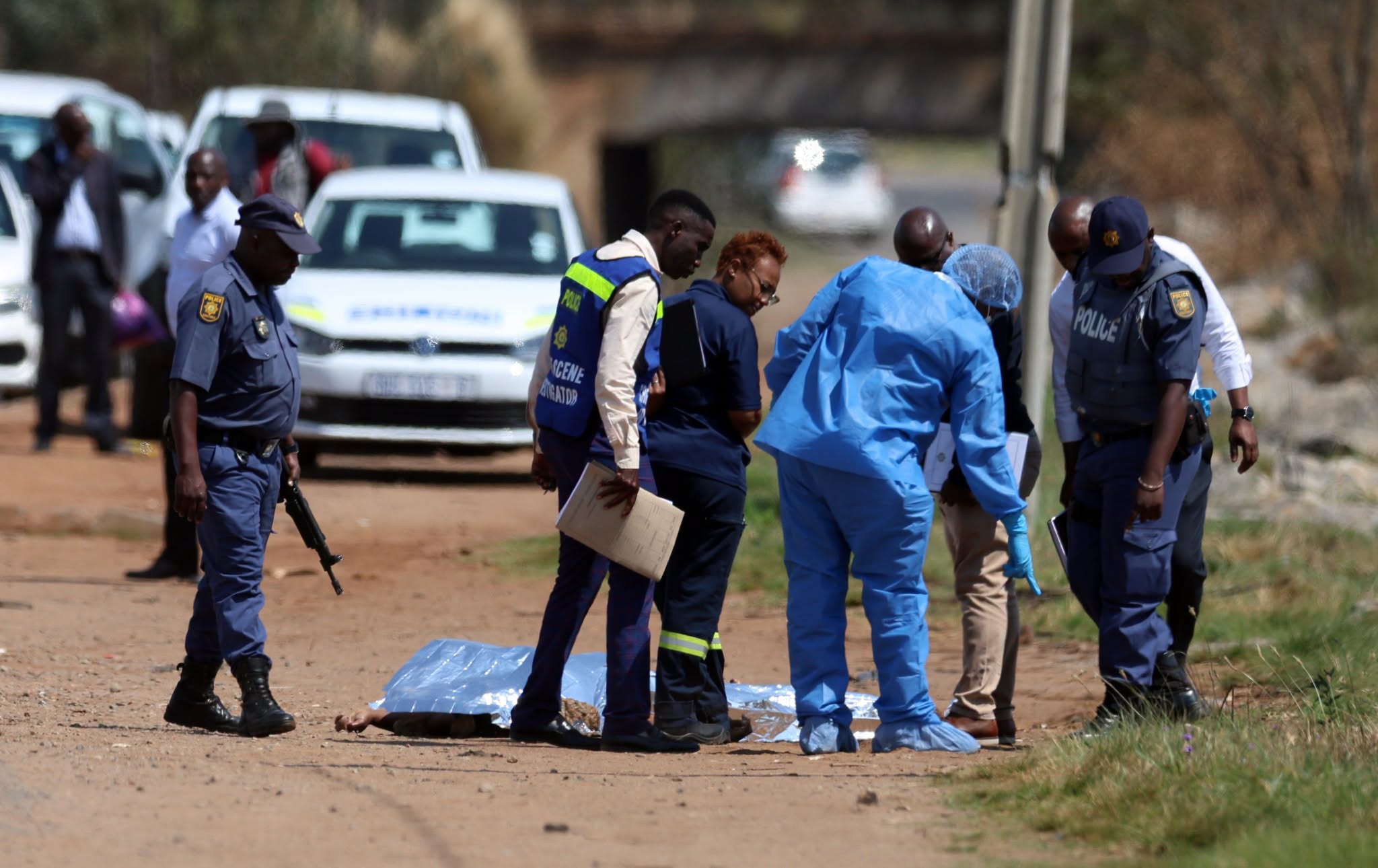
On Tuesday, 15 September 2026, another woman’s body was discovered in KwaThema, Springs, in Ekurhuleni.
The circumstances surrounding the discovery were still unclear, but the timing was enough to send another shiver through communities already living with fear. The discovery brought the number of women’s bodies found in the Ekurhuleni area over the previous two months to six, according to reports. Six women. Six families potentially facing the unbearable task of asking whether the body lying in a mortuary could be the woman they have been desperately searching for. And somewhere, there may be a mother staring at her phone, waiting for it to ring. A child waiting for footsteps at the door. A sister scrolling through photographs, hoping the next message will bring good news instead of confirmation of the worst. This is where statistics become painfully human. Because behind every body is a person who had a life before becoming a crime scene. She had people who knew her laugh, her voice, her habits, her favourite places. She had plans. She had somewhere she was supposed to return to. And now, another family may have to learn how to live with an empty chair.
Kempton Park: Five bodies, one unanswered question
The KwaThema discovery came as police were already under growing pressure to explain the deaths of women whose bodies had been found in and around Kempton Park since July. The discovery of a fifth woman’s body in Olifantsfontein on Monday, 14 September 2026 intensified those concerns. Police formed a multidisciplinary task team to investigate the deaths, while investigators worked to establish whether the cases were connected. Some of the victims were found on roadsides and in open areas, with reports describing bruising and partial nudity. The similarities have fuelled fears among residents that the deaths could be connected, including fears of a possible serial killer. But police have cautioned that it is still too early to confirm that the cases are linked or that one perpetrator is responsible. That caution is necessary. Speculation cannot replace evidence, and grief cannot be allowed to become a substitute for an investigation. But neither can caution become silence. For women living in these communities, the question is painfully simple: How many bodies must be found before fear becomes action? The fear is no longer confined to dark alleys or isolated places. It follows women onto roads, into parks, onto public transport and even into the ordinary routines that should never have to feel dangerous.
Elizabeth “Tsontso” Moselakgomo, a 38-year-old runner, disappeared after leaving home for her afternoon run. Her body was later found in Rhodesfield and was positively identified by her family. Her death has become one of the most painful faces of the growing fear surrounding the Kempton Park discoveries. Running should mean freedom. For Elizabeth, it became a journey from which she would never return. And that is the cruelty of this crisis: women are being forced to negotiate with danger while simply trying to live ordinary lives.
When freedom becomes a luxury
For many women, freedom has quietly become conditional. Can I walk home alone? Can I go for a run? Can I accept a lift? Can I go on a date? Can I leave an abusive relationship without becoming a target? Can I report what happened to me and expect to be believed? Can I travel without constantly sharing my location? Can I go to work, attend a party, visit a friend or simply exist in public without calculating the risk? These are not the questions a free society should be forcing women to ask themselves.
A woman should not need a survival plan simply to go jogging. She should not need to send a live location because she is walking home. She should not have to study the faces of strangers in a taxi, check the locks twice, keep her phone in her hand or pretend to be on a call because she is afraid. Yet for many women, these precautions have become part of everyday life.
The tragedy is not only that women are being killed. It is that fear is teaching women how to live smaller lives.
The numbers have faces
The national figures are equally devastating. Police crime statistics for April to June 2026 recorded 569 women murdered during the quarter, meaning more than six women were killed every day on average. During the same period, police recorded 1,052 women as victims of attempted murder. Rape remains another devastating part of the picture. Police recorded 9,201 rape victims, of whom 8,814 were women and children. Behind every number is a name. Behind every percentage is a person. Behind every statistic is somebody's daughter. Numbers are useful because they show the scale of a crisis. But numbers can also become dangerously comfortable. A figure on a page cannot scream. It cannot cry. It cannot ask why nobody came. The women can.
This is bigger than Kempton Park
South Africa's crisis cannot be reduced to one neighbourhood, one killer, one abusive relationship or one headline.
In 2020/21, research by the South African Medical Research Council found that about 60% of women murdered were killed by intimate partners. The research also highlighted the troubling gap between violence and accountability, with fewer than one in five intimate-partner femicide cases resulting in conviction. That reality matters because GBVF does not always arrive wearing the face of a stranger. Sometimes it arrives through someone who knows where you sleep. Someone who knows your family.
Someone who knows your fears. Someone who once promised to protect you. The danger can hide behind familiarity, love, dependency and silence. And when society tells women to simply “leave”, it often ignores the complicated reality of leaving. Leaving can mean losing financial security, housing, access to children, family support or even one's life. For some women, the most dangerous moment is not when they decide to stay. It is when they decide to leave.
From Kirsten to Olorato, the names keep growing
South Africa has seen too many cases that have shaken the national conscience. Kirsten Kluyts was murdered while jogging in George Lea Park in 2023. She was 14 weeks pregnant. In September 2026, Bafana Mahungela was found guilty of kidnapping, robbery with aggravating circumstances, murder and attempted rape in connection with her death. Olorato Mongale, 30, was murdered in 2025 after going on a date, sparking national outrage and renewed conversations about the dangers women face even when meeting someone they believe they can trust. These cases are different, but they share something painfully familiar: women who were living ordinary lives before violence abruptly changed everything. And that is why the question of safety cannot be dismissed as paranoia. It is experience.
When violence becomes entertainment
There is another disturbing layer to the crisis: the way violence against women can be filmed, shared and consumed online.
Videos showing women being assaulted can travel across social-media platforms within minutes. What was once a private act of violence can become a public spectacle, leaving survivors exposed to further humiliation, harassment and trauma. The phone camera becomes another witness. But a witness that does not necessarily intervene. It records. It uploads. It spreads. And strangers watch. There is something deeply disturbing about a society where a woman's suffering can become content.
The internet was built to connect people. It should not become another place where women lose control over their own dignity.
Justice must mean more than a courtroom
For families who have lost loved ones, justice is not simply a conviction at the end of a trial. Justice begins much earlier. It begins when a missing woman is taken seriously. It begins when evidence is protected. It begins when investigations are properly resourced. It begins when survivors are believed, supported and protected. It continues through prosecution, a fair trial and a lawful sentence where guilt is established. And it must continue after the courtroom doors close, because a conviction cannot bring a woman back to her children. This is why concerns about policing, organised crime and the justice system matter to the GBVF conversation. Lieutenant-General Nhlanhla Mkhwanazi has raised serious allegations about criminal networks and corruption within parts of the law-enforcement and legal environment. His claims are subject to investigation and must not be treated as proven facts. But the broader concern is impossible to ignore: when institutions responsible for protecting the public are weakened or compromised, vulnerable people carry the heaviest burden. A justice system that cannot inspire confidence cannot easily convince frightened women that they are protected.
A disaster cannot remain a declaration
South Africa did something significant when GBVF was formally classified as a national disaster. But classification is not protection. A declaration cannot walk a woman home. A government statement cannot stop an abusive partner from raising his hand. A task team cannot bring back a daughter. A statistic cannot comfort a child waiting for a mother who is never coming home. And a national disaster cannot be allowed to become another phrase that fades into the background noise of political speeches. The declaration was supposed to signal urgency. The streets are now demanding proof of it. Because women are not asking for special treatment. They are asking for something much more basic. Safety. The freedom to walk without fear. The freedom to love without violence. The freedom to leave without becoming a target. The freedom to run. The freedom to say no. The freedom to grow old. The freedom to come home.
So, where are women supposed to be safe?
South Africa cannot keep telling women to be careful while failing to confront the people who make women unsafe.
Women should not have to shrink their lives to survive them. They should not have to choose between freedom and safety, because a society that forces women to make that choice has already failed somewhere along the way. The bodies found in KwaThema, Kempton Park and Olifantsfontein are not simply crime scenes. They are warnings. They are reminders that behind every headline is a family carrying grief that will not disappear when the news cycle moves on. South Africa called GBVF a national crisis. It classified it as a national disaster. Now the country must answer the question that women have been asking for far too long:
If women are not safe in their homes, on their streets, in relationships, on dates, at work, online, or even while going for a run, then where exactly are they supposed to be safe and how can they ever truly be free?




Comments (0)
No comments yet. Be the first to share your thoughts!