



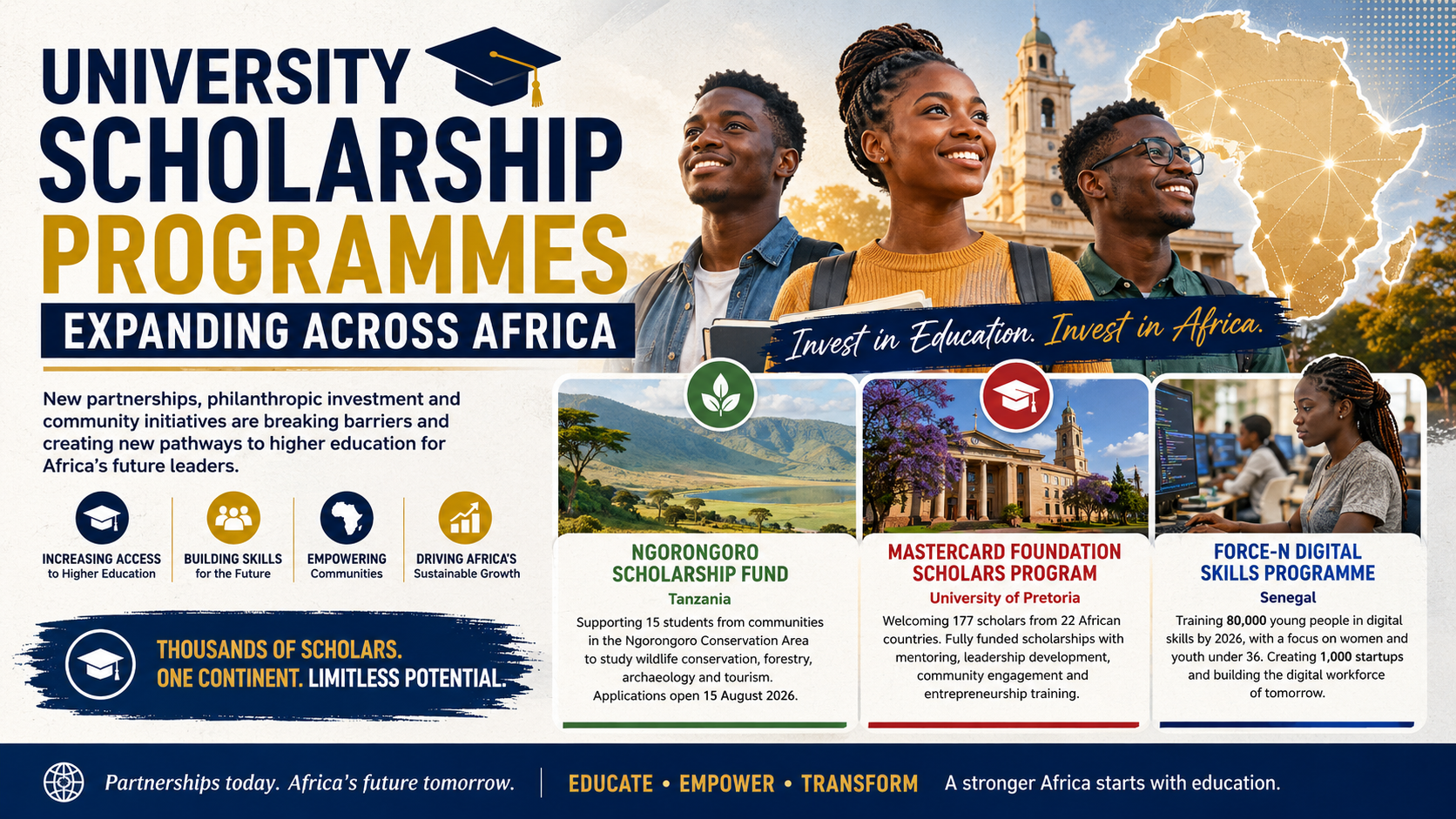
A quiet but profound shift is underway in African education. For generations, a university degree has been seen as the only guaranteed pathway to a secure future. However, as the continent prepares for a demographic explosion, with over 460 million people aged 15 to 51 and the world's largest workforce by 2040, this singular focus is no longer viable. Tertiary enrolment across Africa currently stands at just nine percent, compared to a global average of thirty-eight percent. The reality is that universities—both public and private—cannot absorb the growing number of qualified applicants.
The Capacity Gap and Its Consequences
This mismatch between aspiration and capacity is stark. In South Africa, for example, over 337,000 matriculants achieved a Bachelor's pass, but only about 202,000 first-year university places are available. In 2025, more than 265,000 candidates obtained bachelor-level passes, while public universities offered only 215,000 first-year spots. Private universities face similar pressure, with over 160,000 applicants competing for fewer than 10,000 places.

When a university degree becomes the only perceived door to success, exclusion does more than deny a place—it denies a future. Experts warn that this dynamic creates long-term professional and personal damage for young Africans who cannot secure admission. The psychological and economic toll of being shut out of the system, with no clear alternative path, is increasingly being recognised as a crisis that demands urgent attention.
TVET: A Viable and Growing Alternative
A significant alternative is Technical and Vocational Education and Training. South Africa, for instance, has over 500,000 available spots at TVET colleges nationwide, far surpassing university capacity. Science and Innovation Minister Blade Nzimande has noted that South Africa needs at least sixty percent of school leavers to pursue artisanal and technical careers to meet the country's economic demands. Yet TVET continues to suffer from a perception problem, long viewed as a second-tier option for those who could not make it into university.
This perception is slowly changing. Across the continent, governments and development partners are investing heavily in rebranding and expanding TVET. The new Continental Education Strategy for Africa for 2026 to 2035 explicitly prioritises skills for employability and economic growth alongside higher education. Countries like Rwanda and Kenya have made significant strides in modernising their TVET systems, aligning curricula with industry needs and creating apprenticeship programmes that give graduates real-world experience before they even enter the job market.
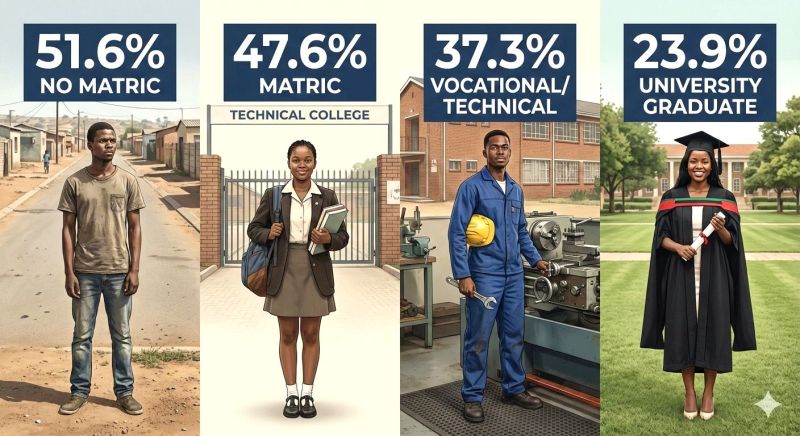
The graphic illustrates a dramatic funnel effect in educational progression. While a majority of learners reach the matriculation level, less than a quarter ultimately achieve a university degree, with only slightly more than one in three pursuing a vocational or technical pathway.
Creating an Ecosystem of Pathways
Education experts are now calling for more than just an expansion of TVET. They advocate for creating what has been termed an "ecosystem of pathways"—a diverse range of options that include apprenticeships, work-integrated learning, short-term professional certifications, and entrepreneurship programmes. This approach recognises that the traditional linear journey from school to university to formal employment no longer serves the majority of African youth.
Apprenticeship models are gaining traction, particularly in countries with strong informal economies. In West Africa, traditional apprenticeship systems are being formalised and integrated with modern curricula, allowing young people to earn while they learn. Work-integrated learning programmes, where students spend significant portions of their training in actual workplaces, are being piloted across the continent with promising results. These programmes not only build practical skills but also create networks and references that are often as valuable as formal qualifications.
Short-term professional certifications are emerging as a particularly flexible and accessible option. With the rise of digital learning platforms, young Africans can now earn globally recognised credentials in fields like information technology, project management, digital marketing, and data analytics without spending years in a university. These certifications are often more affordable, more flexible, and more directly aligned with employer needs than traditional degrees.
The Role of the Private Sector
Employers are increasingly vocal about the skills gap they face. Many report that university graduates lack the practical, problem-solving, and communication skills needed in the workplace. This has led to a growing movement among private sector players to take a more active role in education and training. Companies are establishing their own academies, partnering with TVET institutions to design curricula, and offering internships and apprenticeships that serve as pipelines for future employees.
In Kenya, for example, technology companies have partnered with TVET institutions to create specialised programmes in software development, cybersecurity, and data science. These programmes are designed with direct input from employers and often include guaranteed internship placements. In Nigeria, fintech companies have established training programmes that have placed thousands of young people into jobs within months of completion. These private sector initiatives are filling gaps that public education systems have struggled to address.
Policy Shifts and Continental Strategy
The recognition that education systems must evolve is reflected in major policy shifts. The African Union's Continental Education Strategy for Africa for 2026 to 2035 represents a significant departure from previous frameworks. While earlier strategies focused heavily on expanding access to primary and secondary education, the new strategy places equal emphasis on skills development, technical education, and pathways to employment. It calls for member states to diversify their education offerings and to create systems that recognise and value different forms of learning and achievement.
At the national level, countries are beginning to reform their education policies accordingly. Several nations have introduced policies that allow for alternative entry into higher education based on work experience or professional certifications, rather than solely on secondary school examination results. Others are establishing national qualifications frameworks that recognise prior learning and create pathways between different types of education and training. These frameworks allow individuals to move between formal education, technical training, and work, accumulating credentials and experience throughout their lives.
Entrepreneurship and Self-Employment
A significant portion of Africa's youth will ultimately create their own employment rather than find it. Recognising this, education systems are increasingly incorporating entrepreneurship training into curricula at all levels. The goal is not only to teach business skills but also to cultivate a mindset of initiative, problem-solving, and resilience.
Across the continent, incubators, accelerators, and innovation hubs are springing up, often in partnership with educational institutions. These spaces provide young entrepreneurs with mentoring, networking opportunities, and access to capital. In Nigeria, Ghana, Kenya, and South Africa, vibrant startup ecosystems have emerged, creating jobs and attracting investment. Education programmes that link young people to these ecosystems are proving to be powerful pathways to economic participation.
The Challenge of Implementation
Despite the growing consensus on the need for diversified pathways, implementation remains a significant challenge. TVET institutions across much of Africa remain under-resourced, with outdated equipment, poorly trained instructors, and curricula that do not align with industry needs. Apprenticeship programmes are often informal and lack quality assurance mechanisms. Professional certifications, while increasingly popular, can be expensive and may not be recognised by all employers.
There is also the challenge of stigma. In many African societies, a university degree remains a marker of social status and success. Parents and communities often pressure young people to pursue university education, even when alternative pathways might better serve their interests and talents. Changing these deep-seated cultural attitudes requires sustained public awareness campaigns and visible success stories from those who have built fulfilling careers through non-university pathways.
The Way Forward
The shift beyond the degree is not about diminishing the value of university education but about recognising that one size does not fit all. Africa's demographic dividend will only be realised if its young people have access to diverse, flexible, and relevant pathways to productive employment. This requires sustained investment in TVET, the creation of robust apprenticeship and work-integrated learning programmes, the expansion of professional certification opportunities, and the cultivation of entrepreneurial skills and mindsets.
It also requires a change in how success is defined and celebrated. Governments, educators, employers, parents, and communities all have roles to play in creating an environment where young people can pursue the pathways that best suit their talents and aspirations, without stigma or fear of exclusion. The cost of inaction is simply too high—a generation of young Africans left without hope or opportunity, and a continent unable to harness its greatest resource: its people.












Comments (0)
No comments yet. Be the first to share your thoughts!