

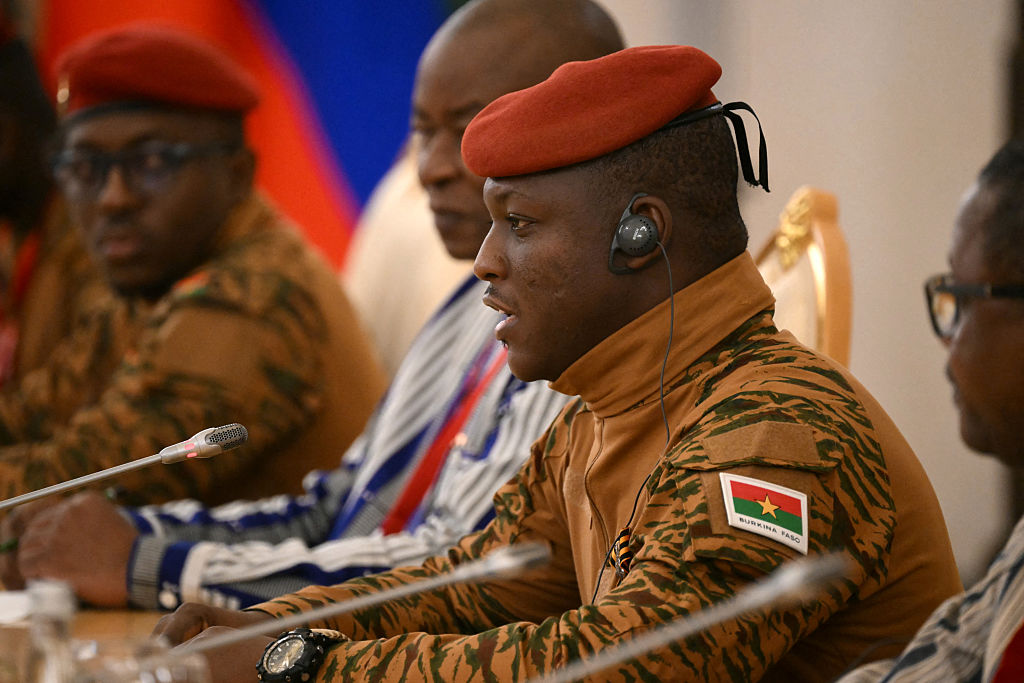
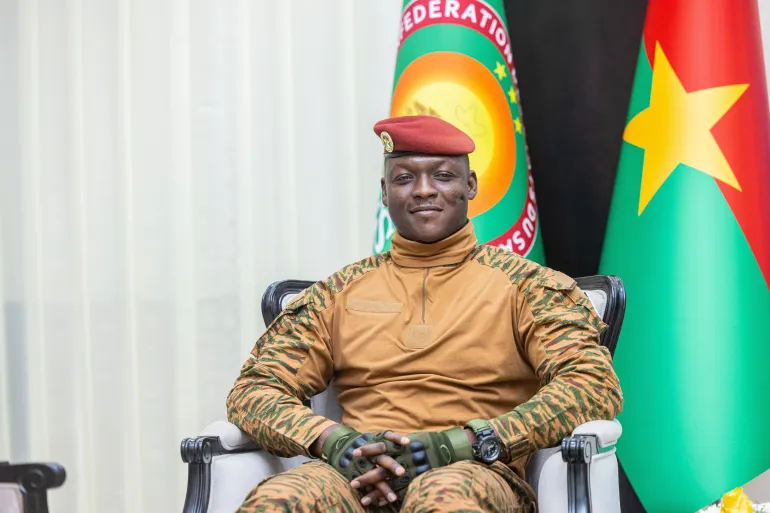
Nearly four years after seizing power in September 2022, the 38-year-old army captain remains one of Africa's most polarising political figures. To critics, his government has overseen a systematic dismantling of democratic institutions while struggling to contain a deepening security and humanitarian crisis. To many supporters, he represents a new generation of African leaders challenging foreign influence and advocating greater national sovereignty.
A Leader Who Has Stopped Pretending
In April 2026, Traoré told Burkinabè people to "forget about the question of democracy," arguing that the country was in a revolutionary phase rather than a democratic one. The remark came after his government extended the military-led transition and dissolved all political parties, signalling that a return to civilian rule was no longer an immediate priority.

When Traoré seized power in September 2022, ousting a leader who had staged a coup only eight months earlier, he promised elections by June 2024. The junta broke that pledge, pushing any transition back to 2029. Now Traoré has confirmed he has no intention of restoring democracy, instead tightening repression while working with neighbouring states to internationalise his anti-democratic model.
Systematic Dismantling of Civic Space
The crackdown has been methodical and far-reaching. In January 2026, the government dissolved all political parties, claiming they sowed division and weakened the social fabric, issuing a decree repealing all laws that regulated parties and ordering them to hand over their assets.
Civil society organisations have been systematically targeted. On 15 April 2026, the government dissolved 118 organisations for alleged non-compliance with a July 2025 law that imposed strict registration and reporting requirements. The legislation provided organisations with a one-year compliance window, meaning the affected groups were dissolved before the deadline had expired. By 11 June 2026, at least 1,174 organisations had been either suspended or dissolved.
The clampdown has affected student groups, religious associations and human rights organisations alike. In May, the government suspended the General Student Union of Burkina Faso, the country's largest student union, after it issued a statement criticising the government's security record.
Press Freedom Under Siege
Media outlets have come under similar pressure. On 5 May 2026, the state media regulator indefinitely suspended French television broadcaster TV5 Monde, accusing it of spreading disinformation and content described as an "apology of terrorist acts." The channel had been suspended twice previously in 2024.
Journalist Atiana Serge Oulon remains missing more than two years after security forces abducted him on 24 June 2024. At least five journalists were arrested in October 2025 for covering sensitive interviews, while a lawyer was sentenced to one year in prison for criticising human rights violations on Facebook.
The Religious Crackdown
Traoré has also escalated his confrontation with influential Muslim scholars. New legislation, the Religious Freedoms Law, introduces tougher oversight of religious organisations and penalties for practices authorities classify as abuses. In late May, Imam Mohamed Ishaq Kindo, one of Burkina Faso's most prominent Sunni scholars, was arrested after criticising the draft legislation. After worshippers gathered to demand his release, authorities closed the largest Sunni mosque in Ouagadougou. According to the Timbuktu Institute, Kindo's whereabouts have not been disclosed since the protests were suppressed.
Traoré declared that "the battle has begun" against what he calls "radical Islam," warning that those who do not change would be fought. He also announced plans to recall Burkinabè students studying Islamic law in Arab countries, claiming more than 800,000 were pursuing religious education abroad without acquiring practical professional skills.
International Isolation
In February 2026, the junta expelled the United Nations Human Rights Office from Burkina Faso, weeks after UN human rights chief Volker Türk called on the authorities to halt their crackdown on civic freedoms. The country has also joined Mali and Niger in beginning the process of withdrawing from the International Criminal Court.
Burkina Faso's withdrawal from the Economic Community of West African States (ECOWAS), alongside Mali and Niger, has complicated regional pressure on the military leadership. "ECOWAS is weakened precisely when it needs leverage most and the AU's influence is similarly compromised," said Dr Baiye Mbu, West and Central Africa Researcher at CIVICUS.
A Pan-African Image vs. Domestic Reality
Despite the crackdown, Traoré's appeal extends beyond Burkina Faso. His criticism of France, calls for greater African self-reliance and emphasis on domestic control over natural resources have resonated with audiences frustrated by years of insecurity and political instability. His speeches frequently invoke the legacy of former revolutionary leader Thomas Sankara, who remains a symbol of anti-imperialism across Africa.
His government has expelled French troops, strengthened ties with Russia, promoted local industry and agriculture, and expanded the Volunteers for the Defence of the Homeland programme, a civilian force created to support the military in areas where the state has struggled to maintain security.
But the central test remains security. Traoré came to power promising to reverse the deterioration that had plagued Burkina Faso for years, but the insurgency has grown and civilians are paying the price. All sides are accused of crimes against humanity and war crimes, and there is evidence that Burkina Faso's armed forces and allied militias have increasingly targeted civilians, particularly members of the Fulani ethnic group.
As the Timbuktu Institute noted, by turning against former allies—including influential Muslim scholars who once bolstered his standing—Traoré risks drying up an important source of legitimacy without resolving the security problem that justifies his actions. The gap between his revolutionary rhetoric and the realities on the ground has created profound confusion across the country, as official reports of military victories contrast sharply with ongoing attacks, millions of displaced persons and a severe humanitarian crisis.
With reporting from Outlook India, allAfrica.com, Yen News, CHANNELAFRICA, Al Jazeera, Timbuktu Institute, Africa.com and CIVICUS.


Comments (0)
No comments yet. Be the first to share your thoughts!