


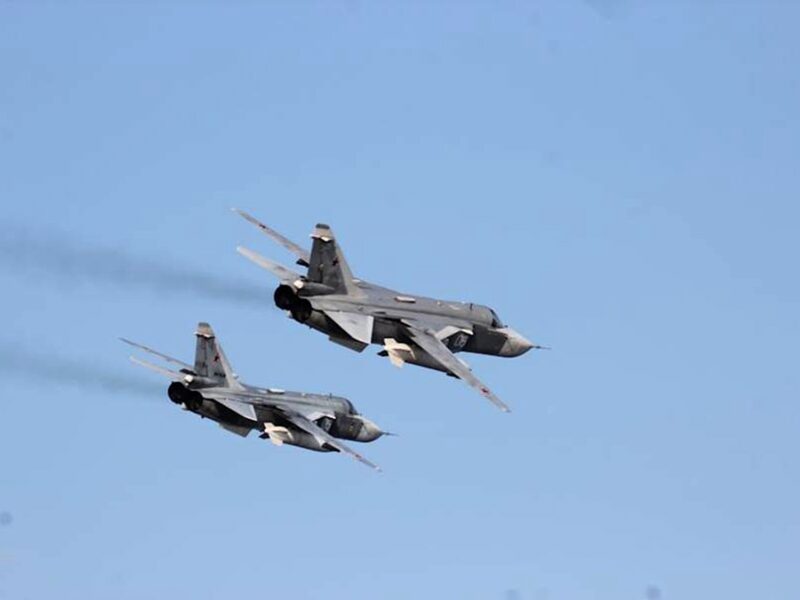
Aircraft identified by two Malian military sources as a Russian Sukhoi Su-24 dropped at least two munitions on the village, which has been controlled by the al Qaeda-linked group Jama'at Nusrat al-Islam wal Muslimin (JNIM) for the past six years. One strike hit near the home of the village chief, killing his wife, two of his children and another child, while a second strike hit a nearby cattle market, killing four men.
HRW said no fighters from JNIM were believed to have been killed in the strikes. Residents told HRW that while three of the chief's sons were JNIM fighters, they were not in Kyrnia during the air strike. At least 100 JNIM fighters were in the village but were mainly at the mosque, which was not struck.

Investigation Findings
HRW said it interviewed 19 people between June 24 and July 14, analysed satellite imagery and reviewed a video Africa Corps posted on social media describing the operation as an attack on a "gathering place of terrorist groups" in the Mopti region. HRW was able to geolocate that footage to Kyrnia.
"The strikes in Kyrnia did not appear to target specific military objectives, which would make them unlawfully indiscriminate," the rights group said.
HRW identified two craters of about 12 metres and destruction of nine market stalls. The organisation considered that the strikes did not appear to target specific military objectives and could constitute indiscriminate attacks prohibited by the laws of war.
Calls for Investigation
HRW urged Mali's government to investigate the strikes and hold those responsible to account.
"By handing the Russian authorities a blank check, the Malian government should be aware that it too is accountable for allied forces' atrocities," said Ilaria Allegrozzi, senior Sahel researcher at HRW.
The United Nations and Amnesty International have called for investigations into possible war crimes by both JNIM and the separatist Azawad Liberation Front. The UN said its mission in Mali, MINUSMA, had documented human rights abuses by both sides but that identifying perpetrators remained difficult.
The UN has documented widespread human rights abuses, including the executions of hundreds of civilians, since the conflict in northern Mali began in 2012. A long-running peace process between the government and the separatist groups has remained fragile, and JNIM has expanded its presence across the region, carrying out attacks on military and civilian targets.
The Africa Corps and Russian Influence
The Africa Corps was established as Russia's new military mission on the continent to replace the Wagner Group, which had been operating in several African countries. The presence of Russian forces in Mali has been a source of controversy, with allegations of human rights abuses and involvement in civilian deaths.
The Malian government has defended its cooperation with Russia, arguing that it needs support to combat the growing threat of Islamist insurgency in the country. However, HRW's findings add to a growing body of evidence suggesting that the partnership has come at a significant cost in terms of civilian lives.
With reporting from Reuters, Human Rights Watch, AFP, VOA, BBC, Malian media and The New Arab.




Comments (0)
No comments yet. Be the first to share your thoughts!