


When the veteran opposition leader died on October 15, 2025, Kenya did not merely lose an 80-year-old politician who had contested the presidency five times. It lost a man whose political existence had become intertwined with the country's own struggle over power, opposition, reform, ethnicity, elections and the presidency.
For almost three decades, Kenyan politics had a reliable constant: Raila would be there. He could be fighting the government. He could be negotiating with it. He could be building an opposition coalition. He could be threatening mass action. He could be sitting at State House with the very people he had spent years opposing. But he was always somewhere in the equation. Now he is not. And that changes everything.

Raila's Greatest Political Asset Was Not His Votes
This is where much of the early discussion about Raila's death gets it wrong. People talk about his voting bloc. They talk about Nyanza. They talk about ODM. They talk about the millions of people who followed him. All of that is true, but it misses the deeper point.
Raila's greatest political asset was his ability to make political mathematics work. He understood that Kenya's presidency is not won by one community acting alone. It is won by constructing a coalition large enough to cross regional boundaries. Raila understood this instinctively. He spent decades learning how different communities, personalities and political interests could be brought into one electoral vehicle.
That is why his political career survived so many defeats. That is why he could reinvent himself. That is why politicians who had spent years attacking him could eventually sit beside him. And that is why his death has created a problem that cannot be solved simply by finding another Luo politician to lead ODM. Kenya does not merely need another Raila from Nyanza. It needs someone capable of doing what Raila did nationally. So far, nobody has demonstrated that ability.
The Uncomfortable Truth: Raila Was Both the Opposition and Part of the Establishment
This is the paradox that makes his political legacy so difficult to categorise. Raila spent much of his life fighting presidential power. He was imprisoned for a cumulative period of nine years during the authoritarian era under former President Daniel Arap Moi. He became a central figure in the struggle for political reform almost immediately after he emerged from prison. He helped push Kenya toward constitutional change and eventually became a prime minister under the power-sharing arrangement between his Orange Democratic Party and the Party of National Unity of former President Mwai Kibaki, created after the 2007-08 post-election crisis.
He was, in many ways, the permanent challenger to the political establishment. But Raila also understood something that younger politicians sometimes discover too late: politics is not a morality play. It is the management of competing interests. That explains his Handshake with former President Uhuru Kenyatta in 2018. It also explains his cooperation agreement with William Ruto in March 2025.
Ruto and Raila agreed to cooperate on a framework addressing governance, youth unemployment, inclusivity and other national issues, while insisting that the agreement was not itself a power-sharing arrangement or an electoral coalition. To Raila's supporters, this was controversial. To his critics, it was evidence that the man who had spent years fighting governments had eventually become part of the system he once challenged. But there is another interpretation: Raila had become one of the few politicians in Kenya who could talk to almost everybody. And that ability is precisely what Kenya has lost.
Ruto Has Lost Something Too
There is a temptation to believe that Raila's death automatically strengthened William Ruto. I am not convinced. Ruto certainly lost one of his most formidable historical opponents. But he also lost something more useful: a predictable political counterparty.
When Ruto signed the cooperation framework with Raila, he knew who he was dealing with. He knew Raila's history. He knew Raila's influence. He knew the people Raila could mobilise. He knew the compromises Raila could make. He knew that if Raila agreed to something, there was a political structure behind that agreement. That relationship was imperfect, controversial and deeply political. But it was understandable.
Now Ruto is dealing with a different opposition landscape. ODM itself is struggling with internal divisions as it attempts to reorganise after its founding leader's death. In May 2026, the party held a retreat specifically to address internal wrangles and prepare for 2027. This is not the same political environment. The president is no longer negotiating with Raila. He is negotiating with Raila's political inheritance. And those are two very different things.
The Real Crisis Is Inside ODM
Raila's death exposed a weakness that had been hiding in plain sight. ODM was extraordinarily powerful. But how much of that power belonged to the institution and how much belonged to Raila himself? That question is now impossible to avoid.
A political party can survive the death of its founder if its institutions are strong enough. But when a party's identity, emotional appeal, historical memory and national coalition-building strategy are all concentrated around one individual, succession becomes dangerous. This is what Kenya is watching now. ODM has politicians. It has MPs. It has governors. It has experienced organisers. It has a national history. But it does not yet have an uncontested political centre. And politics abhors a vacuum. Someone will occupy it. The question is who.
Raila's Death Has Created a New Opposition Race
Before Raila died, much of the political conversation was about how the opposition would relate to him. Now the conversation is about who replaces the space he occupied. That has opened the field to politicians who previously operated partly in his shadow.
Kalonzo Musyoka brings decades of political experience. Martha Karua carries a reformist reputation and national political credentials. Rigathi Gachagua has built a formidable anti-Ruto political identity after leaving government. Fred Matiang'i has emerged as another possible national contender. Others are waiting.
And this is where the opposition faces its most dangerous problem. They may agree on one thing: Ruto must be defeated. But that is not enough. A presidential coalition requires someone around whom different political interests are willing to surrender some of their ambitions. Raila could do that. The others have not yet proved they can. That is the difference between opposition unity as a slogan and opposition unity as a functioning political machine.
This Is Why 2027 Will Be Different
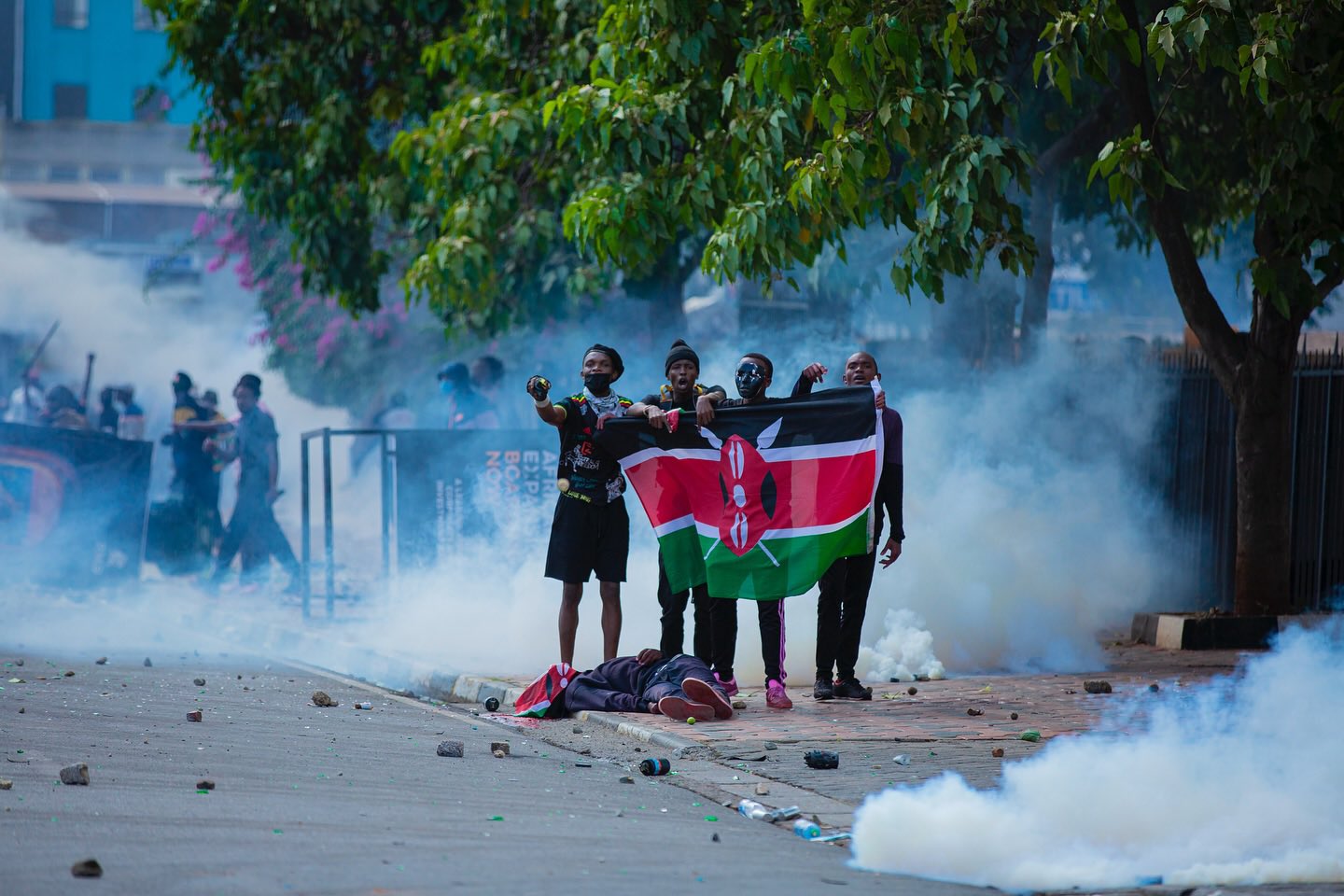
Raila will not be on the ballot in 2027. But his absence will be on every ballot. It will be in the coalition negotiations. It will be in ODM's internal battles. It will be in Nyanza. It will be in Ruto's calculations. It will be in the opposition's search for a candidate. It will be in the memories of voters who spent decades believing that one day Raila would finally become president. And perhaps most importantly, it will be in the question facing Kenya's younger generation: do we continue inheriting political identities, or do we finally create our own?
That is the real political consequence of Raila's death. Kenya did not simply lose an opposition leader. It lost the last great political figure who belonged simultaneously to several eras of Kenyan politics: the struggle against authoritarianism, the birth of multiparty democracy, the constitutional revolution, the politics of ethnic coalitions, the age of the Handshake, and the politics of today's restless, digitally connected youth.
Nobody can inherit all of that. And that is why the political vacuum Raila left behind is much larger than ODM. It is a vacuum at the centre of Kenya's political imagination. The politicians preparing for 2027 are now fighting to fill it. But perhaps they should be asking a more difficult question: what if Kenya's future does not require another Raila?
Perhaps the real test of Raila Odinga's legacy is whether the country can finally build a politics in which no single individual has to carry the hopes, frustrations and ambitions of an entire nation. That would be a fitting ending to the Raila era. Not another Raila. A Kenya that no longer needs one.
Opinion | Pro 24 Africa



Comments (0)
No comments yet. Be the first to share your thoughts!