
George Weah’s life story is one of the most remarkable journeys in African football and politics. Born in Monrovia, Liberia, Weah rose from a difficult childhood to become one of the most celebrated footballers in the world before making another extraordinary transition into politics and becoming president of his country.
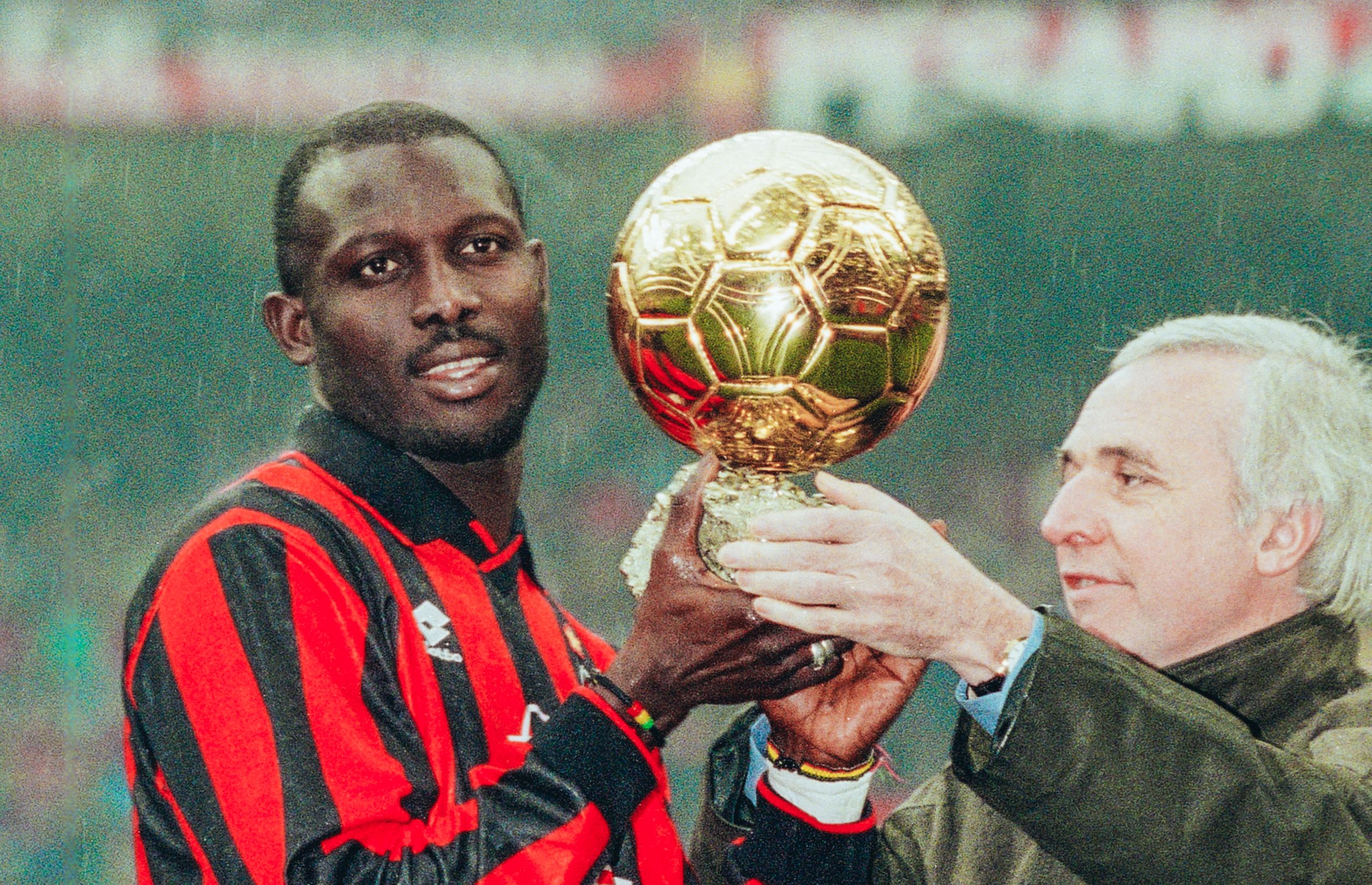
His journey took him from the streets of Liberia to some of Europe’s biggest football stadiums, where he represented clubs including AS Monaco, Paris Saint-Germain and AC Milan. In 1995, he reached the summit of individual football achievement, becoming the first and, to date, only African player to win the Ballon d’Or. FIFA also named him World Player of the Year that same year.

Years later, Weah would achieve another historic milestone this time away from football. In 2018, he became President of Liberia, completing a journey that had taken him from sporting superstardom to the highest political office in his homeland. He served as president until 2024.
From the Streets of Monrovia to European Football
Weah's early life was far removed from the luxury associated with international football. He grew up in Liberia and developed his football skills in an environment where professional success was far from guaranteed. His story has often been associated with perseverance, opportunity and the ability to turn football talent into a pathway out of poverty.
As a young player, Weah began building his reputation in Liberia before moving abroad. His breakthrough eventually took him to Europe, where he played for AS Monaco under manager Arsène Wenger. His performances attracted increasing attention, and his career soon took him to Paris Saint-Germain.
At PSG, Weah established himself as one of Europe's most dangerous forwards. He helped the club win domestic honours and became the top scorer in the 1994–95 UEFA Champions League campaign. FIFA records that he scored 32 goals during his PSG spell and won Ligue 1, two Coupe de France titles and a Coupe de la Ligue. His performances opened the door to another major move AC Milan.
The Ballon d’Or: Reaching the Summit
The defining moment of Weah's football career arrived in 1995. Playing at the highest level for PSG and Milan, the Liberian striker was recognised as the world's outstanding player. He won the Ballon d’Or and was also named FIFA World Player of the Year. The achievement carried significance beyond Weah himself. He became the first African to win the Ballon d’Or and remains the only African player to have won the award. FIFA's historical records also identify him as the only player from outside Europe and South America to have won the FIFA World Player of the Year award during that era. His individual honours did not stop there. Weah won the African Footballer of the Year award three times, in 1989, 1994 and 1995. His club career also included appearances for Chelsea and Manchester City toward its later stages. Yet there was one major international prize that escaped him: the FIFA World Cup. Liberia never qualified for the tournament during Weah's playing career. His closest opportunity came during qualification for the 2002 World Cup, when Liberia narrowly missed out to Nigeria.
From Football Icon to Presidential Candidate
After establishing himself as a football legend, Weah gradually moved into public life.
His transition into politics was not simply a celebrity entering government. He sought elected office in Liberia and eventually became one of the country's most prominent political figures. After previous attempts to reach the presidency, Weah won the 2017 presidential election and took office in January 2018. FIFA noted at the time that his election gave new attention to the potential role of sport in education and development across Africa.
For Liberia, the symbolism was significant: a former footballer who had risen from humble beginnings was now occupying the country's highest political office.
As president, Weah's administration faced the challenges of governing a country dealing with poverty, unemployment, infrastructure needs and concerns about corruption and public finances. His government also introduced reforms that Transparency International later acknowledged, particularly during 2022–2023, while noting that corruption-related impunity remained a concern.
A Legacy That Goes Beyond Football
Weah's presidency ended in January 2024 after he lost the presidential runoff election to Joseph Boakai. He subsequently handed over power, marking another chapter in a career that had already crossed two very different worlds. Today, Weah's legacy remains closely connected to both football and Liberia's political history. On the football field, he became an African pioneer, winning an individual prize that had previously remained beyond the continent's reach. In politics, he became one of the few globally recognised football stars to rise to the presidency of a country.
His story therefore goes beyond the familiar image of a footballer holding the Ballon d’Or. It is the story of a Liberian who moved from humble beginnings to European football's biggest stages, became one of Africa's most famous sporting figures, and eventually entered the political arena at home.
From the streets of Monrovia to the San Siro, from the Ballon d’Or podium to the presidential palace in Monrovia, George Weah's life has followed an extraordinary path one that links African football history with the political history of Liberia.



Comments (0)
No comments yet. Be the first to share your thoughts!