


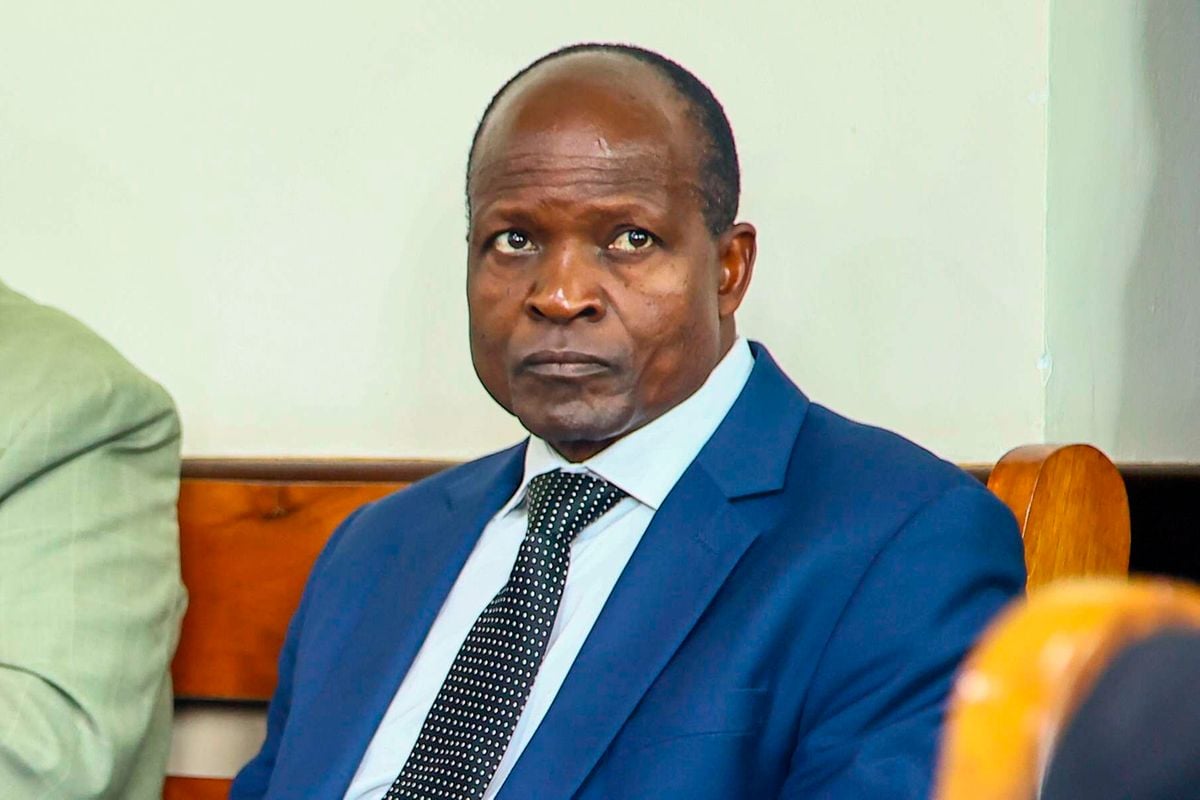
The High Court at Milimani delivered the verdict on Thursday, July 23, 2026, bringing to a close one of Kenya's most closely watched murder trials that has gripped the nation for nearly eight years.
Justice Cecilia Githua ruled that the prosecution had proved its case beyond reasonable doubt, finding that Obado "orchestrated a plot to eliminate Otieno". He "supplied motive, instigation and funds to finance the criminal enterprise," the judge said.

The Crime and Motive
Sharon Otieno, a 26-year-old university student at Rongo University and mother of three, was abducted on September 3, 2018, after leaving a hotel in Rongo with Nation Media Group journalist Barrack Oduor. Two days later, her bloodied body was discovered in a thicket near Kodera Forest in Homa Bay County. She had been stabbed multiple times in the neck, abdomen and back, and had been sexually assaulted. She was approximately 28 weeks pregnant at the time of her death.
The court found that Obado had a strong motive to eliminate Otieno to prevent details of their relationship and her pregnancy from becoming public. Justice Githua stated:
"From the totality of the evidence adduced in this case, it is my considered view that the first accused had a very strong motive to unlawfully end Sharon's life to ensure that his illicit affair with her was not widely publicised... in order to save himself from possible public embarrassment and reputational harm and to safeguard his political standing".
The Co-Conspirators
Obado was convicted alongside his former personal assistant Michael Juma Oyamo and former Migori County clerk Casper Obiero. The court found that the three acted in concert as part of a coordinated criminal enterprise.
The judge detailed their respective roles: Oyamo "facilitated execution" of the plot, while Obiero "ensured logistical support and concealment to avoid detection of the offence". Justice Githua rejected Obado's defence that he could not be held criminally liable because he was in Nairobi when Sharon was abducted and killed, ruling that physical absence from the crime scene does not absolve an accused under the doctrine of common intention.
The Case Against Obado
The trial heard testimony from 42 prosecution witnesses, with the prosecution presenting 81 exhibits. The prosecution argued that Sharon's pregnancy and her engagement with a journalist pursuing the story posed "a real and imminent threat" to Obado's public image.
Obado admitted having had an intimate relationship with Sharon and acknowledged responsibility for her pregnancy but denied any involvement in her death. He argued that the prosecution's case was built on suspicion rather than proof beyond reasonable doubt.
However, the court found that Obado had pressured Sharon to terminate her pregnancy, rejecting his claim that he had accepted it. Evidence showed Sharon had repeatedly demanded that Obado publicly acknowledge the pregnancy and provide her with a house, vehicle and employment, warning she would expose their relationship if he failed to do so. Justice Githua ruled that promises Obado made to Sharon were "merely a scheme to buy time as he schemed on how to eliminate her".
Despite the strong evidence against Obado, his supporters—who had earlier ferried him to court in matatus with fanfare—fell into stunned silence after the conviction.
Sentencing
Following the conviction, the prosecution successfully applied to have the three remain in custody. Justice Githua revoked their bond terms, ordering that they be remanded in prison for 21 days pending the filing of pre-sentence reports and victim impact statements. The matter will be mentioned on August 18, 2026, when the court is expected to receive the probation and victim impact reports ahead of sentencing.
Reactions to the Verdict
The conviction has been welcomed by women's rights advocates, human rights defenders, and the victim's family. Dr Nancy Baraza, who chaired the Presidential Task Force on Gender-Based Violence, said the judgment was "a strong warning to those hell-bent on committing femicide".
Brenda Yambo, senior legal counsel at the Federation of Women Lawyers-Kenya (Fida-Kenya), welcomed the judgment, saying it demonstrated that "nobody is above the law" and restored confidence in the judicial system. Prominent lawyer and human rights defender George Kegoro described the conviction as "big, very big," adding that it "vindicates the increasingly beleaguered Kenyan judiciary, reaffirms faith in the justice system and constitutes a victory for the movement against femicide".
Sharon's mother, Melida Auma, held back tears in court as the judgment was read, while her lawyer Hezekiah Awuor praised the ruling: "We are happy that justice has been done. The judge analysed the evidence of 42 witnesses in a most judicious way before arriving at the finding of guilty as charged".
The Director of Public Prosecutions described the conviction as a "significant milestone in the pursuit of justice and accountability for victims of serious crimes" , expressing hope that the court would impose "an appropriate and deterrent sentence that reflects the gravity of the offence".
The Sharon Otieno case, which sparked nationwide protests and highlighted the extent of violence against women in Kenya, has now reached a conclusion that advocates hope will send a powerful message about accountability for gender-based violence.
With reporting from BBC, Daily Nation, The Star Kenya, Pulse Kenya, KBC Digital, allAfrica.com, and Newswatch Nigeria.

















Comments (0)
No comments yet. Be the first to share your thoughts!